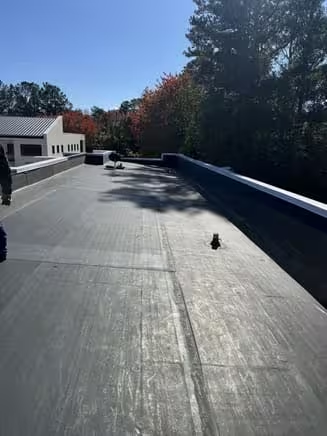
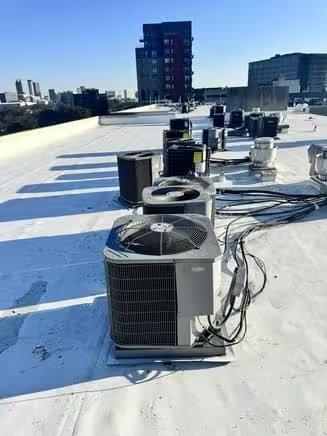
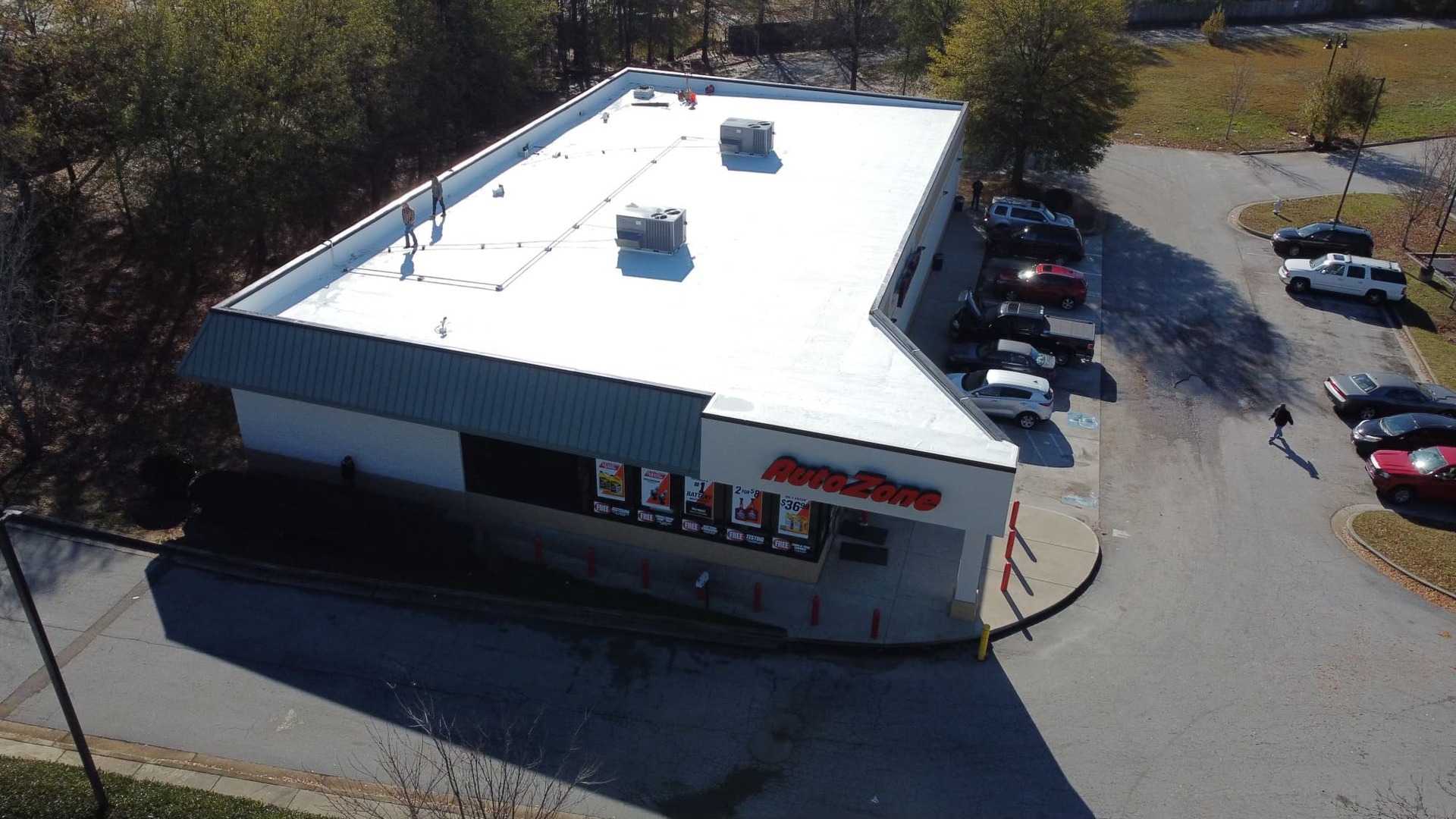
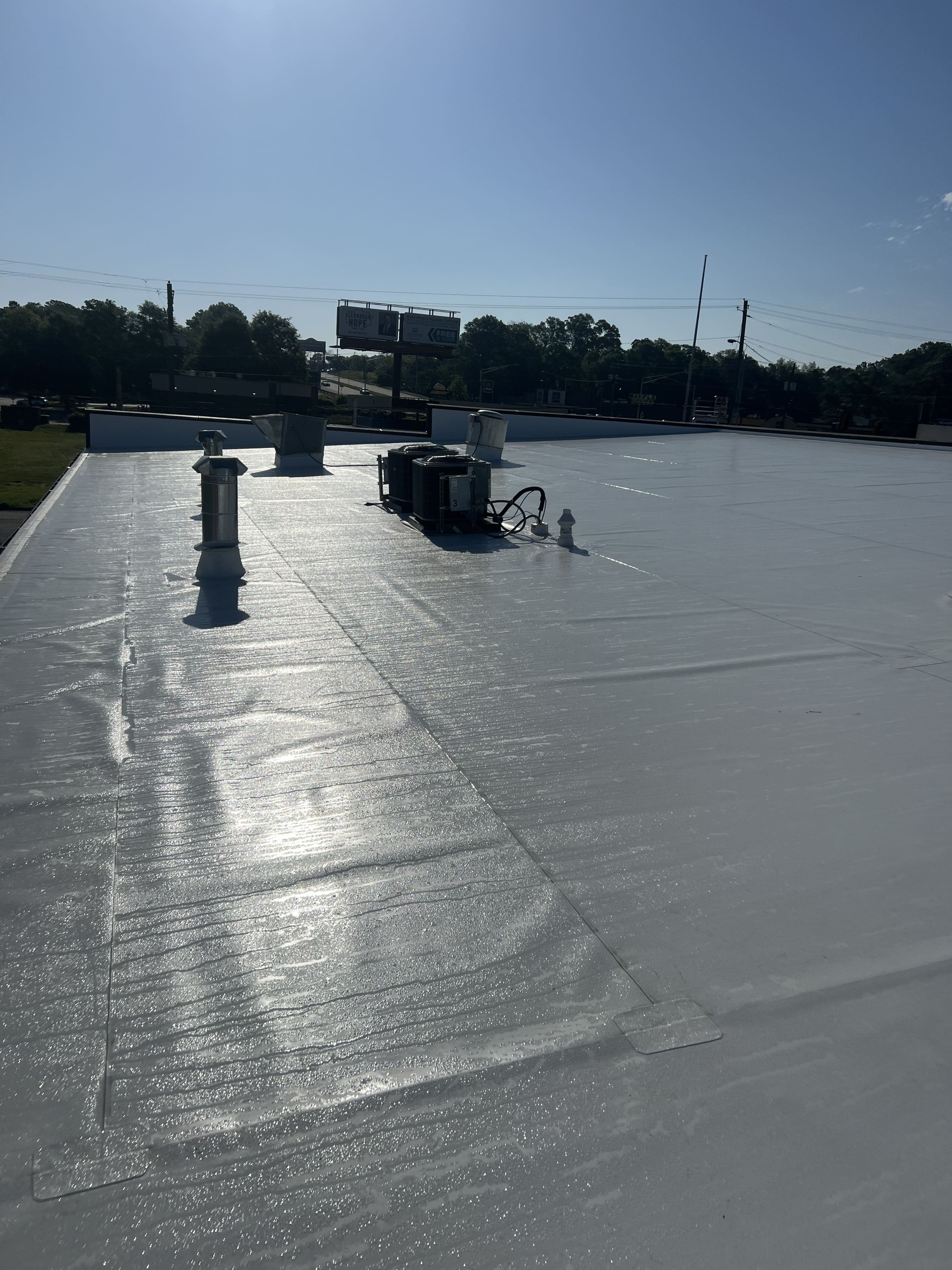
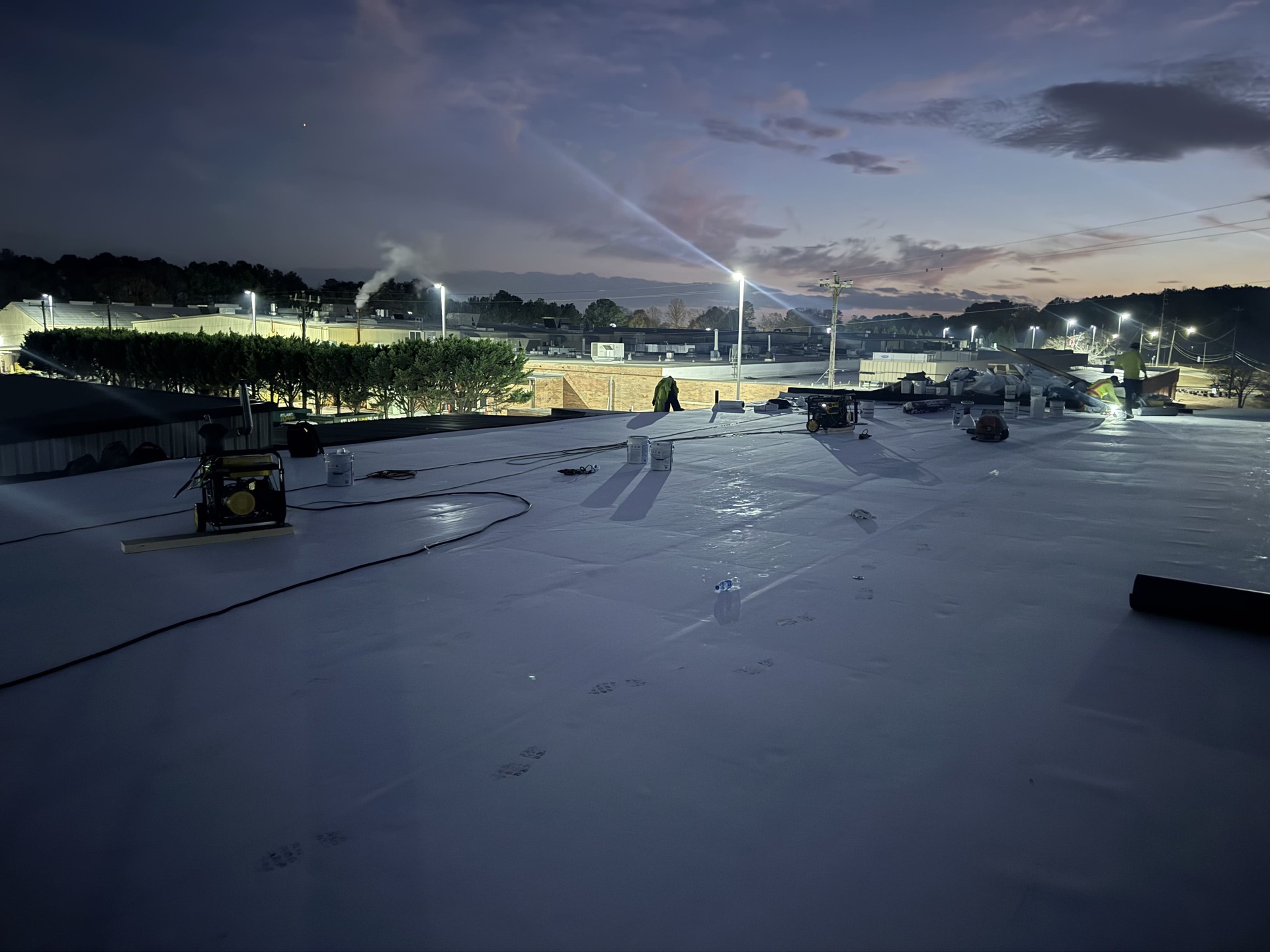
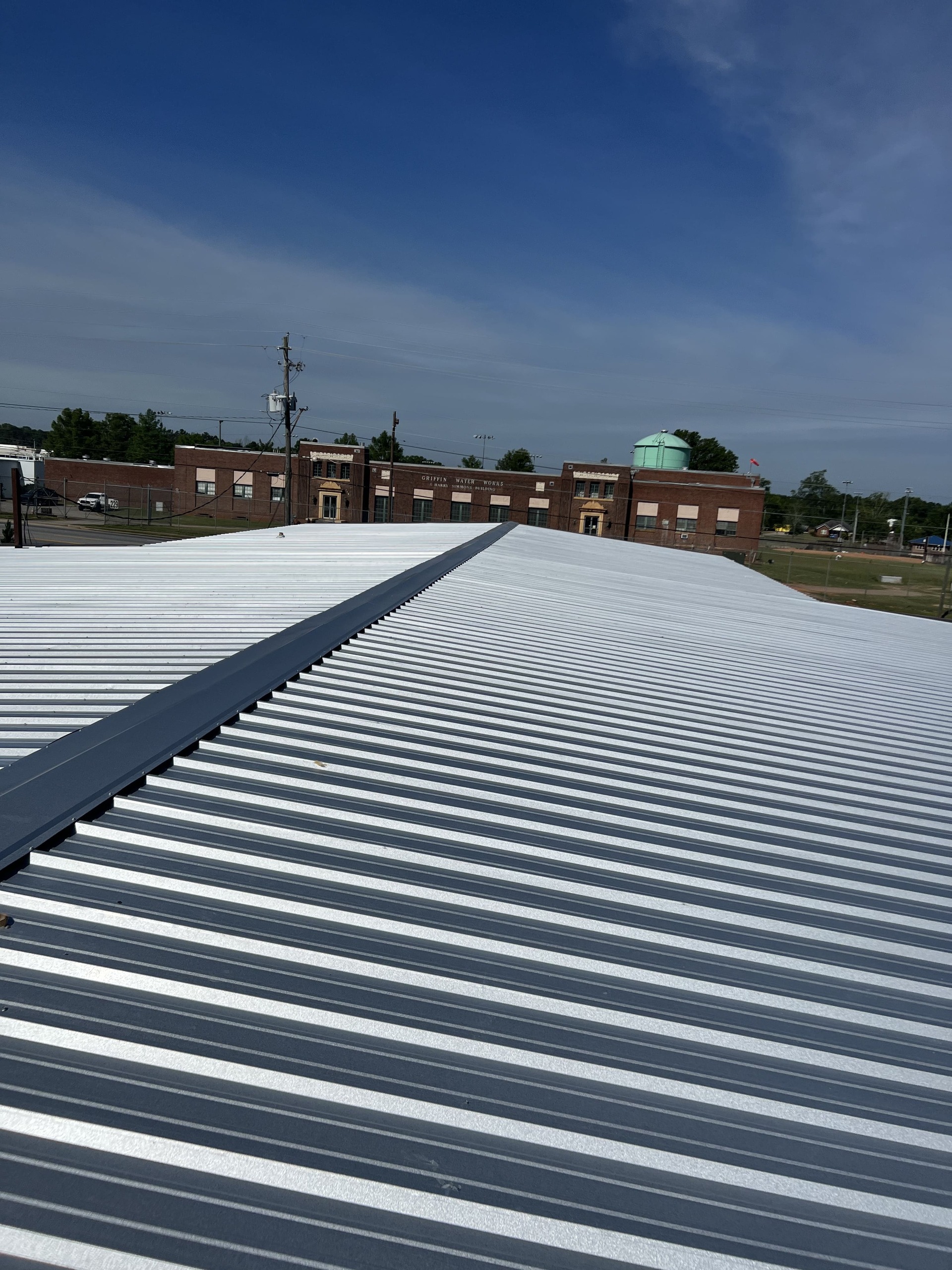
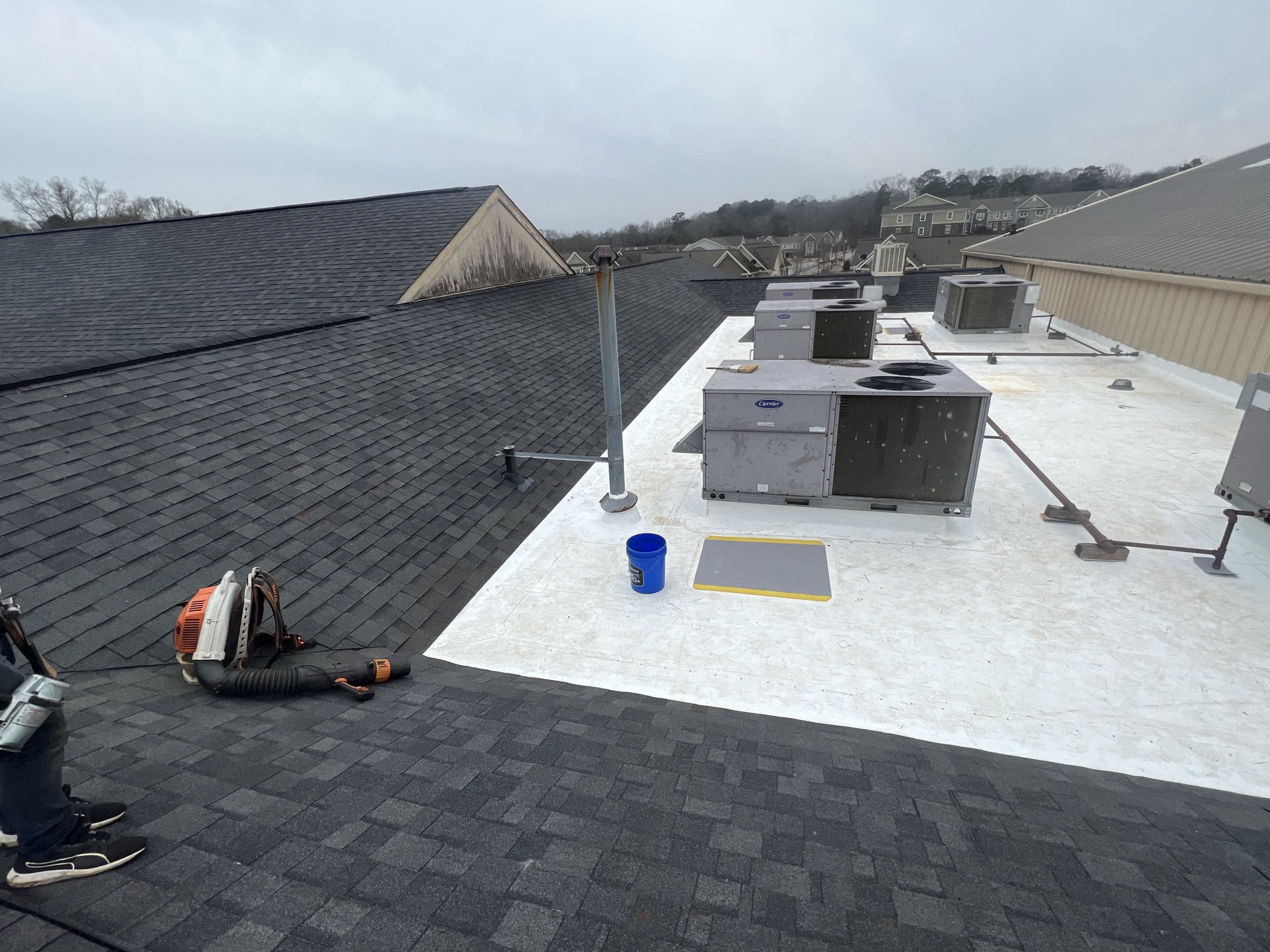
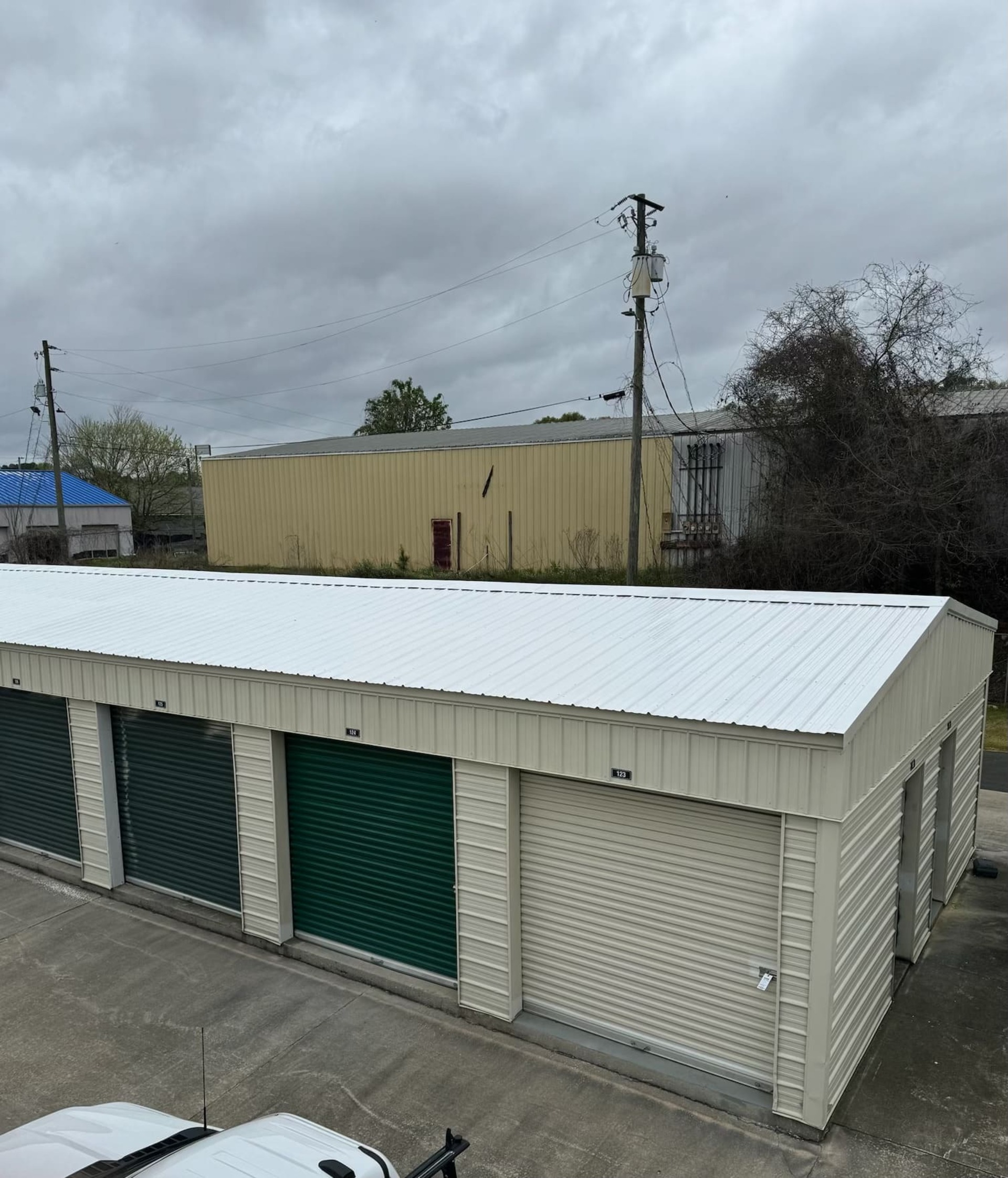
Commercial roofing systems in Chattanooga are constantly exposed to rainfall, humidity, and seasonal heat. Over time, traditional membranes can weaken at seams, flashing points, and drainage areas, allowing moisture to penetrate the roofing system. Spray polyurethane foam roofing, commonly called SPF roofing, offers a seamless alternative designed to eliminate many of those vulnerabilities.
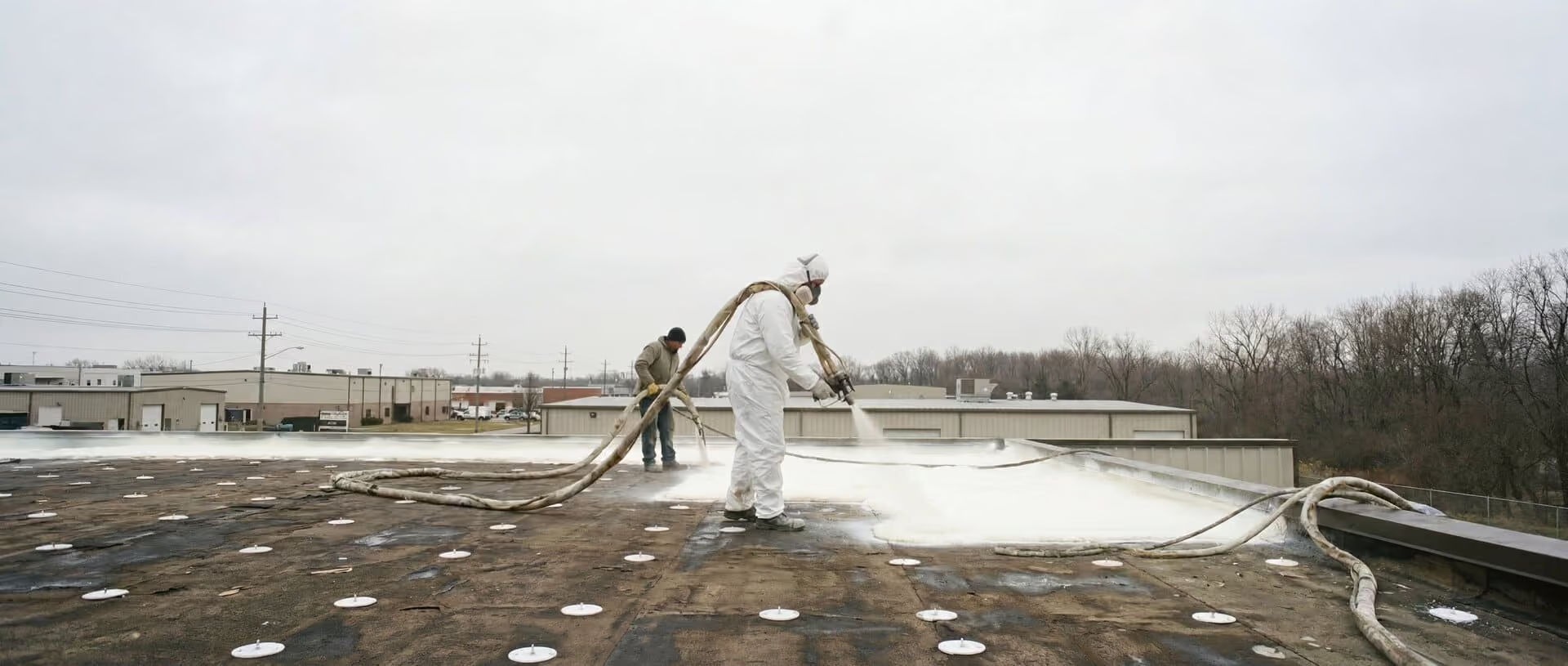
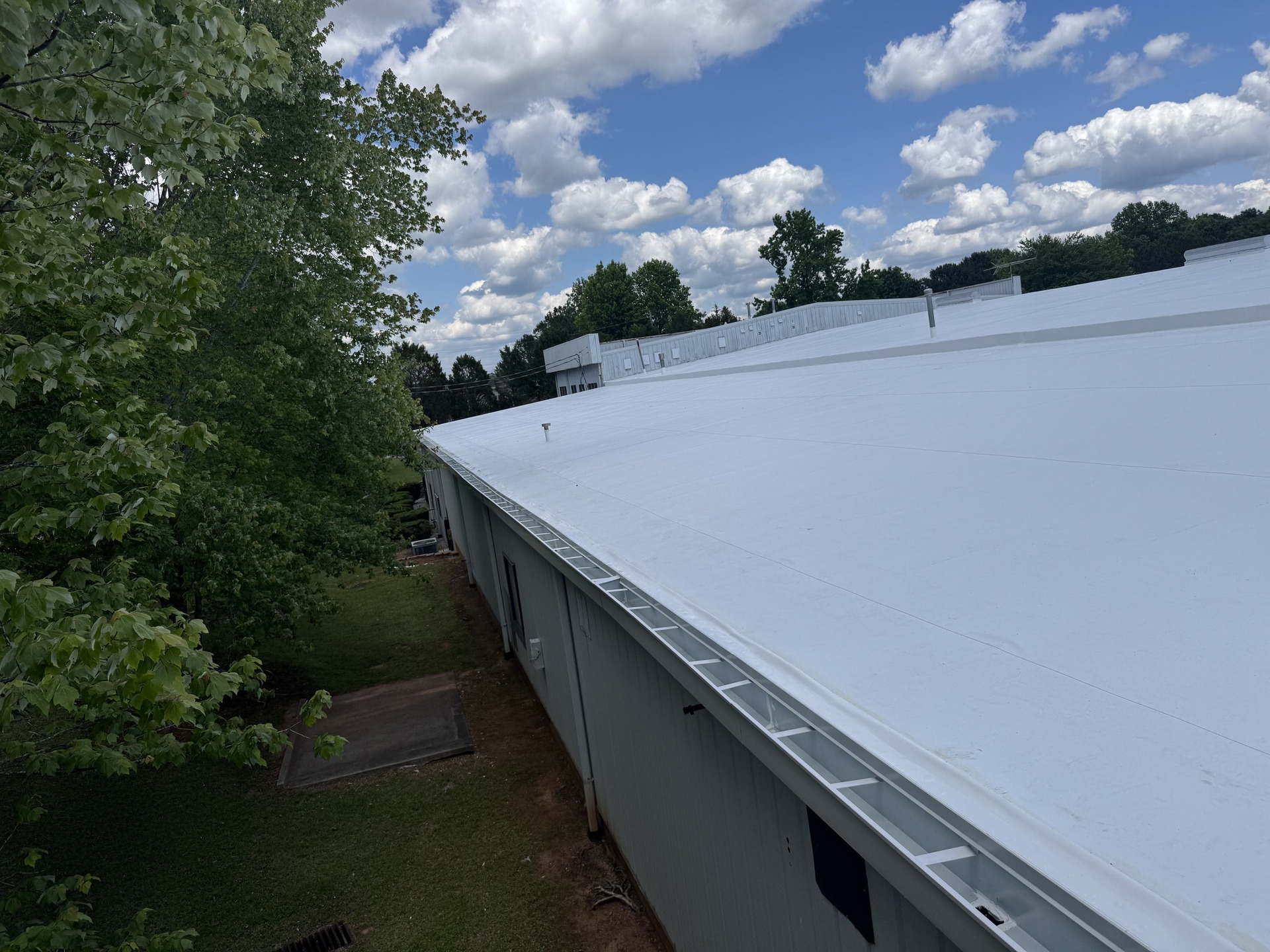
Unlike layered roofing materials, spray foam is applied as a liquid that expands into a continuous surface. This creates a watertight barrier that reduces the likelihood of leaks while adding insulation across the entire roof structure. Because the system adheres directly to the existing roof, it also eliminates many of the seam failures that occur with conventional membranes.
For Chattanooga property owners exploring restoration options, our experts at Jaco Roofing can install commercial spray foam roofing systems that strengthen aging roofs, improve insulation, and enhance water resistance.
Correcting Drainage and Ponding Water
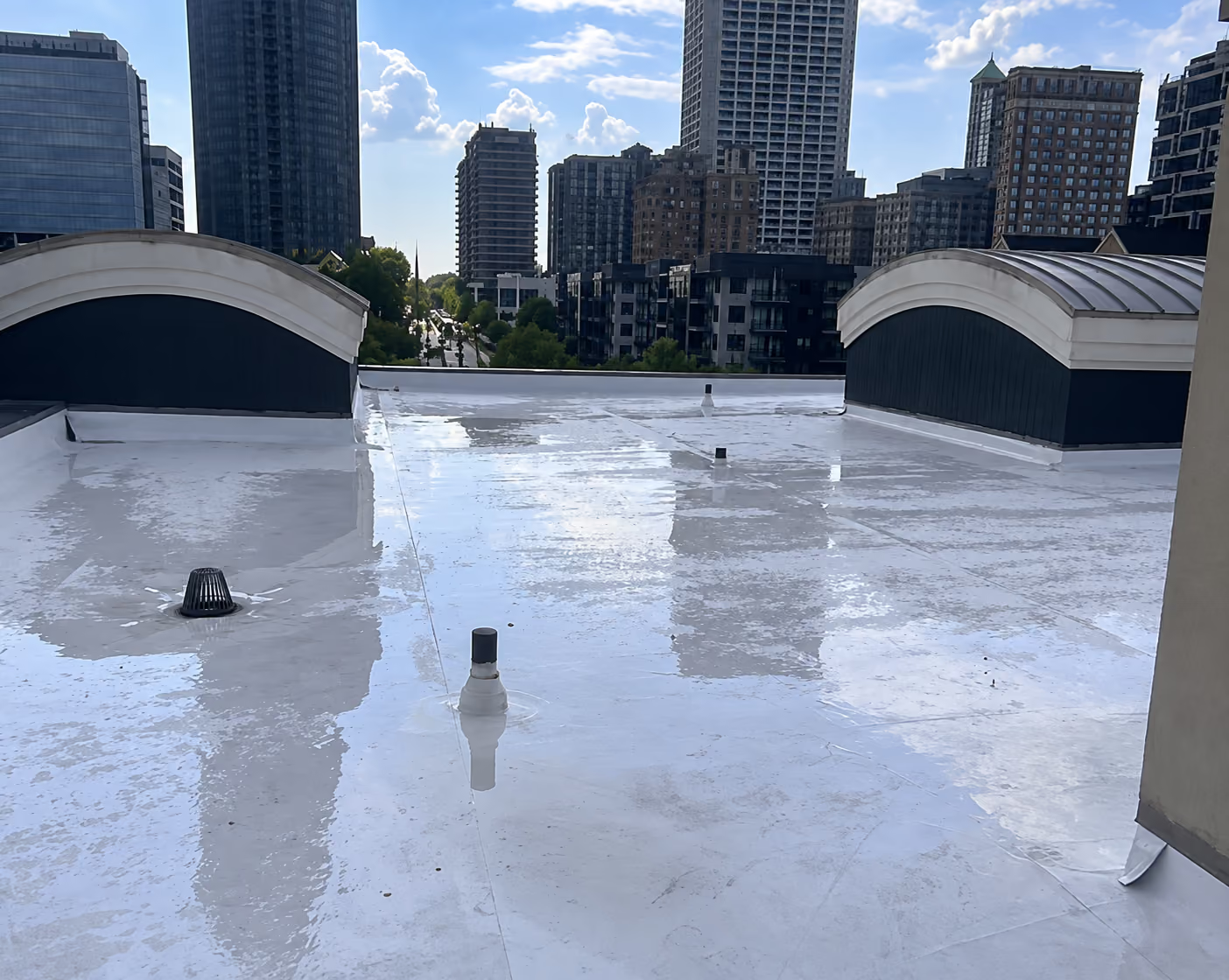
One of the most common challenges for flat and low-slope commercial roofs is ponding water. Over time, minor structural shifts or aging insulation can create low spots where water collects after heavy rainfall. In Chattanooga’s wet climate, these areas can accelerate roof deterioration.
Spray foam roofing offers a unique advantage because it can be applied to varying thicknesses. This allows experienced spray foam roofing contractors to reshape drainage slopes during installation, helping water flow toward drains rather than collecting on the roof surface.
By addressing drainage concerns while sealing the entire roof system, our spray foam installations can significantly reduce the risk of long-term moisture damage.
Energy Efficiency and Thermal Protection
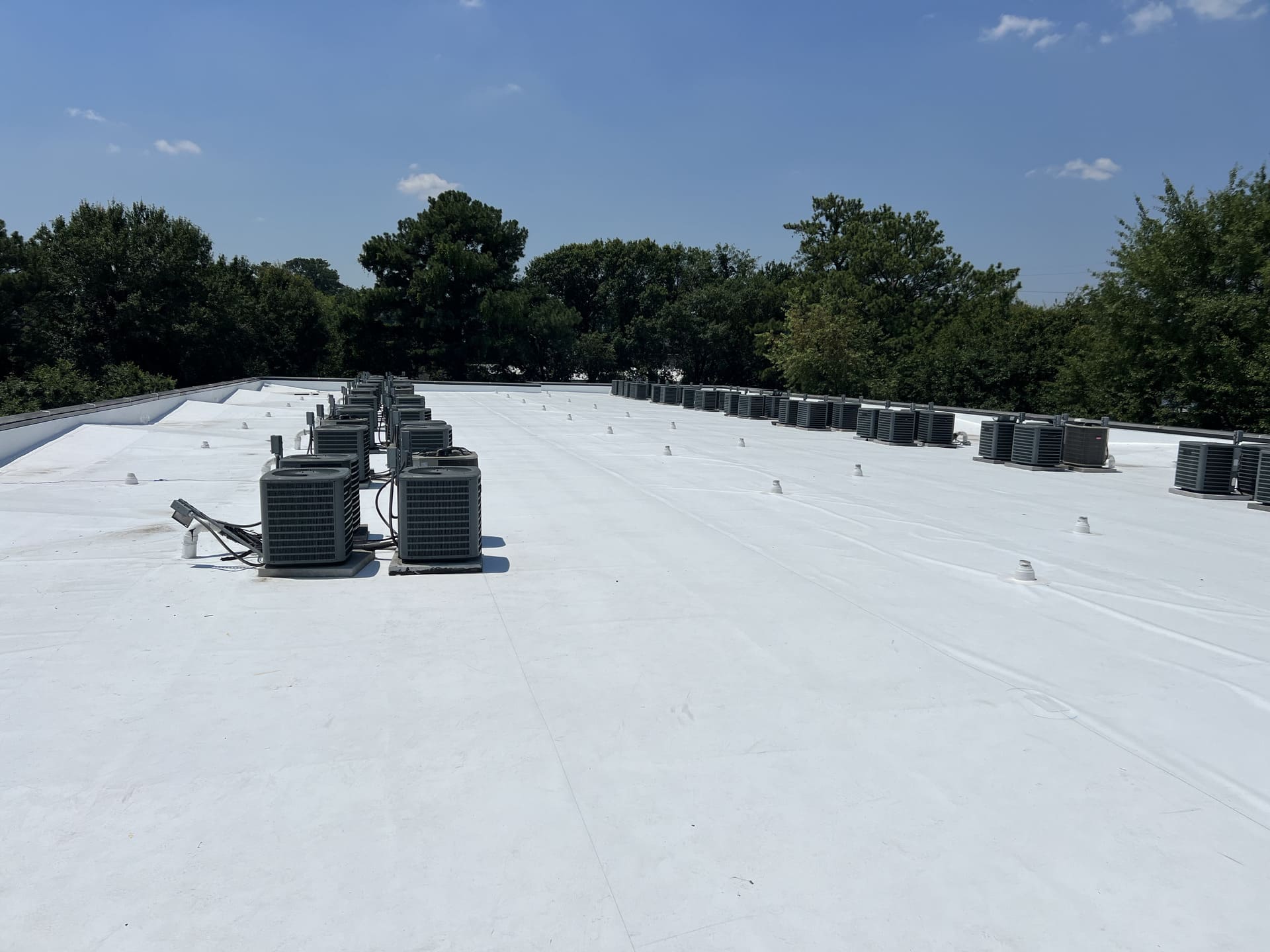
Another major benefit of spray foam roofing is insulation performance. SPF creates a continuous thermal barrier across the roof, limiting heat transfer into the building during Chattanooga’s hot summer months. Lower roof temperatures often translate into reduced cooling demand for warehouses, offices, and industrial facilities.
This energy efficiency is one reason many commercial property owners consider our spray foam when evaluating long-term roofing solutions. The combination of insulation, waterproofing, and structural reinforcement allows spray foam systems to perform as both a roofing surface and an energy-saving upgrade.
Professional Spray Foam Installation
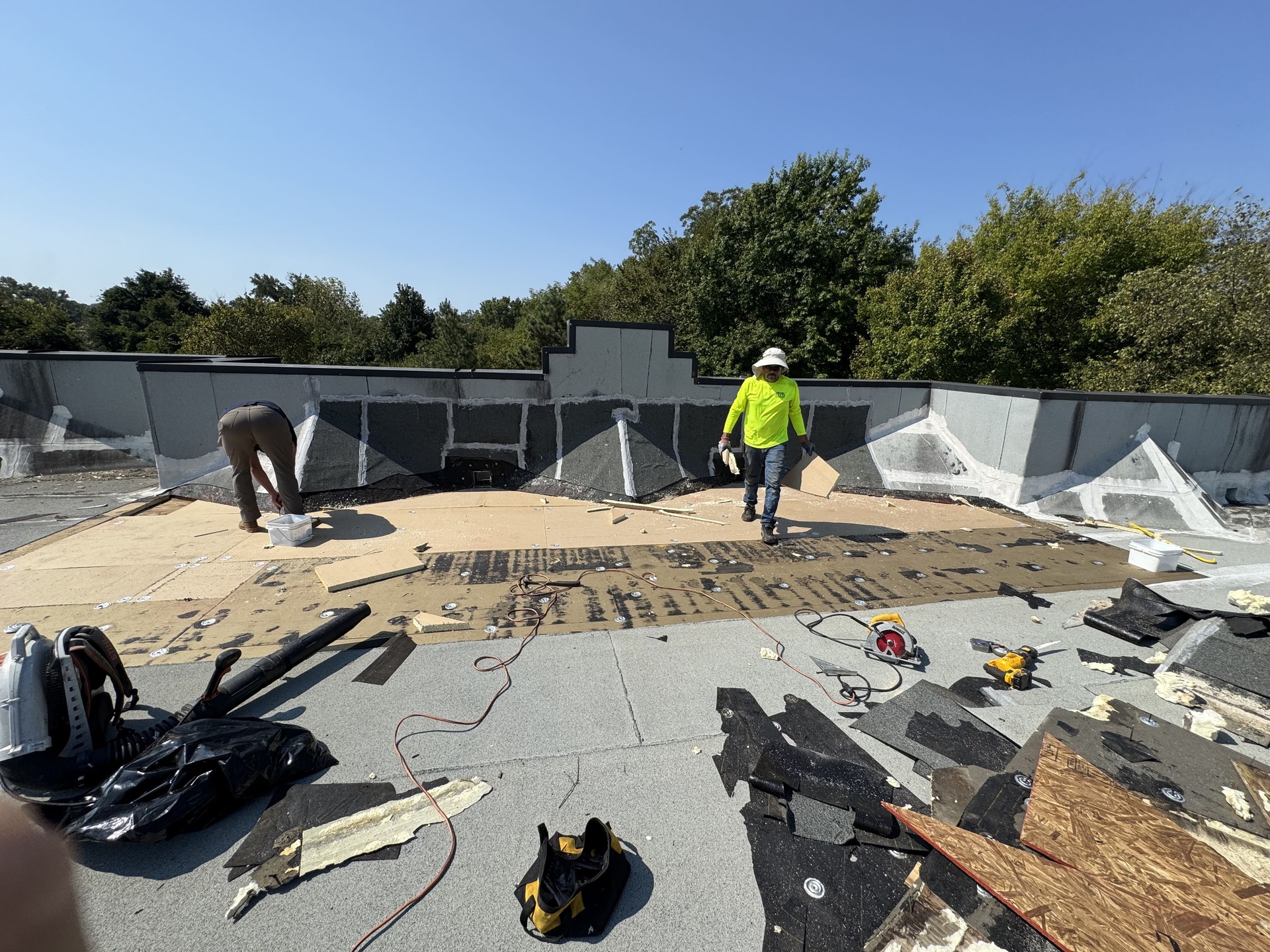
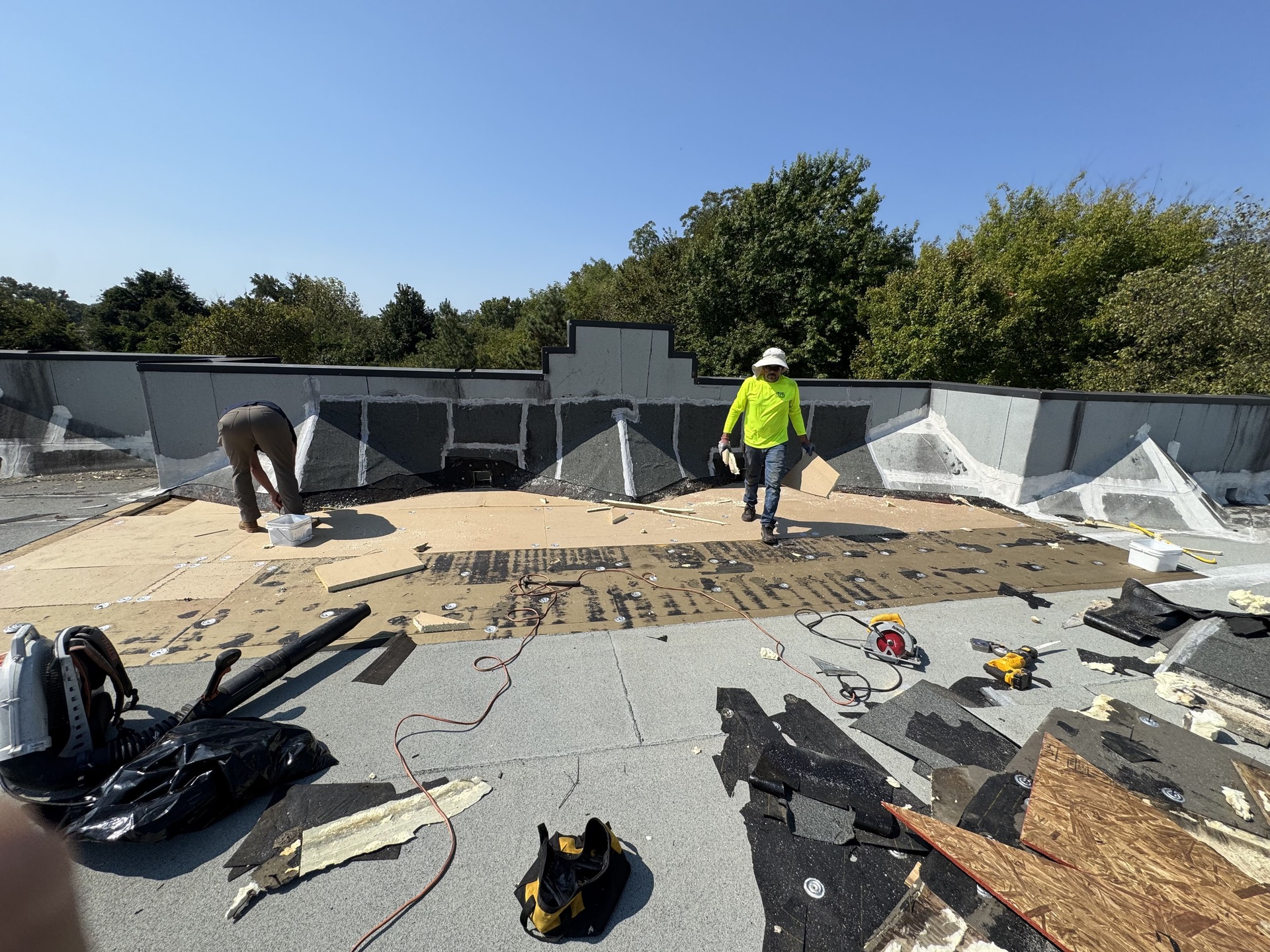
Successful SPF installation depends heavily on preparation and experience. The roof surface must be properly cleaned and repaired before foam is applied to ensure strong adhesion and long-term durability. Once the foam layer is installed, protective coatings are added to shield the system from ultraviolet exposure and environmental wear.
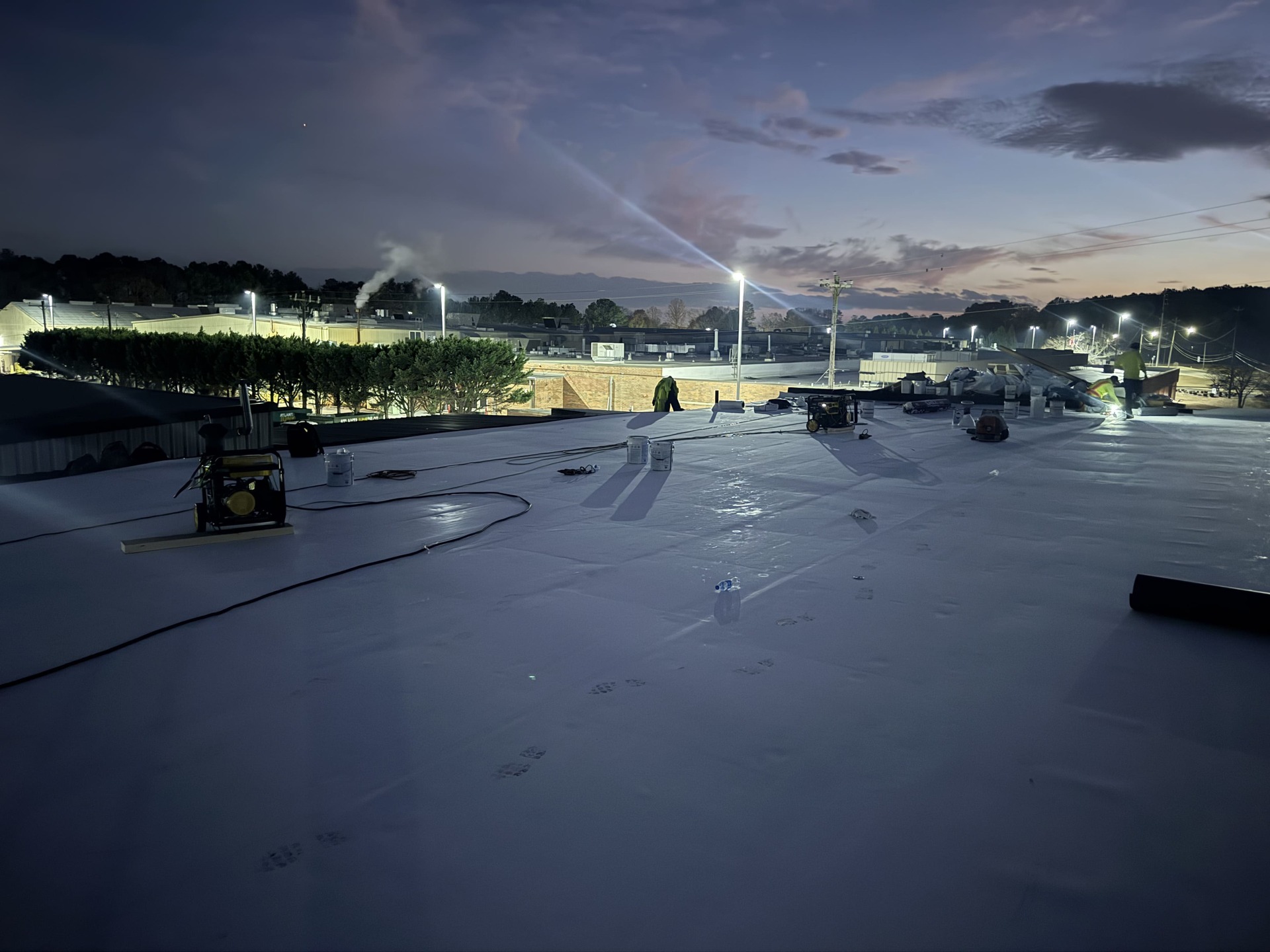
With extensive experience installing commercial spray foam roofing, our crew at Jaco evaluates existing roof conditions to determine whether SPF systems are the right solution for a building. If you’re ready to get started today, contact our team!