
Commercial PVC roofing is commonly specified for facilities across Georgia and Tennessee where chemical exposure, grease discharge, or heavy rooftop activity are part of daily operations. Restaurants, food processing plants, manufacturing buildings, and specific industrial properties benefit from PVC's resistance to oils and contaminants that can deteriorate other membrane systems. The material is formulated to maintain flexibility while resisting chemical breakdown, helping preserve membrane integrity in challenging conditions.
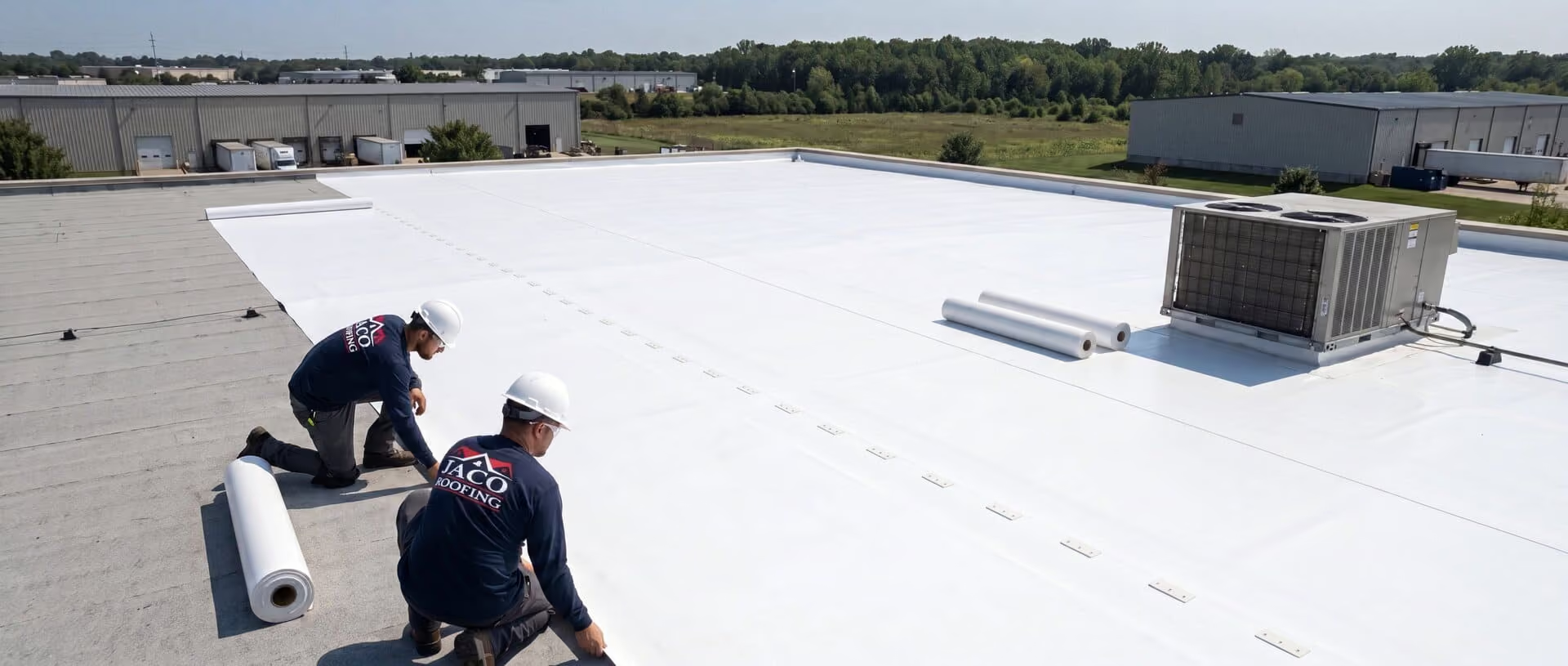
PVC Roofing for Commercial Structures in Georgia & Tennessee
Platinum-certified commercial PVC roofing backed by a 20 year workmanship guarantee.
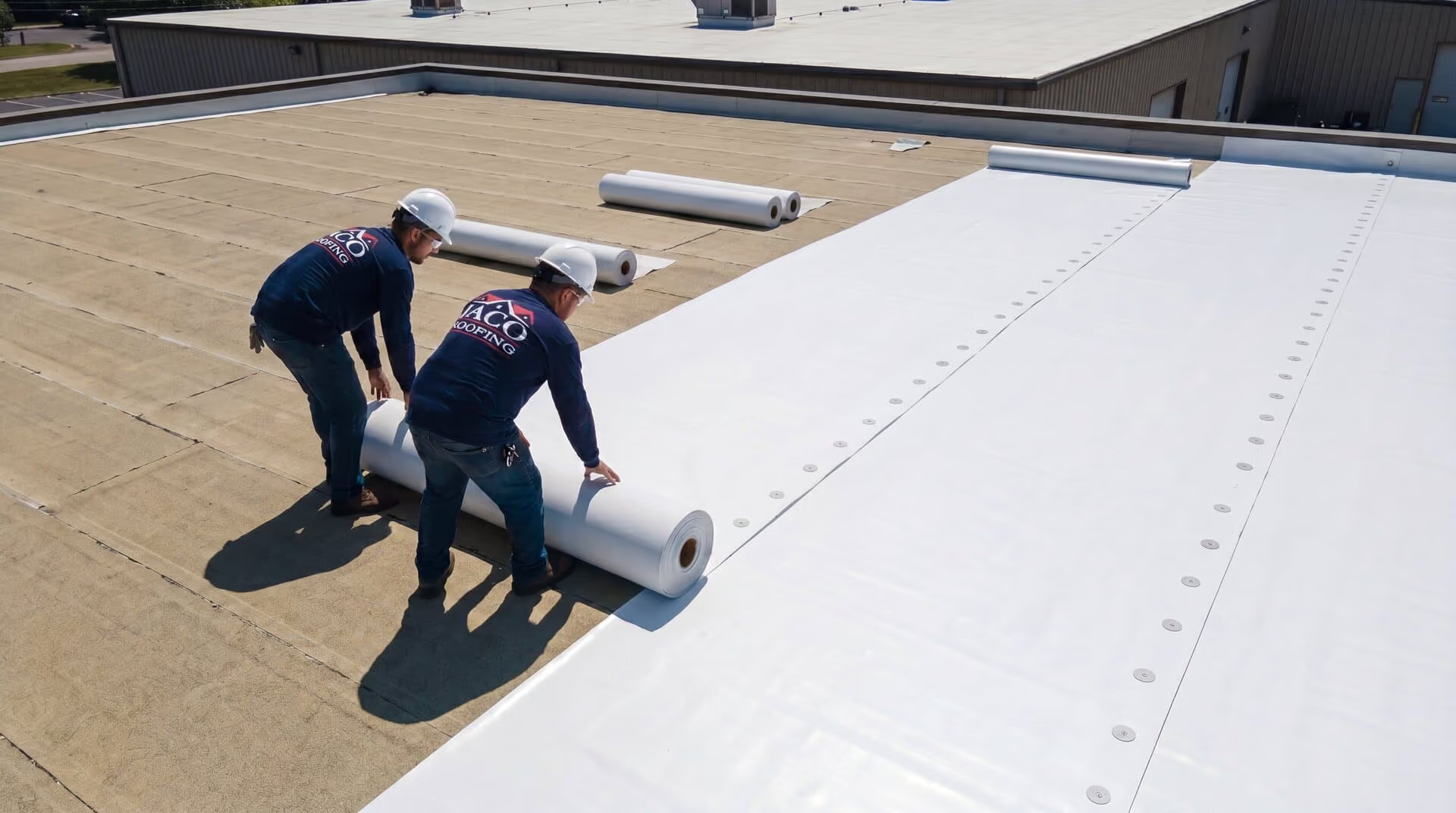
Durable Chemical‑Resistant Roofing for Challenging Environments
Compatibility With Complex Rooftop Layouts
Commercial facilities throughout Atlanta and the surrounding region often include HVAC units, exhaust systems, skylights, and multiple penetration points. PVC membranes are well-suited for these complex layouts because the material can be precisely cut and heat-welded around transitions. Proper detailing at penetrations and parapet walls reduces vulnerability at high-risk leak locations. Careful coordination between membrane layout and rooftop equipment placement is essential to maintaining long-term watertight integrity.
Heat-Welded Seam Performance
One of the defining characteristics of PVC commercial roofing is its heat-welded seam construction. During installation, membrane seams are thermally fused to create a continuous, bonded connection rather than relying solely on adhesives. This welding process produces a watertight seal that withstands expansion and contraction and long-term exposure to moisture common throughout Covington and greater Georgia. When properly installed, welded seams contribute to consistent waterproofing performance across the entire roof surface.
Structural Integration and Installation Standards
PVC systems require careful evaluation of insulation depth, deck stability, and drainage configuration before installation begins. Membrane thickness is selected based on building use, wind exposure, and anticipated foot traffic. Flashing transitions around penetrations, edge metal integration, and fastening patterns must align with manufacturer specifications to protect warranty eligibility and system longevity.
Because PVC membranes are often used on low-slope commercial structures throughout Chattanooga and Tennessee, proper slope design and drainage planning remain critical. Standing water can shorten the lifespan of any roofing system if not addressed through correct installation and maintenance practices.
Long-Term Value and Lifecycle Considerations
PVC membranes are known for durability, reflectivity, and resistance to environmental stress. Their reflective surface can help reduce heat absorption in warm climates, improving energy performance when paired with adequate insulation. Routine inspections and preventative maintenance further support long-term reliability.
Why Choose Jaco For PVC Roofing?
If your commercial property requires a membrane system engineered for chemical resistance and strong seam integrity, request a proposal from Jaco. Our team will assess structural conditions, operational demands, and environmental exposure to determine whether PVC roofing is the appropriate solution for your building. Contact us today to get started!
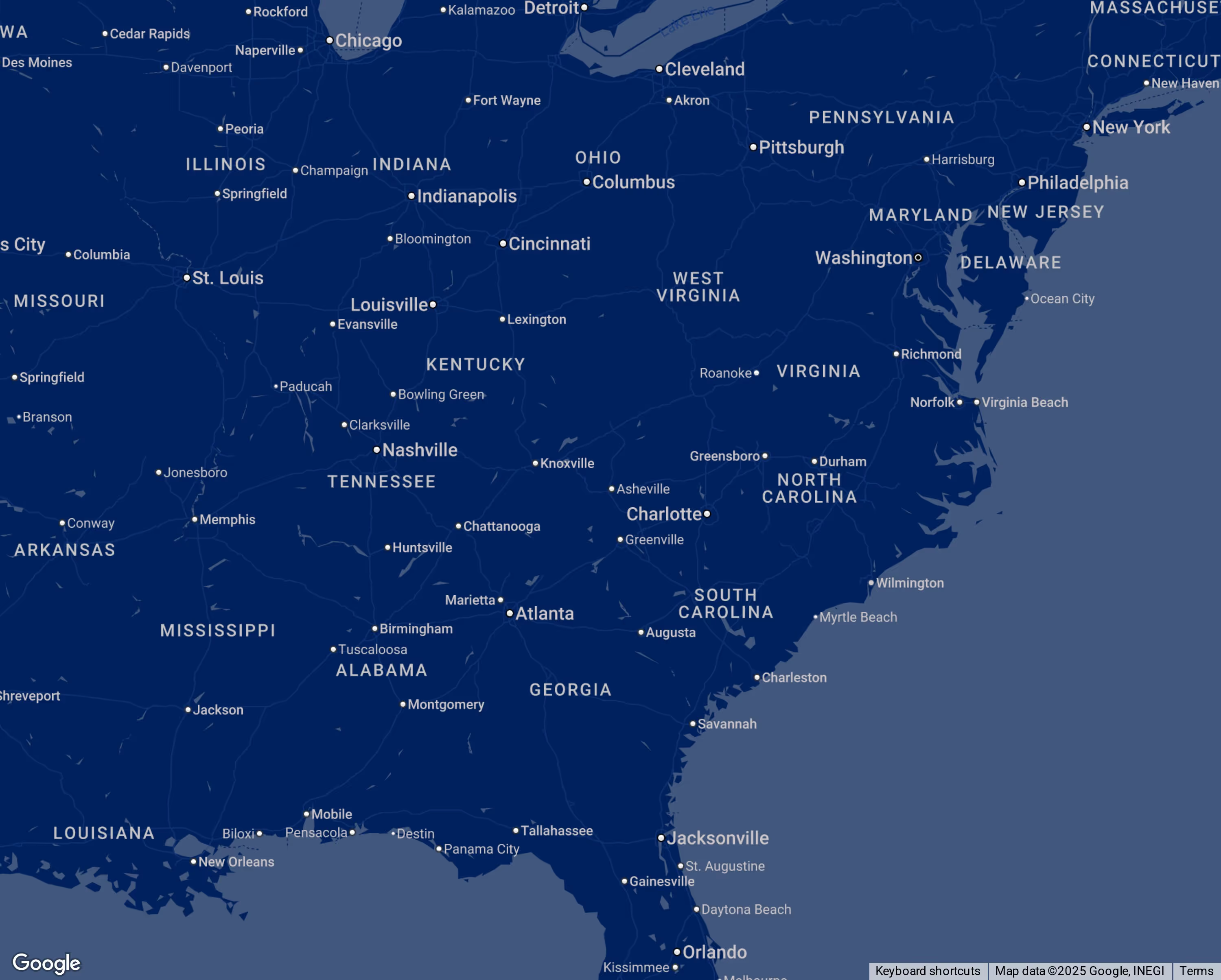
Areas We Serve
Featured ProjectsAcross Georgia & TennesseE
Featured Projects
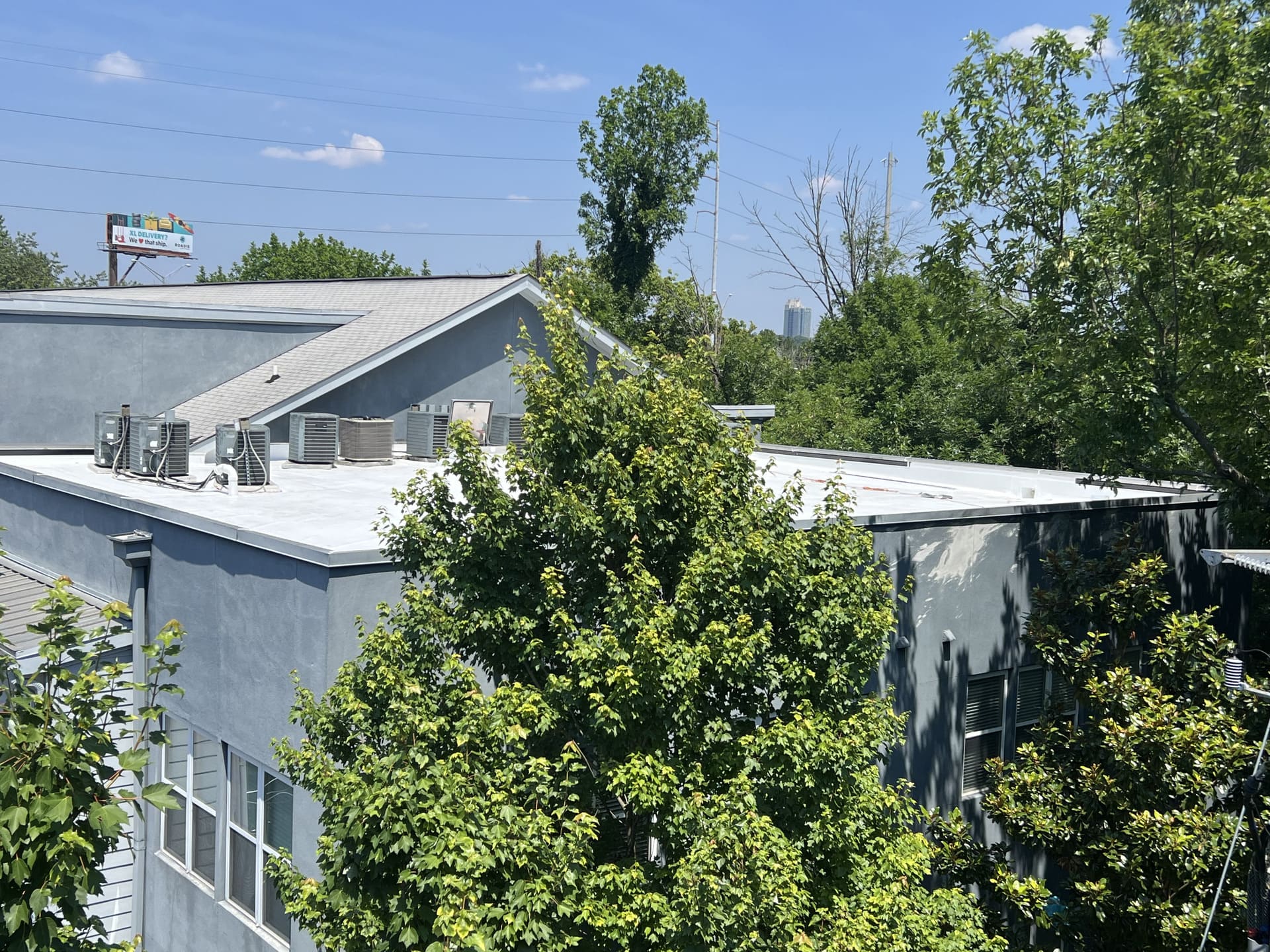
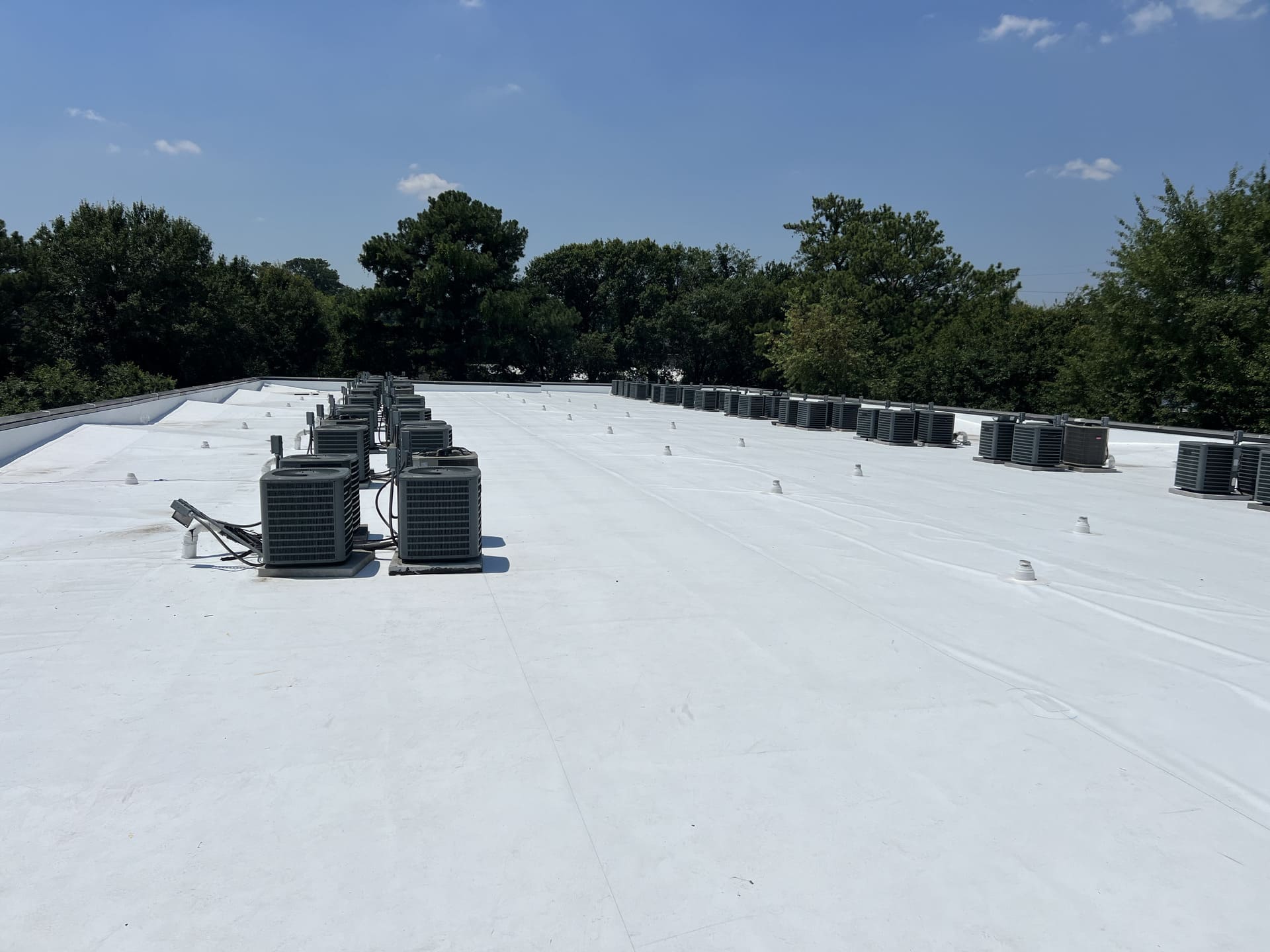
Atlanta, GA
A white single-ply membrane roof on a loft building, worked in around a row of rooftop HVAC units and tied into the adjoining sloped sections.
No items found.
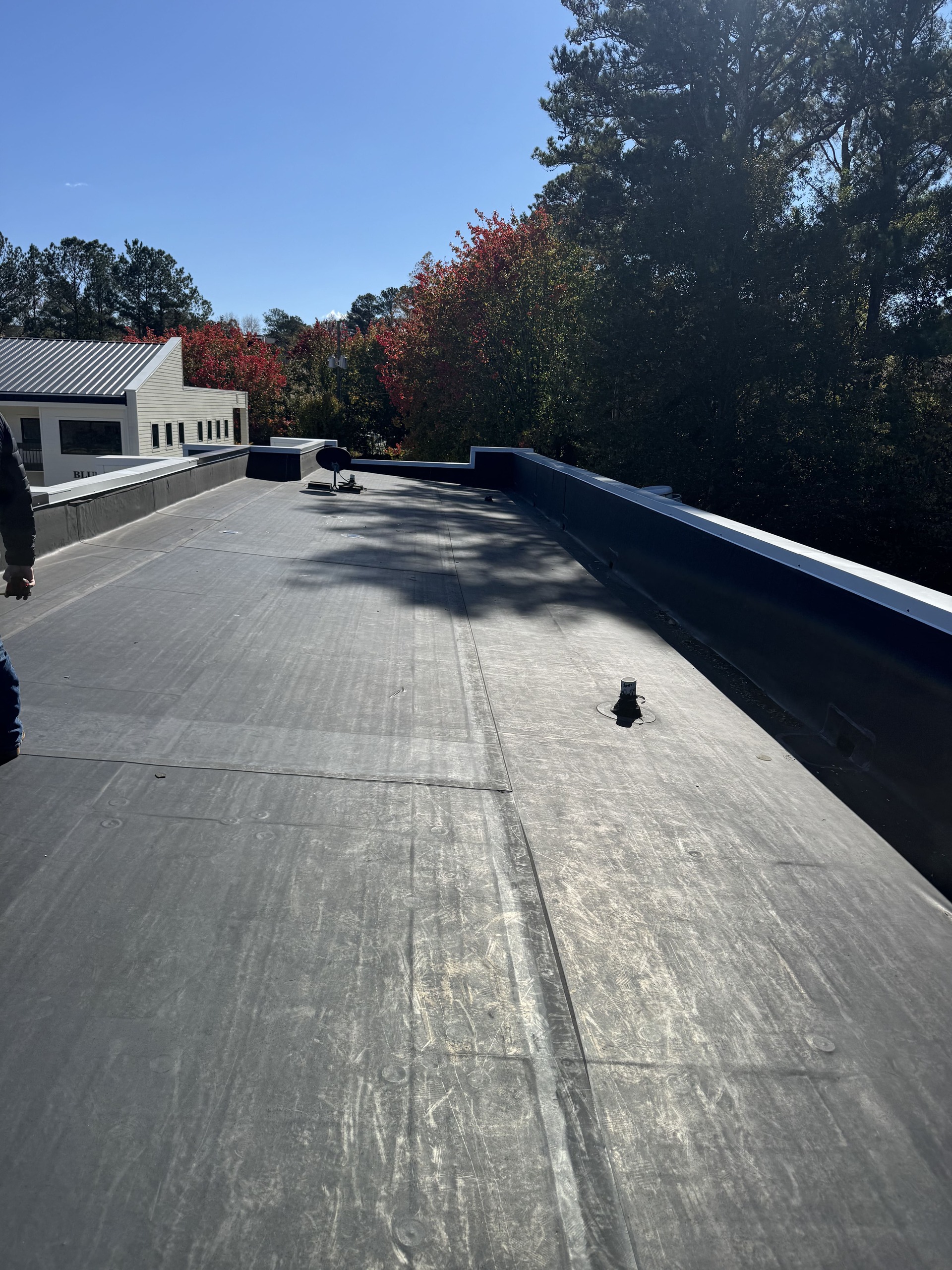
Peachtree City, GA
A flat, charcoal-gray field framed by dark coping � understated, resilient, and engineered to outlast the seasons.
No items found.
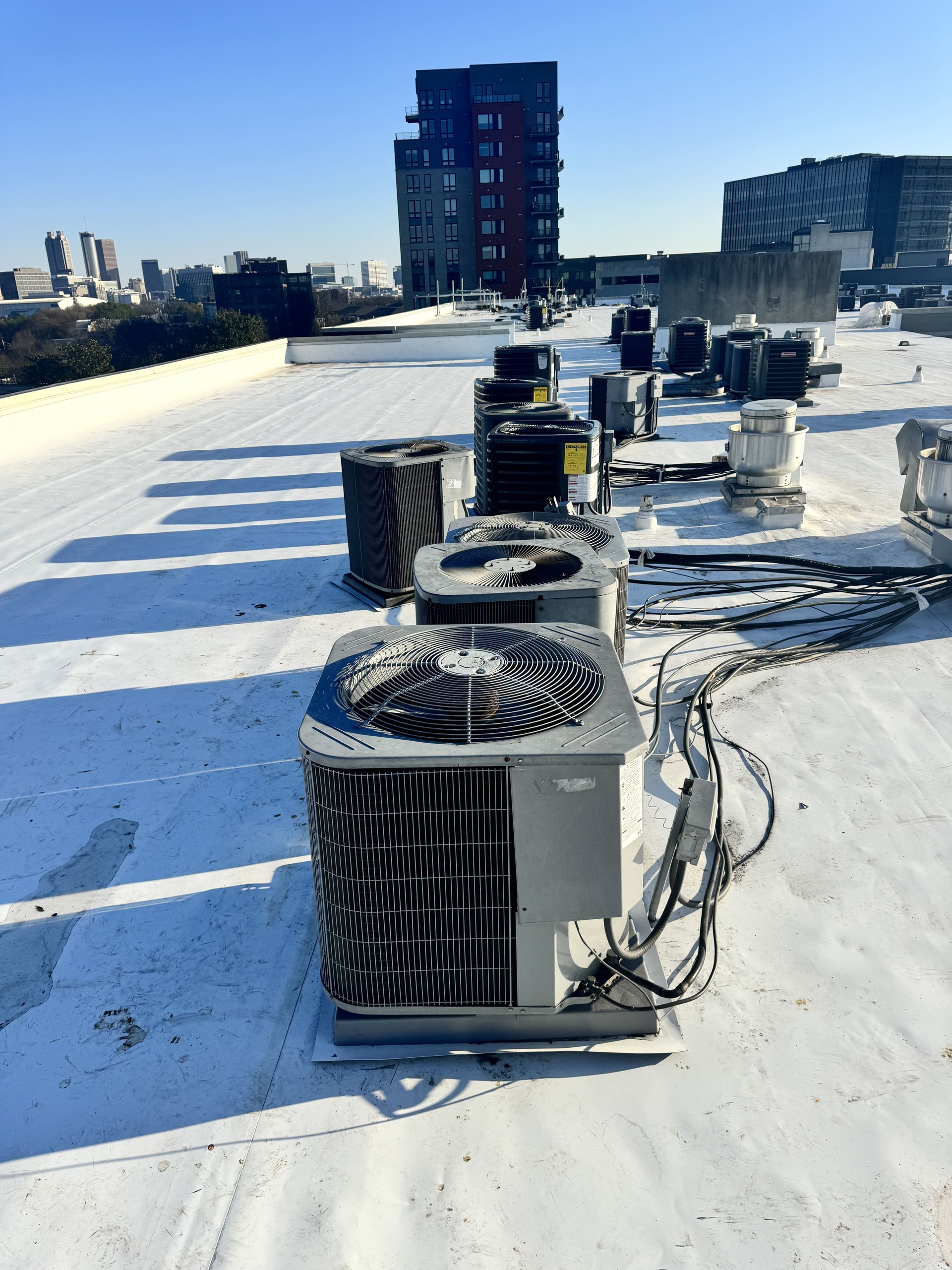
Atlanta, GA
A large-scale commercial roof spanning a multi-story building, with clean tie-ins around every rooftop unit and a finish built to reflect heat and cut cooling costs.
No items found.
Stockbridge, GA
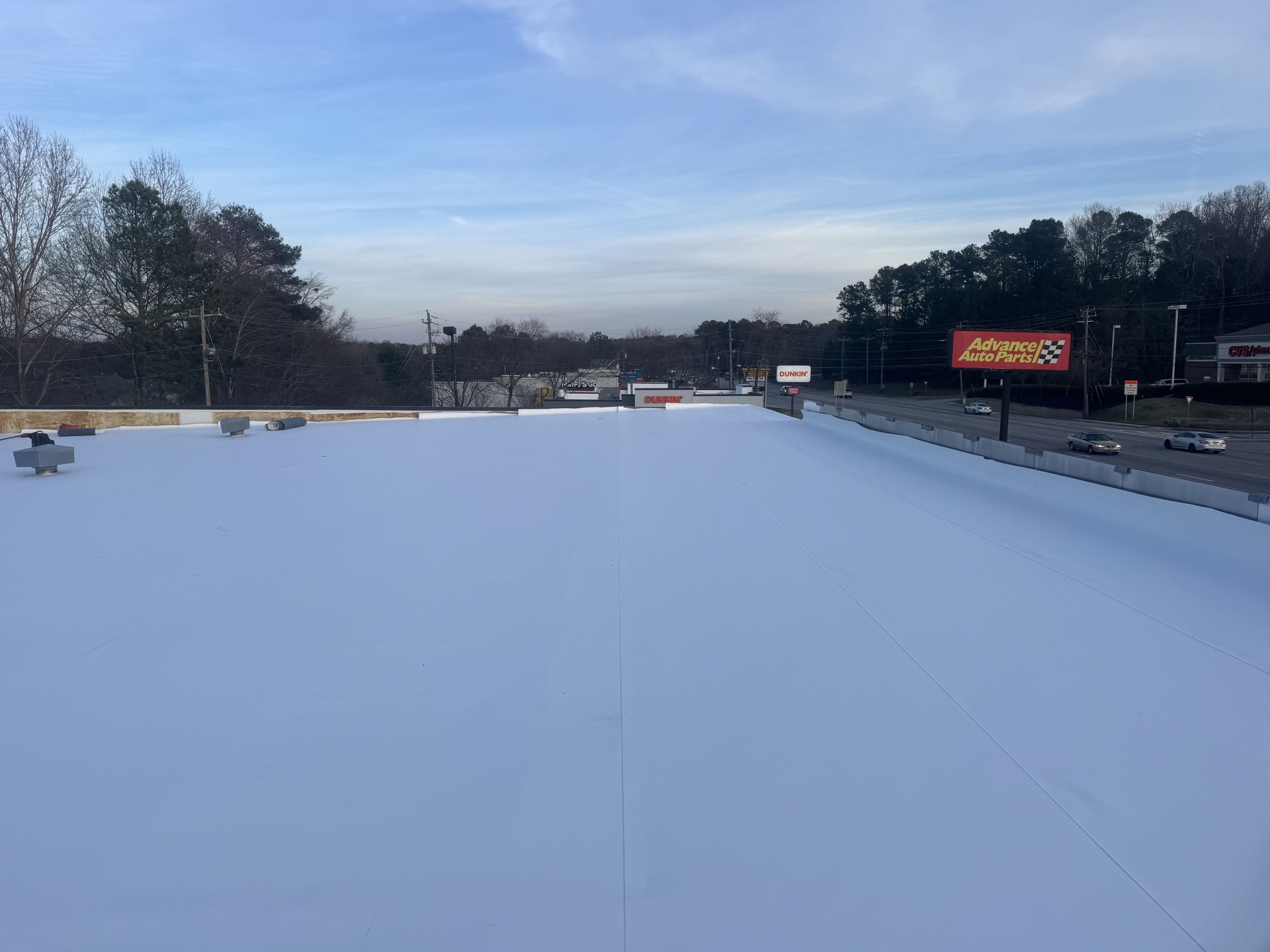
A completed roofing project for an Advance Auto Parts location, finished edge to edge with a smooth field and clean parapet work along a high-traffic corridor.
No items found.
Conyers, GA
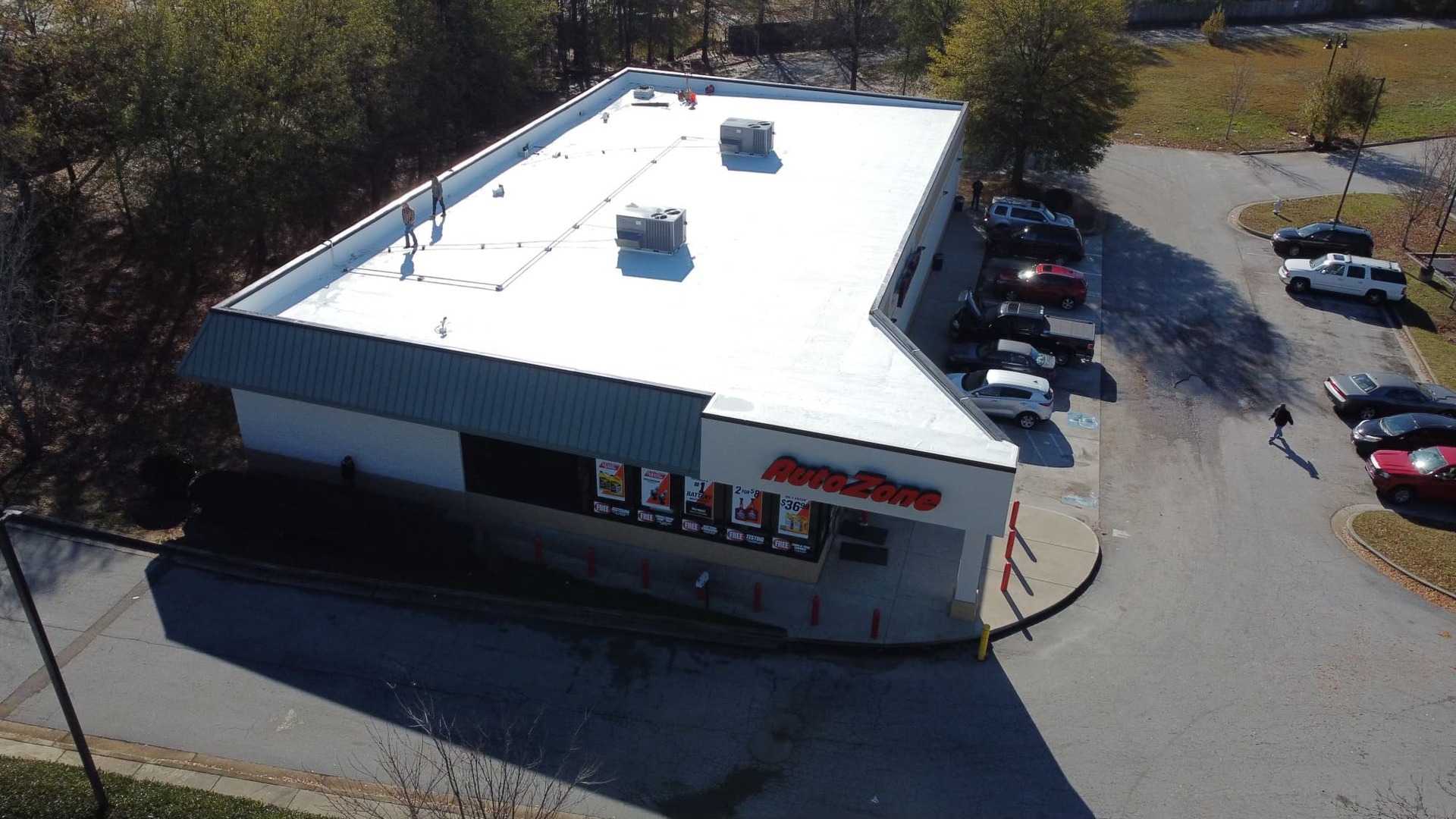
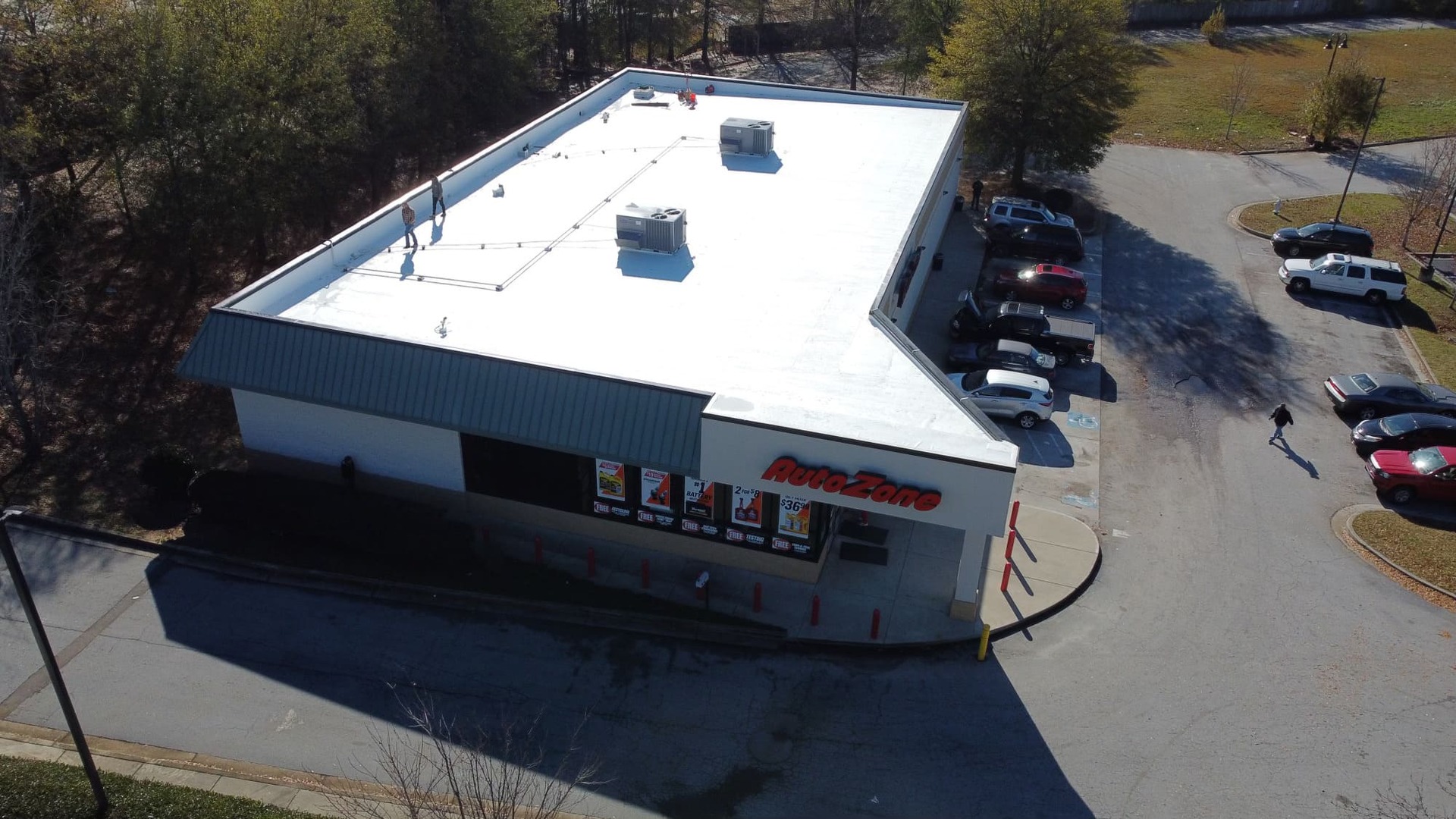
A bright white single-ply membrane roof on an AutoZone location, with clean tie-ins around each rooftop unit and a reflective surface that helps hold down cooling costs.
No items found.
Smyrna, GA
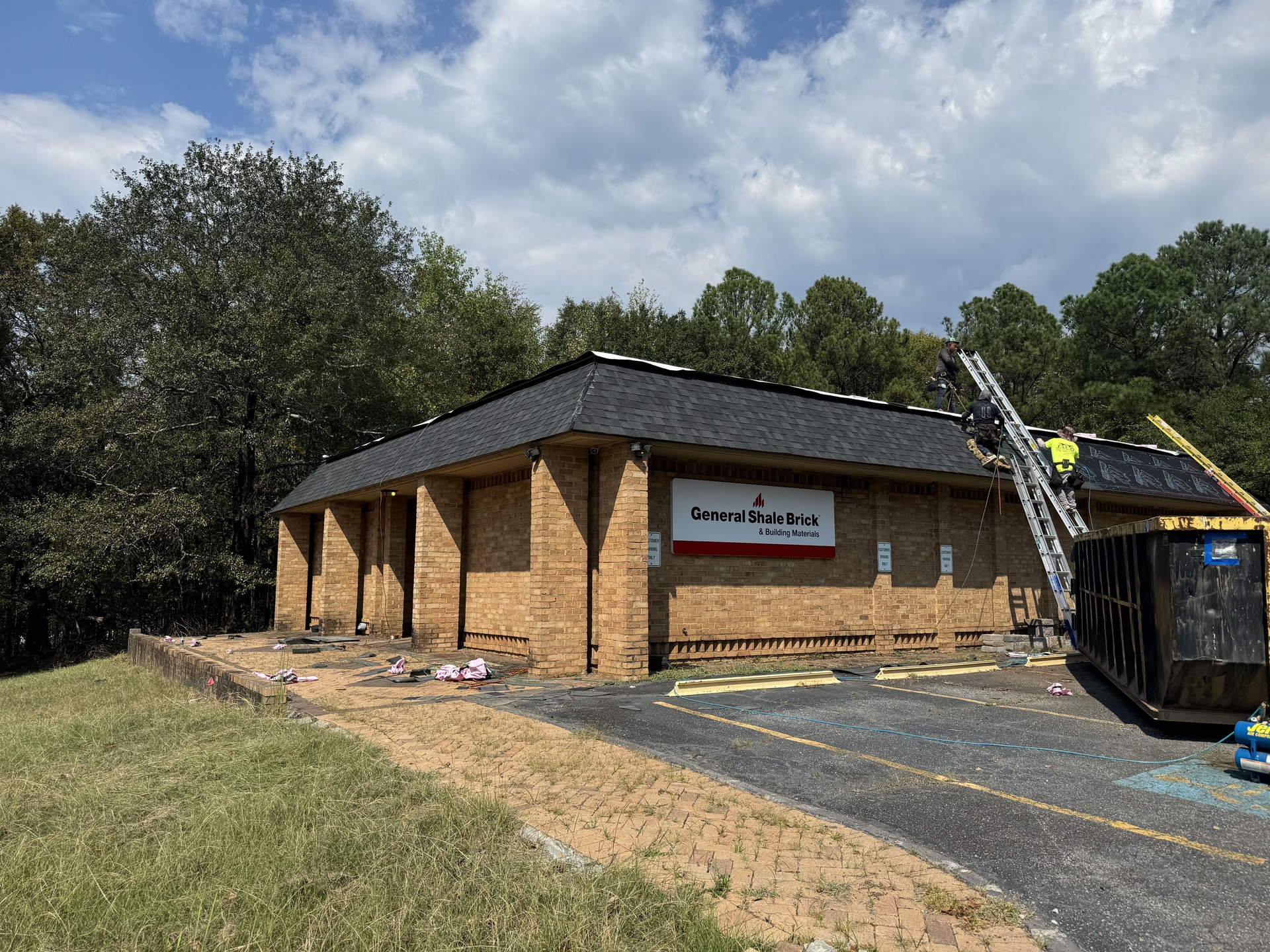
A re-roof on a brick sales office, with fresh dark shingles wrapping the mansard edge and a clean low-slope field behind it.
No items found.
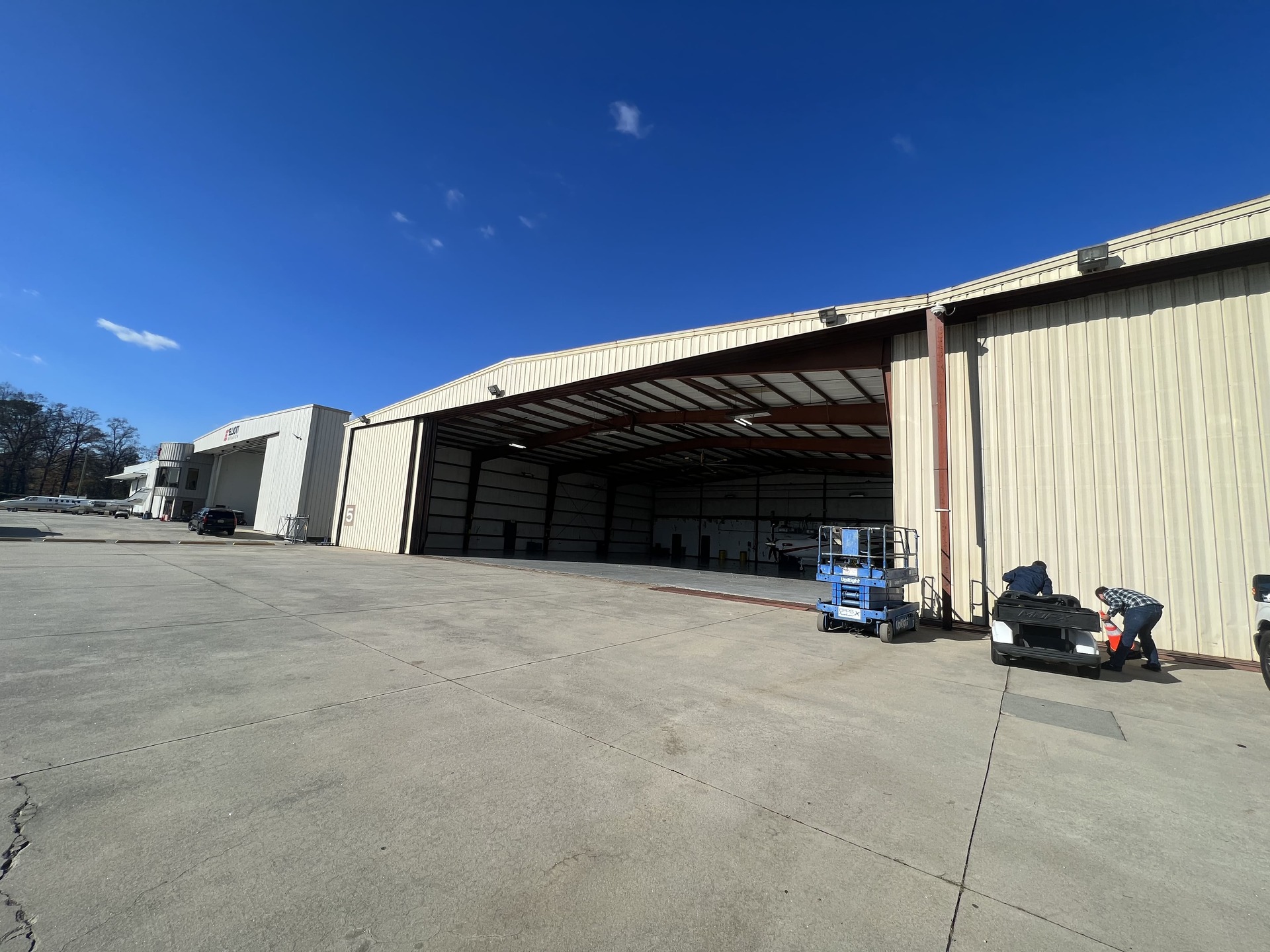
Atlanta, GA
Ribbed metal panel roofs across a row of airport hangars, with long panel runs and a reflective silver finish from ridge to eave.
No items found.
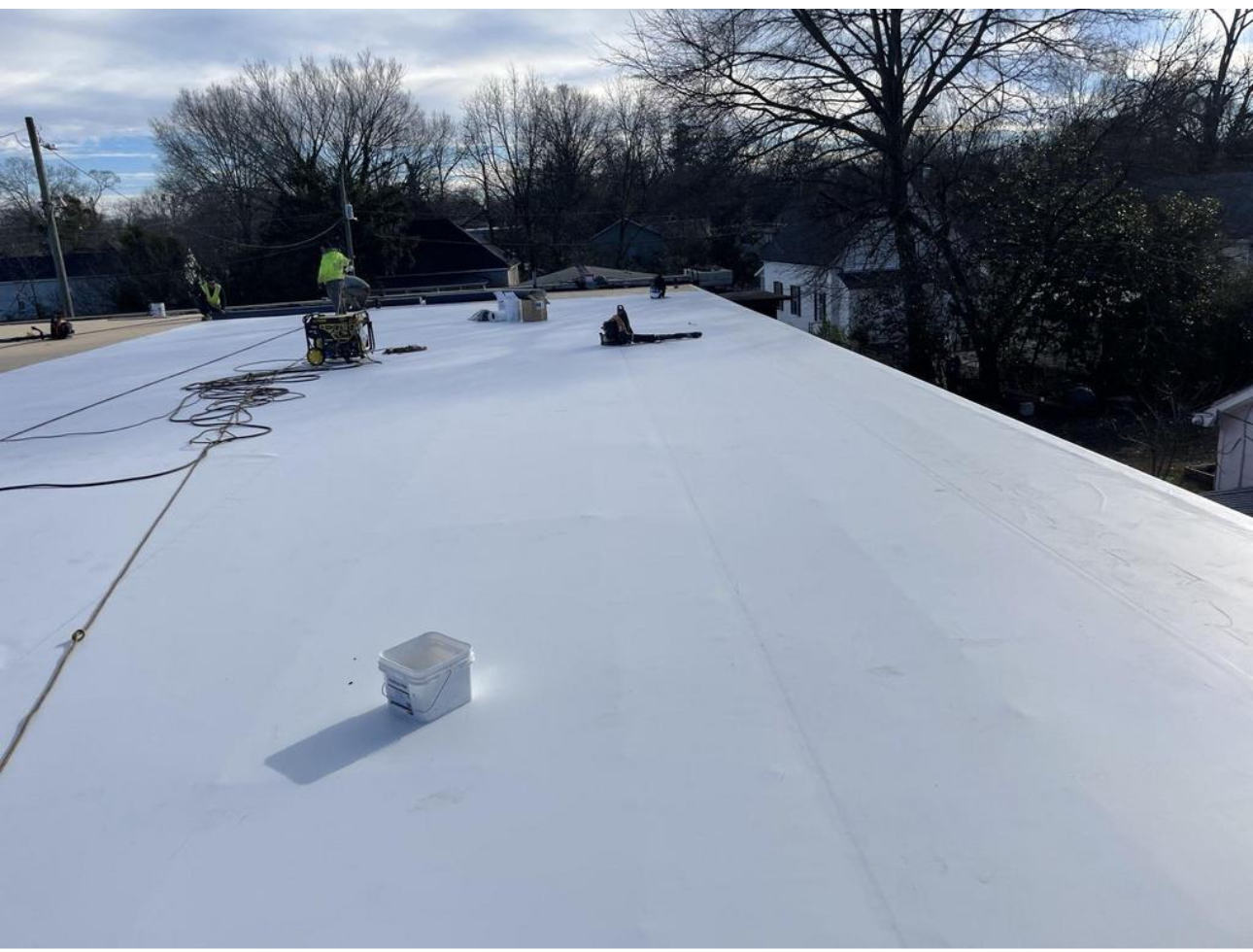
Griffin, GA
A tear-off and new white TPO membrane on a grocery store, replacing the worn low-slope roof with a clean, heat-welded field that reflects sunlight.
No items found.
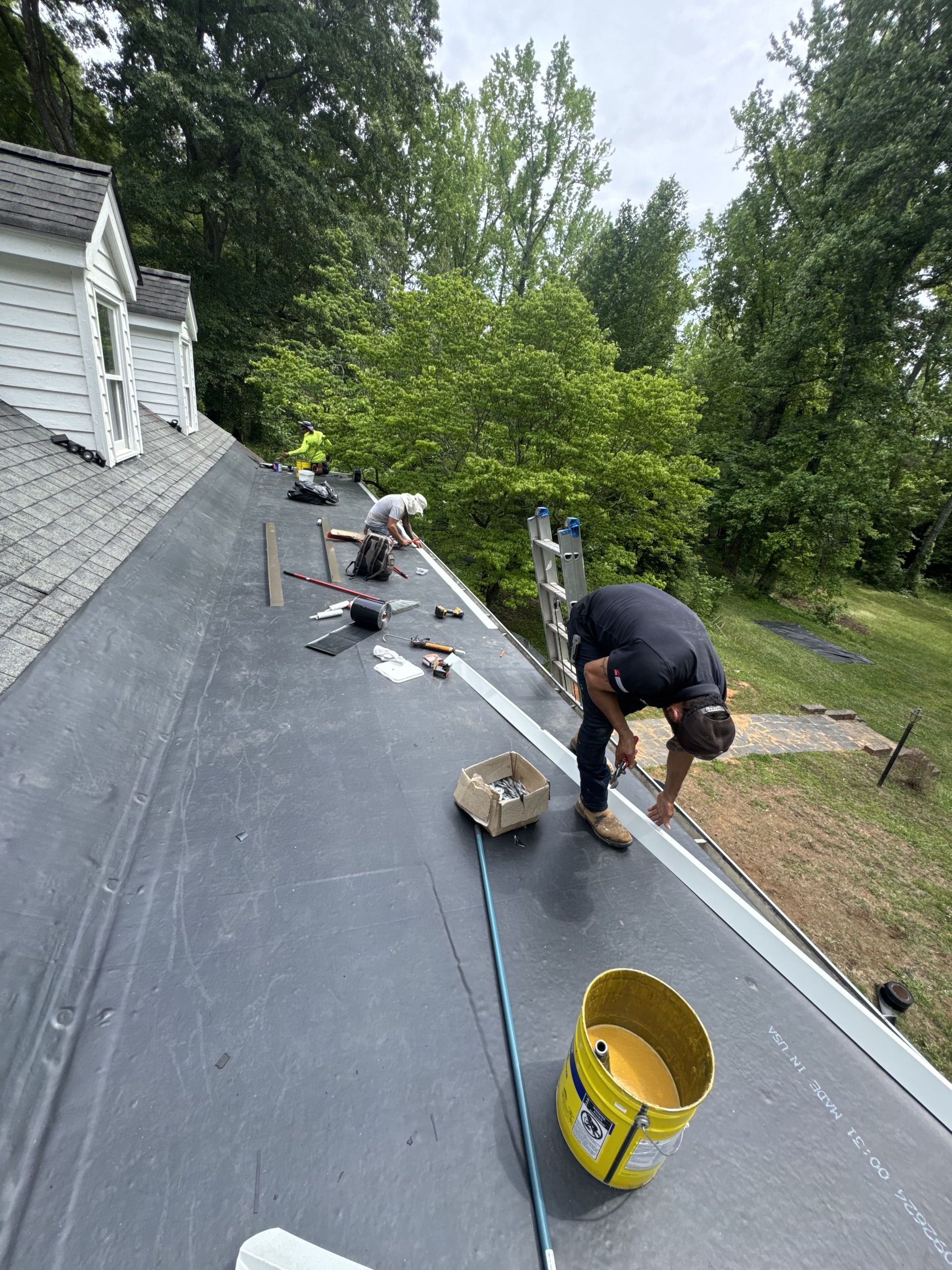
Atlanta, GA
A black EPDM rubber membrane on a low-slope porch roof, laid out flat with new metal edging and tied cleanly into the adjoining shingle roof.
No items found.
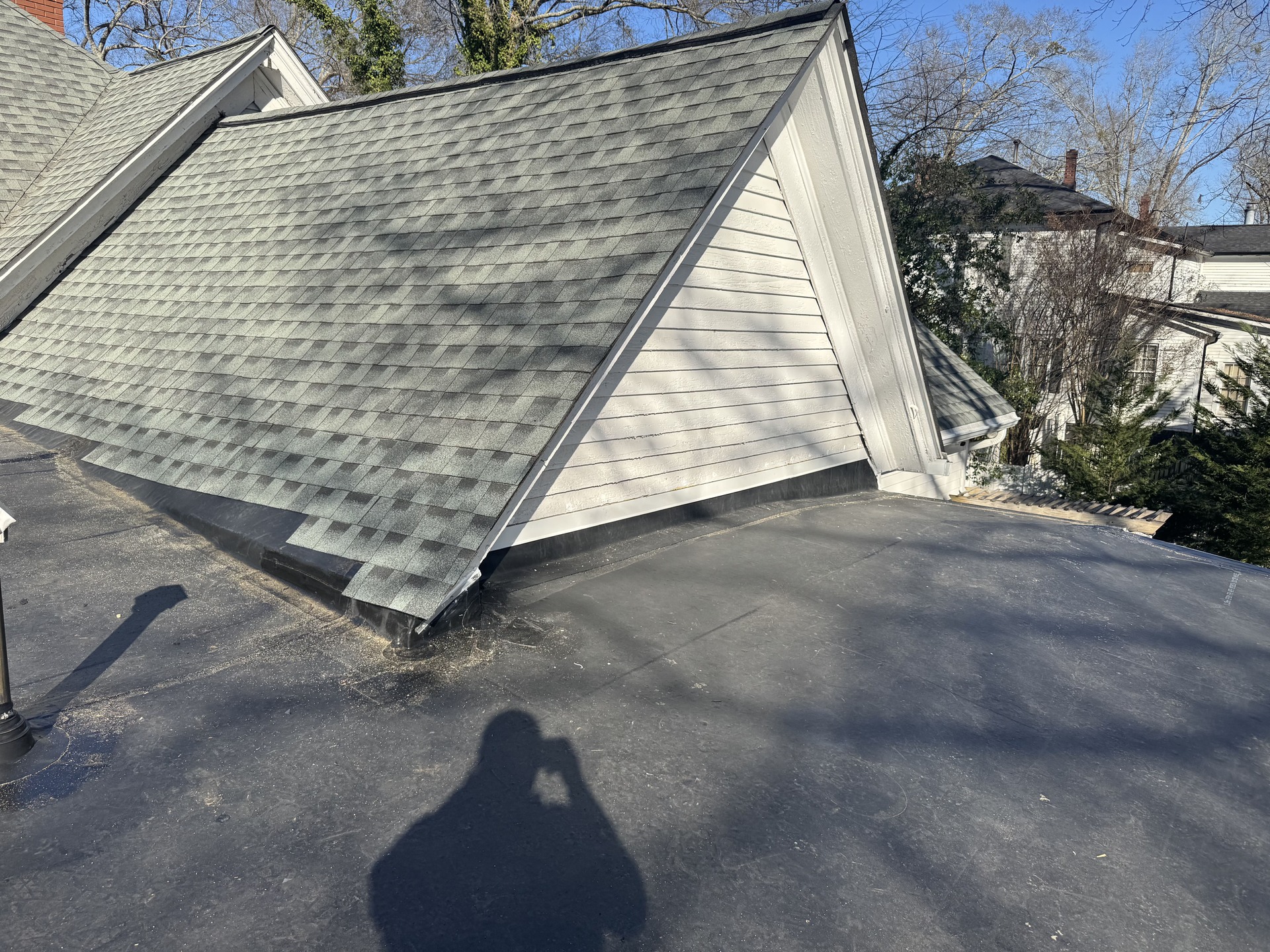
Covington, GA
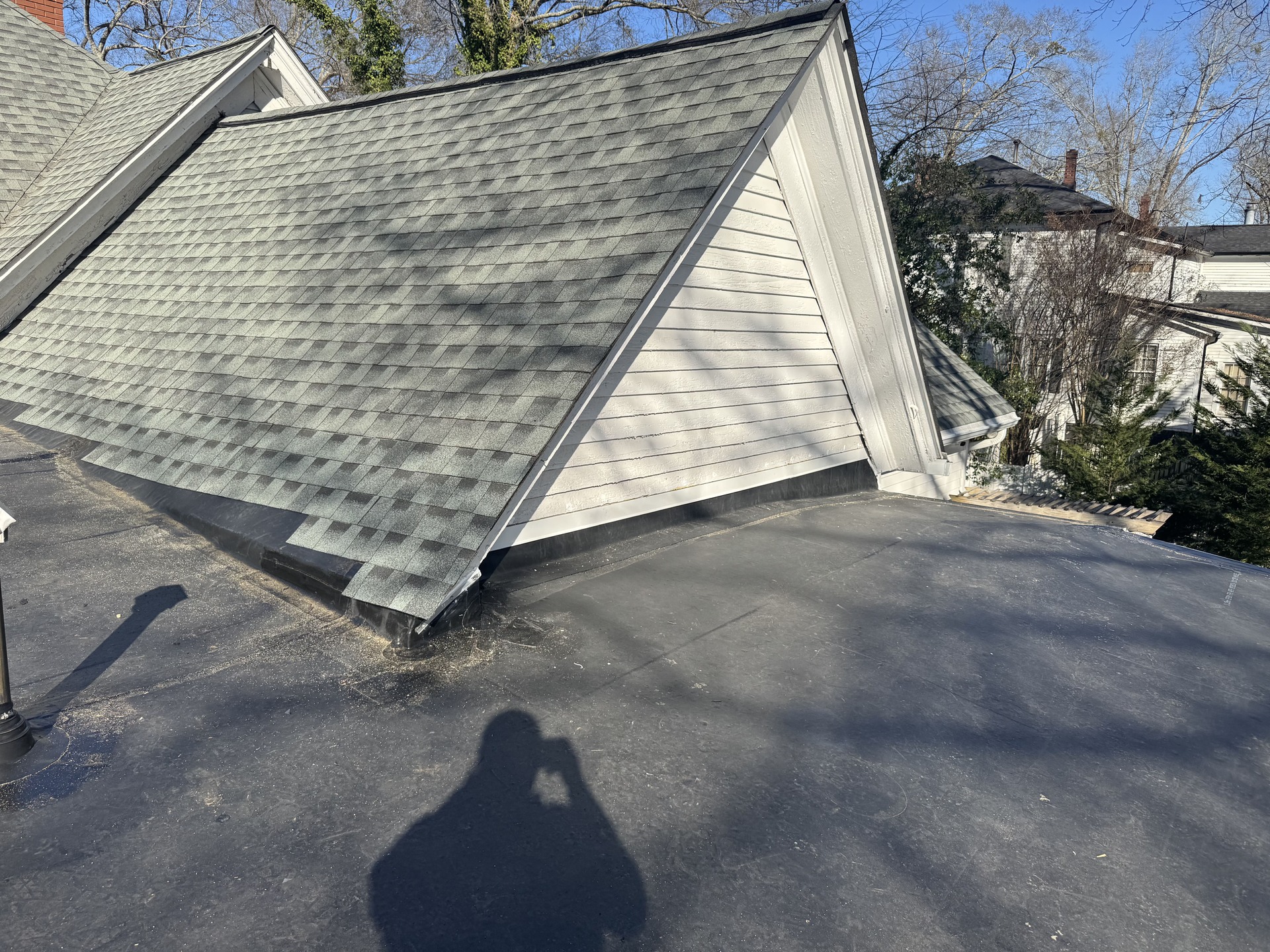
A combination roof on a historic home, pairing gray architectural shingles on the steep slopes with a low-slope membrane across the flat section behind it.
No items found.
Loganville, GA
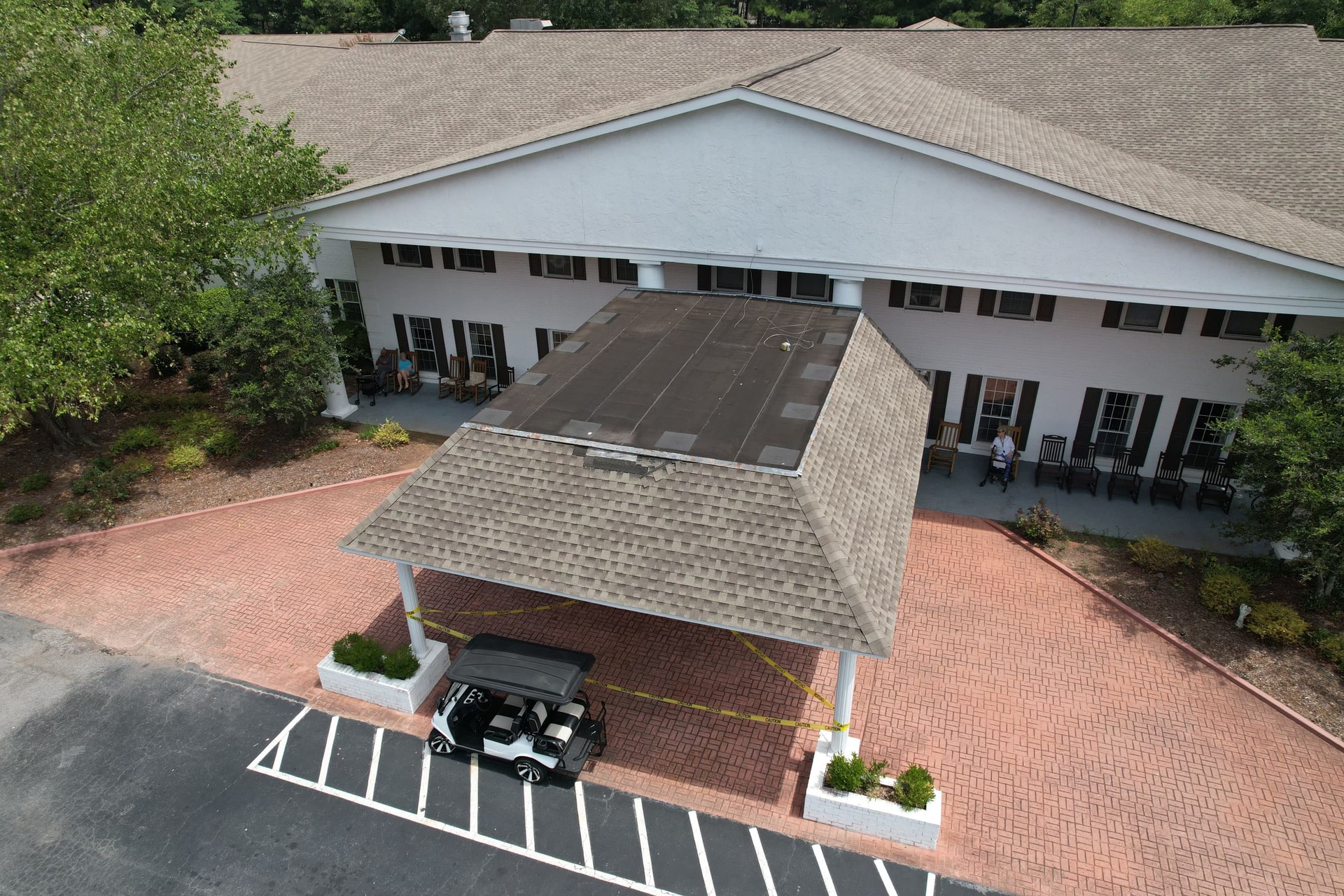
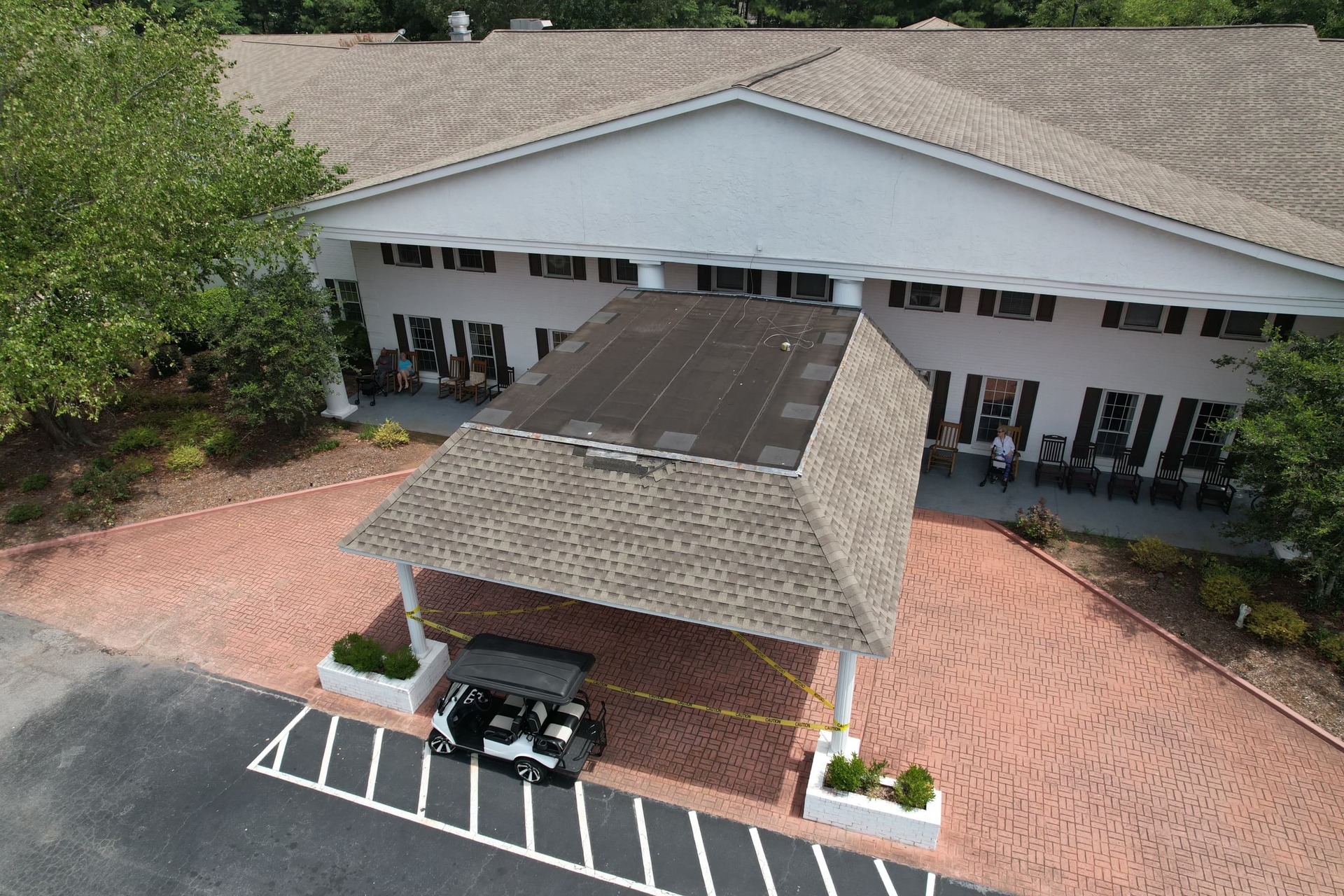
A wide shingled hip roof over a retreat facility, with a low-slope membrane covering the entry portico below.
No items found.
Griffin, GA
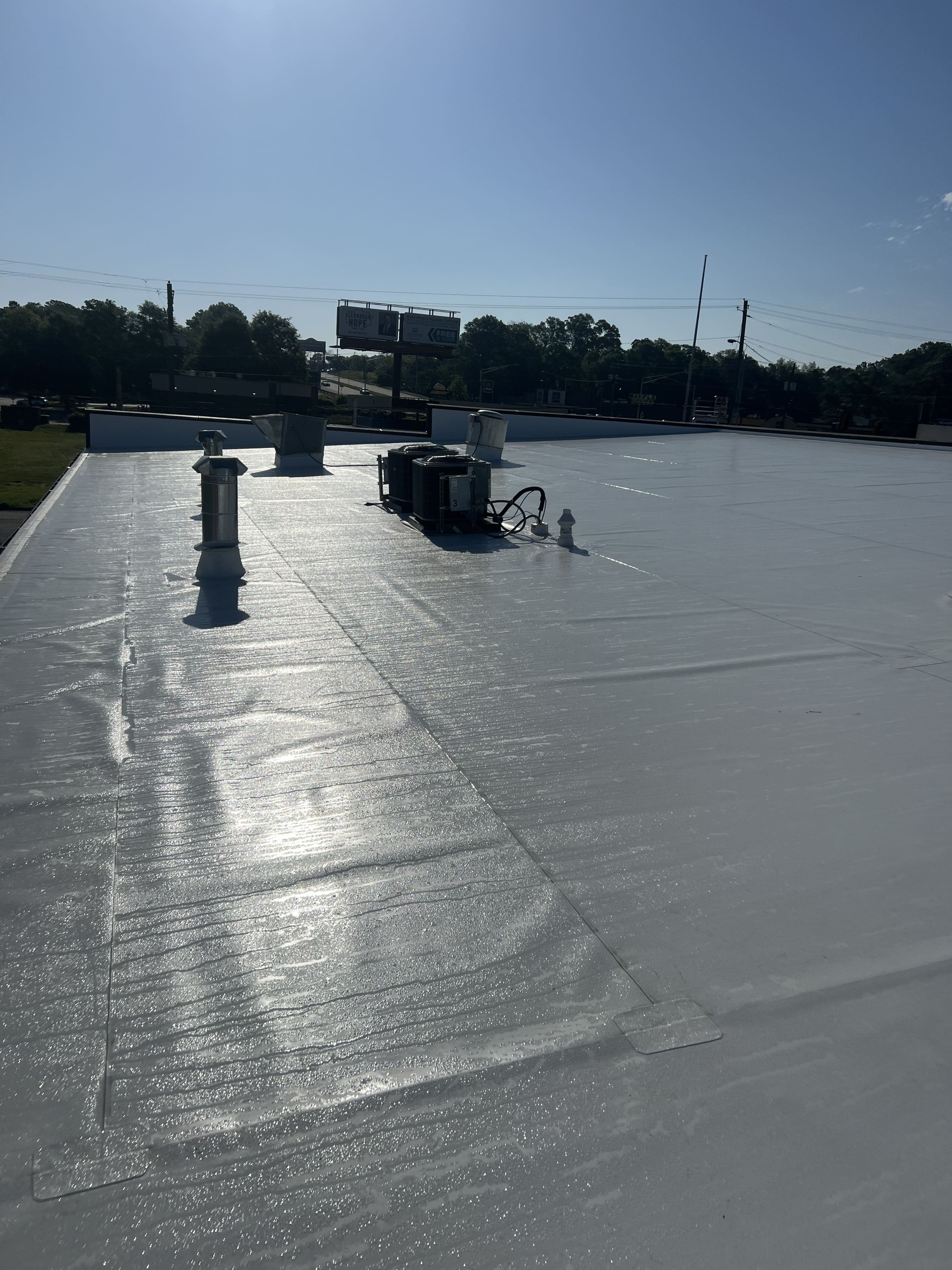
A new white TPO membrane across a retail building�s low-slope roof, with a wide-open field and clean edge details along a busy commercial strip.
No items found.
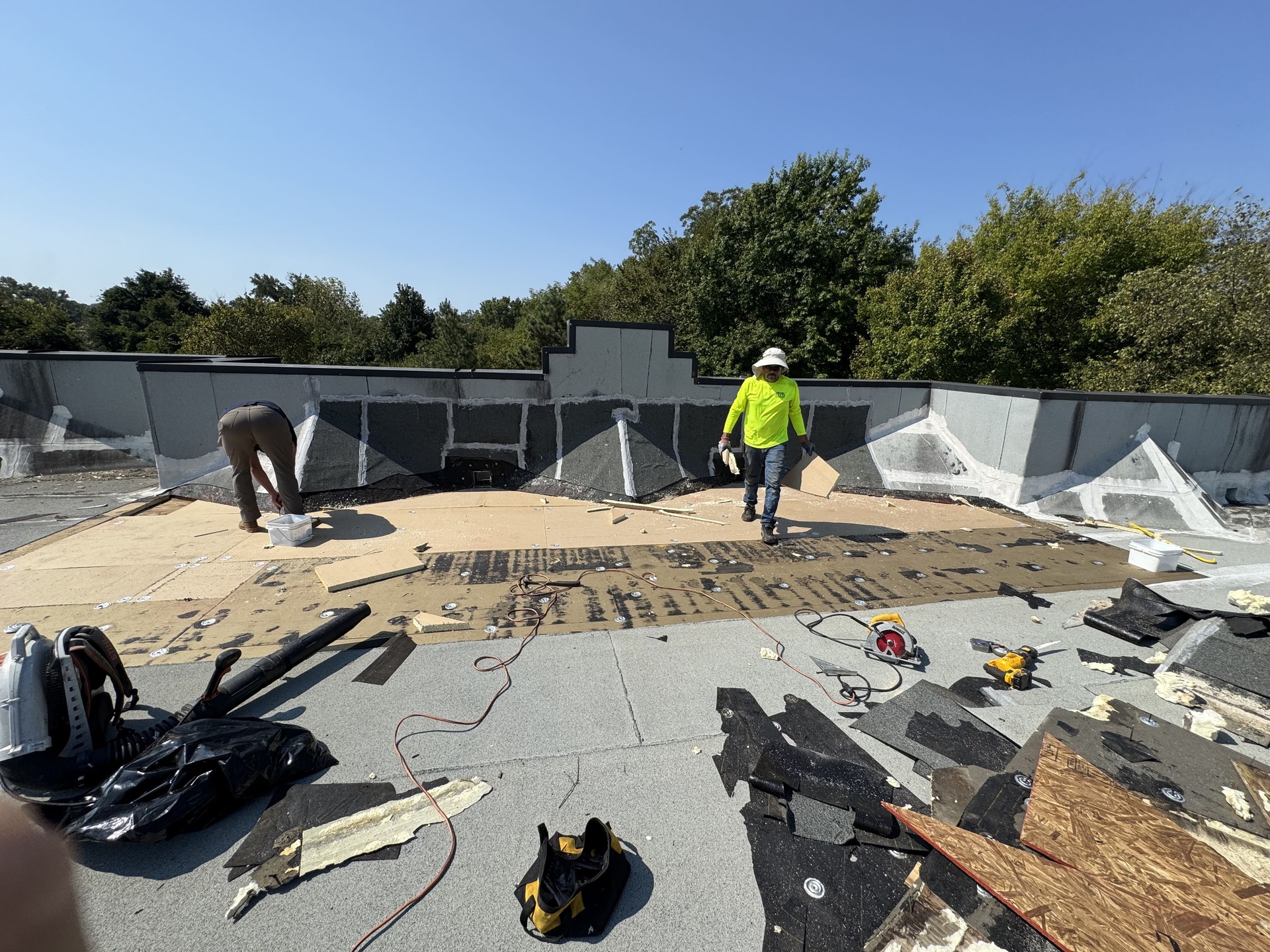
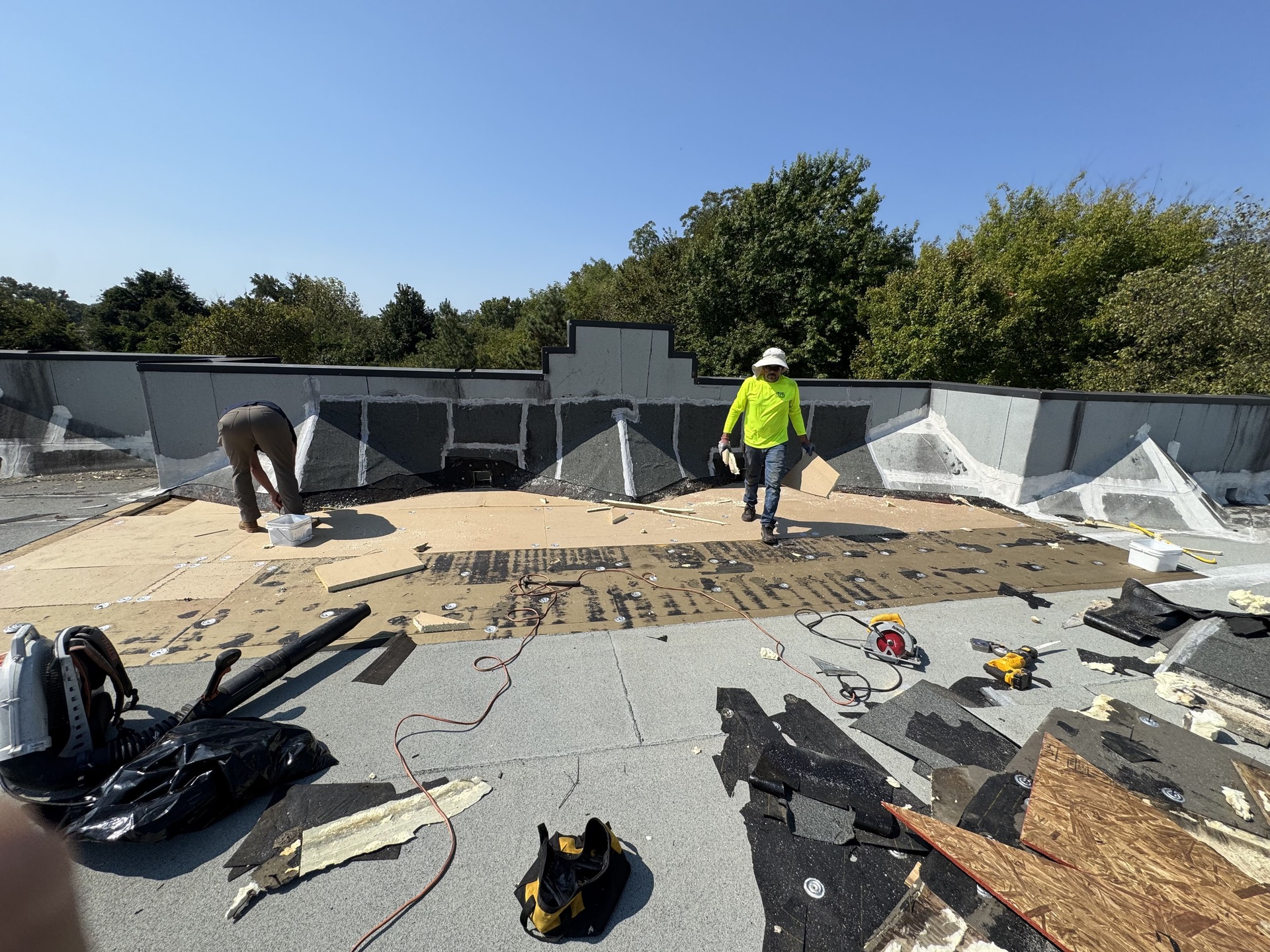
Conyers, GA
A repair on the Rockdale Chamber of Commerce�s low-slope roof, opening up the field to replace damaged decking before reflashing the parapet walls.
No items found.
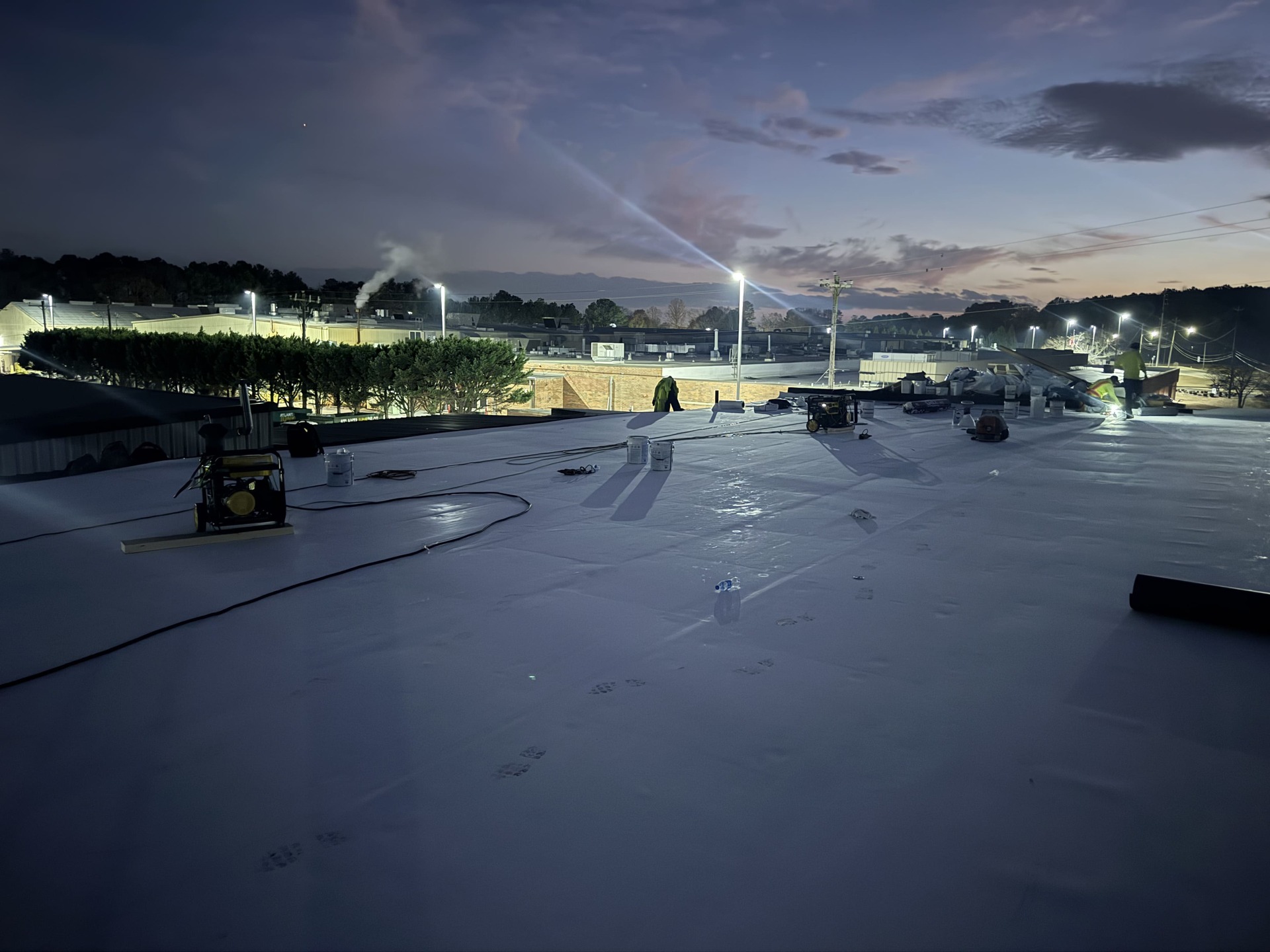
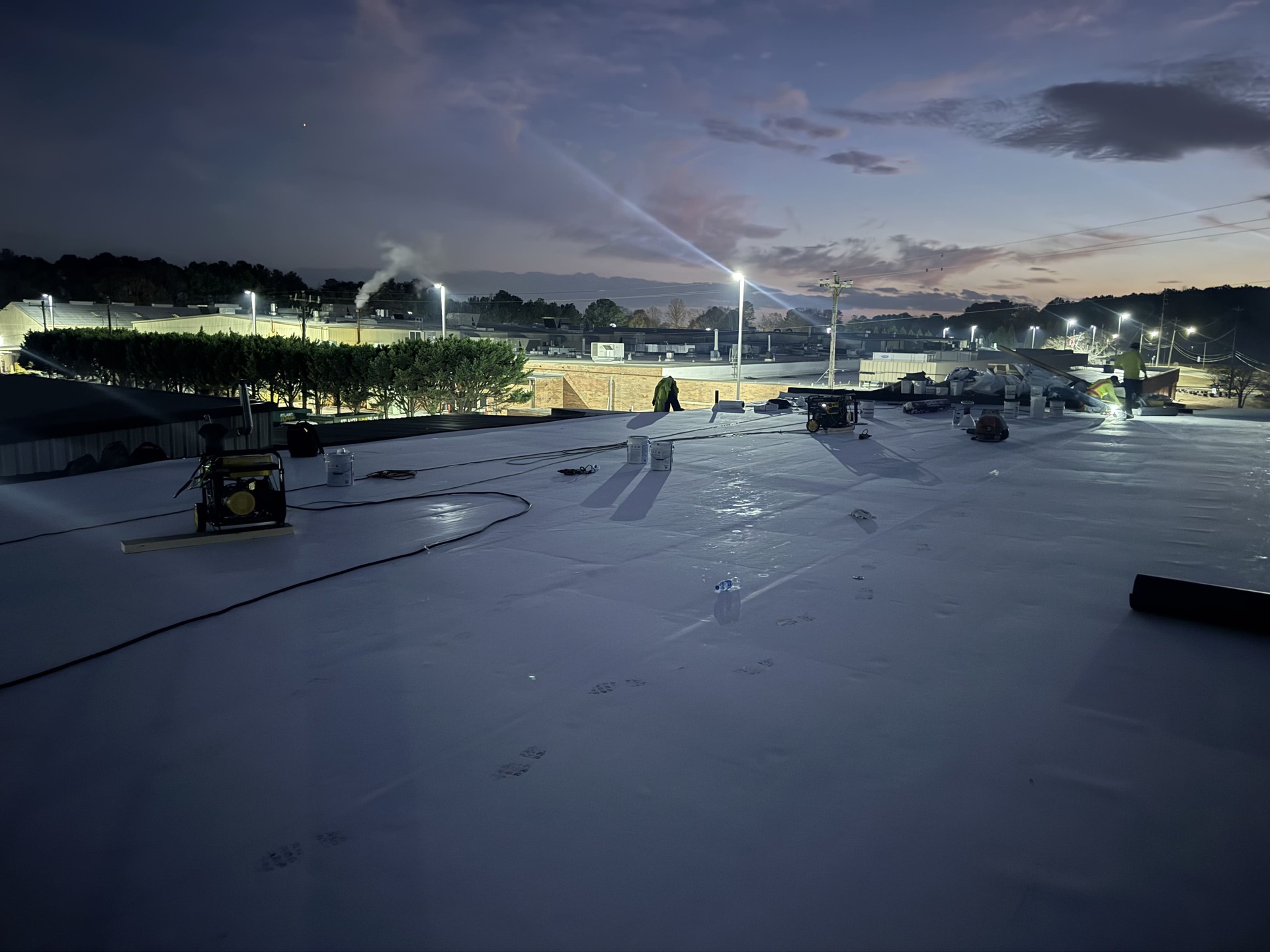
College Park, GA
A new TPO roof on a roll-off facility, with fastened insulation board across the deck and membrane staged for a clean low-slope install.
No items found.
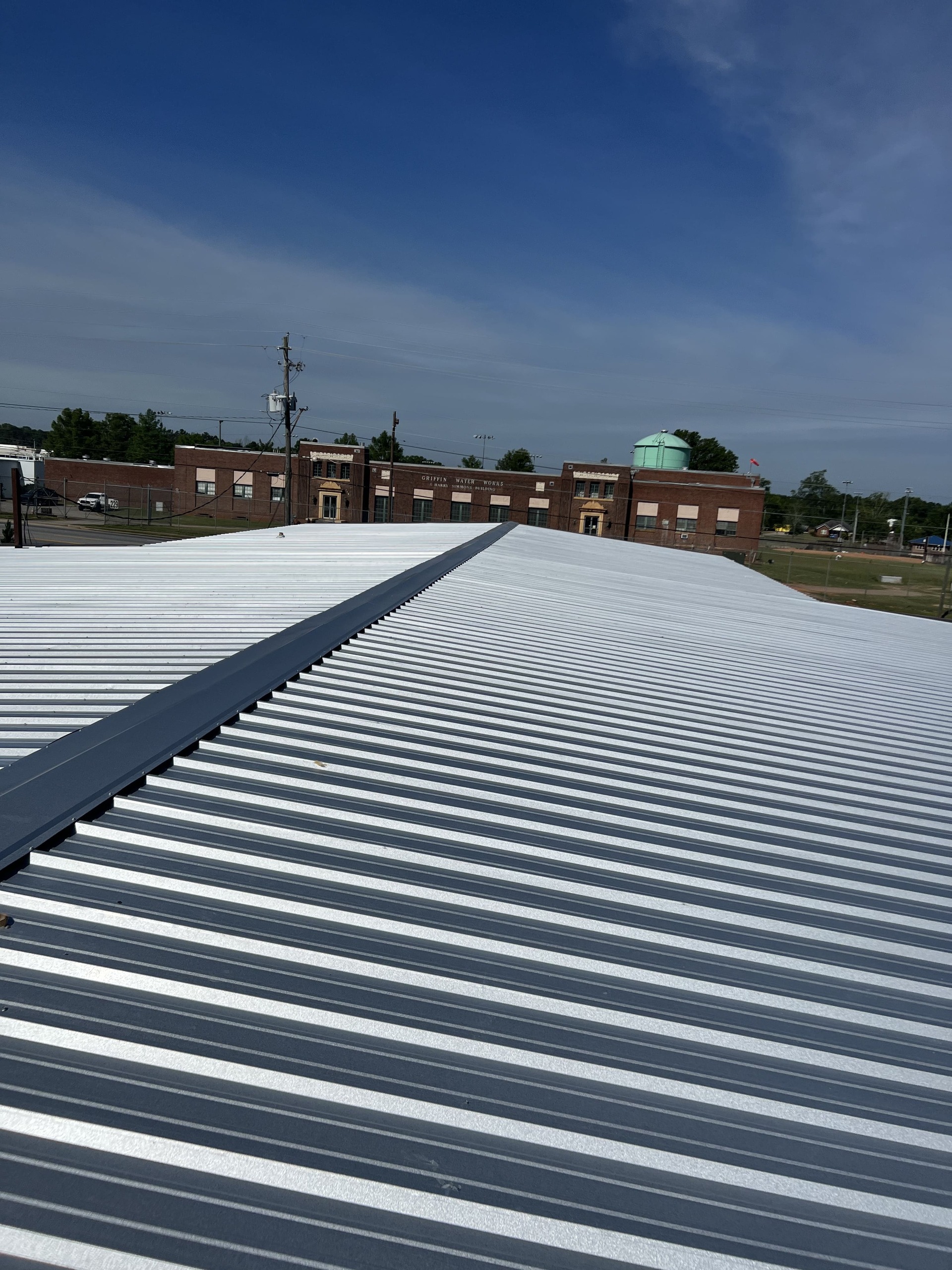
Griffin, GA
A ribbed metal panel roof on the Salvation Army building, with long silver panel runs across a broad low-slope expanse.
No items found.
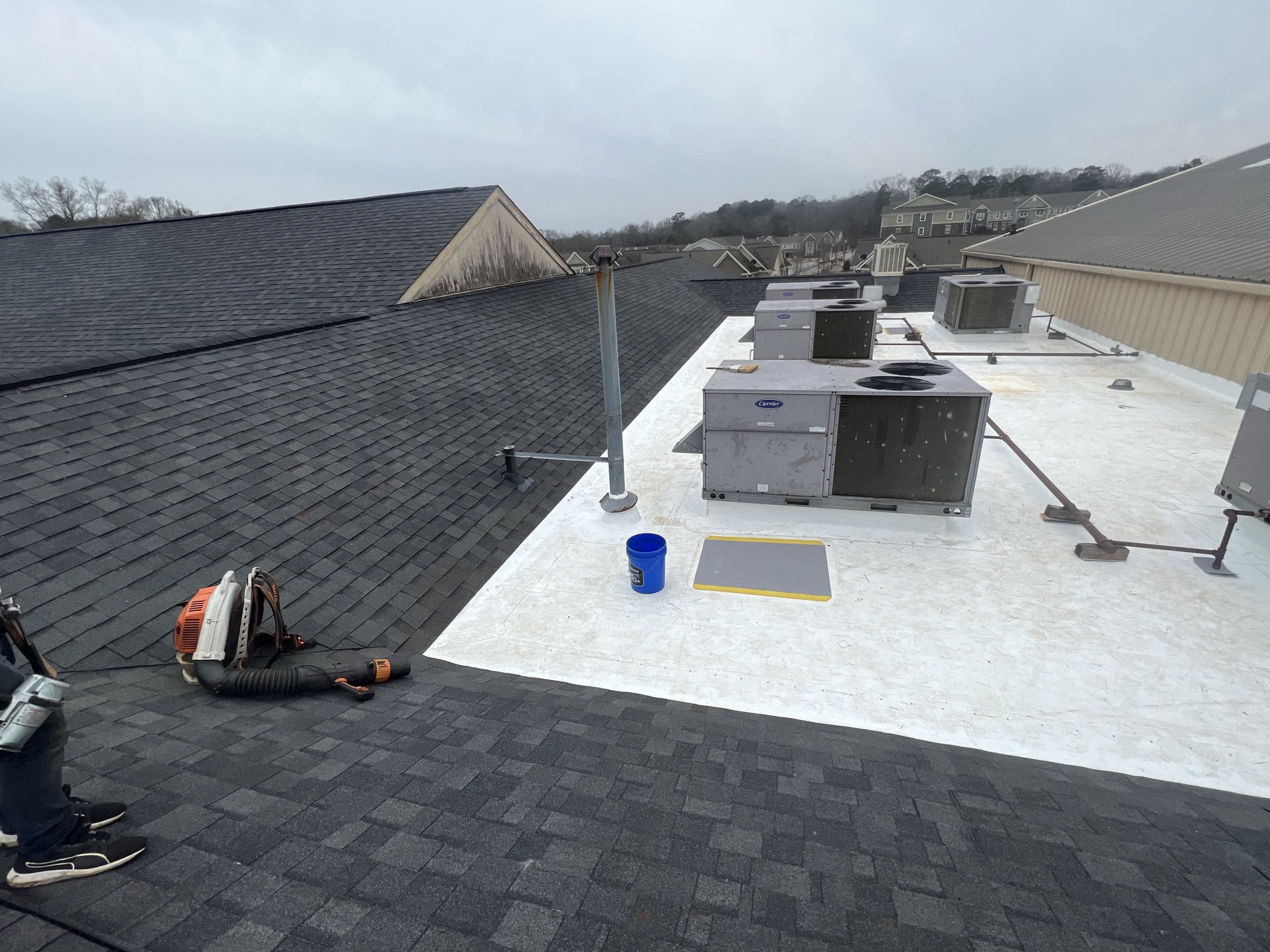
Griffin, GA
A combination reroof on the Salvation Army building, pairing dark architectural shingles on the slopes with a white membrane field around the rooftop units.
No items found.
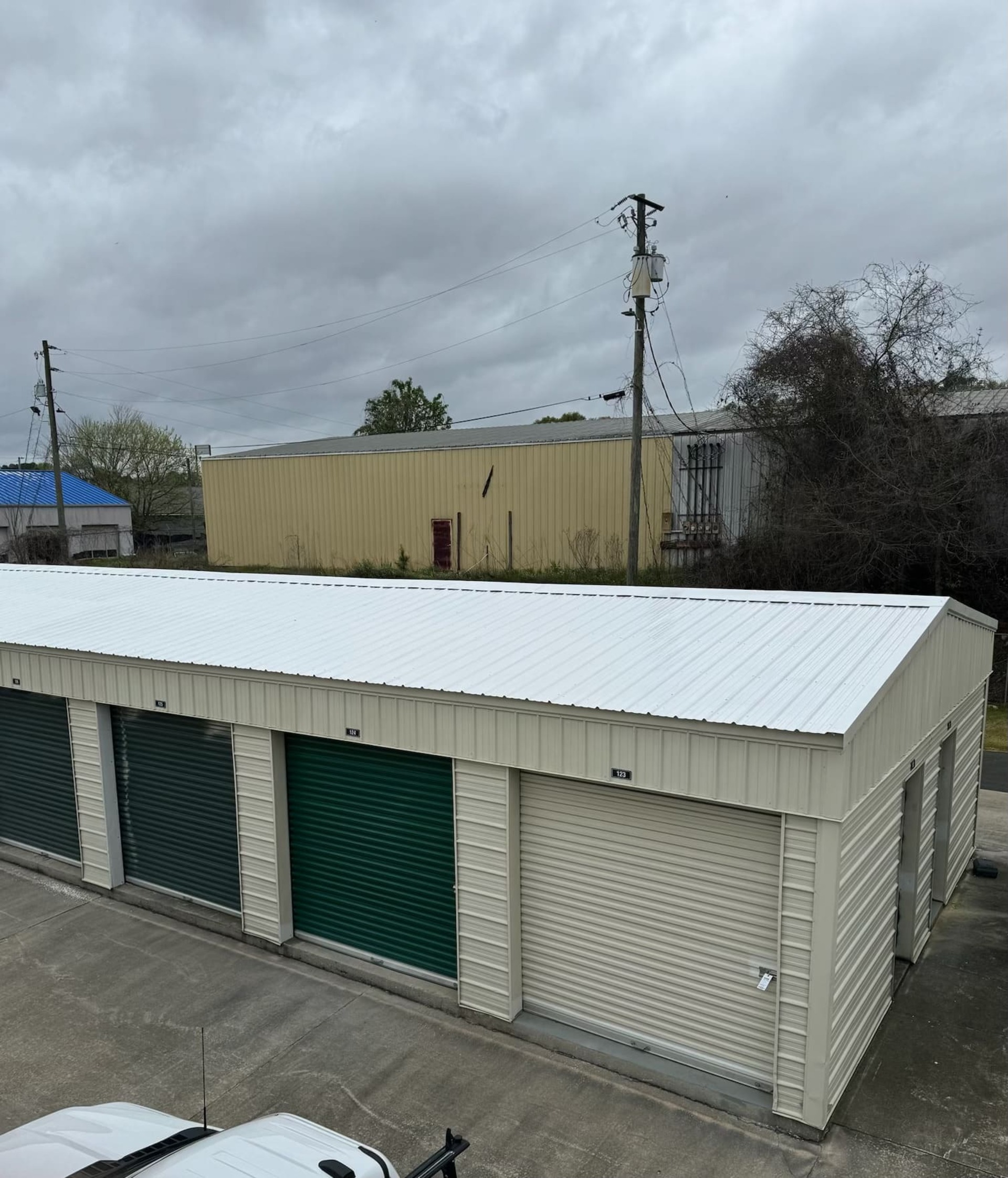
Covington, GA
A reflective white coating over the metal roofs of a self-storage facility, sealing the panel seams and brightening a long run of buildings.
No items found.
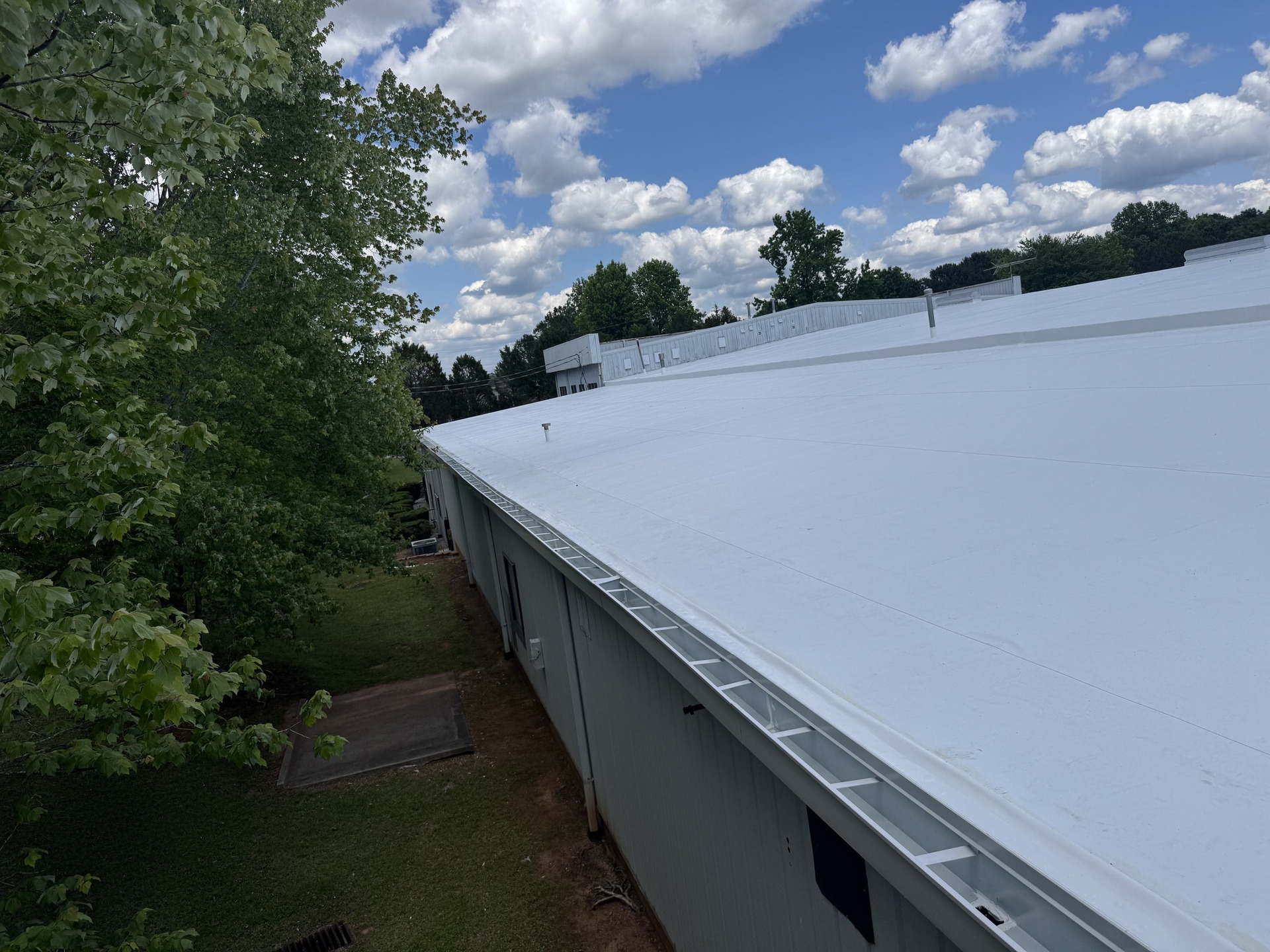
Newnan, GA
A white membrane retrofit over a long industrial building, laid across a wide low-slope expanse with new perimeter edge metal.
No items found.
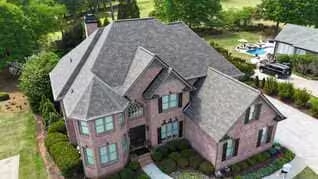
Monroe, GA
A warm weathered-gray shingle roof flowing over gabled peaks and a turret � texture and dimension that bring a brick home to life.
No items found.
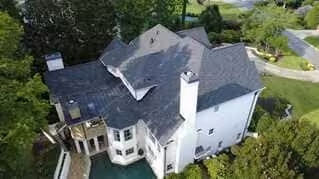
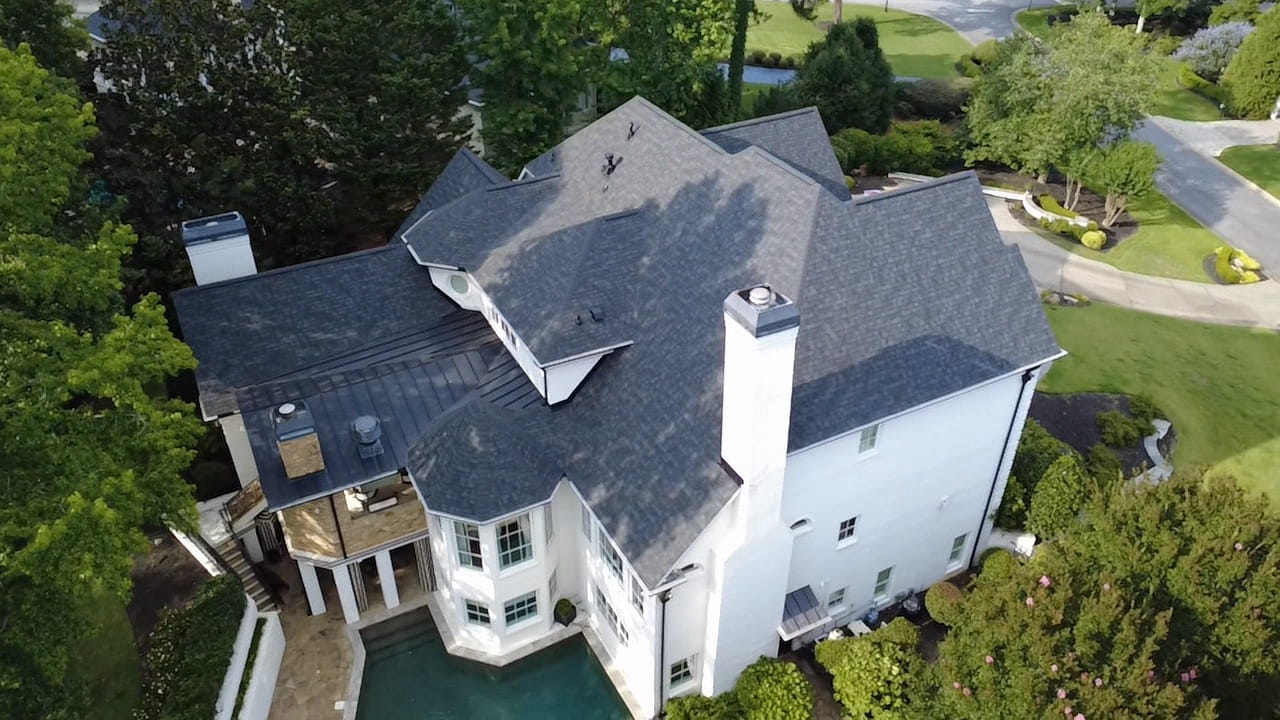
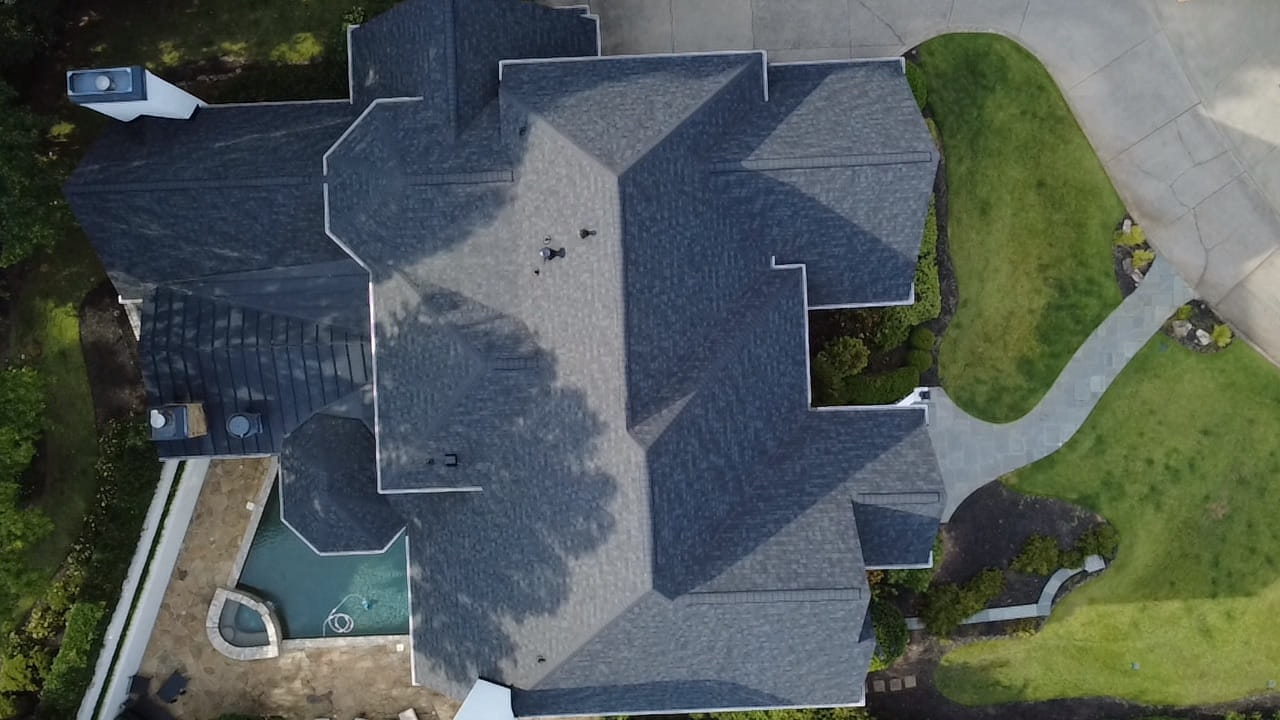
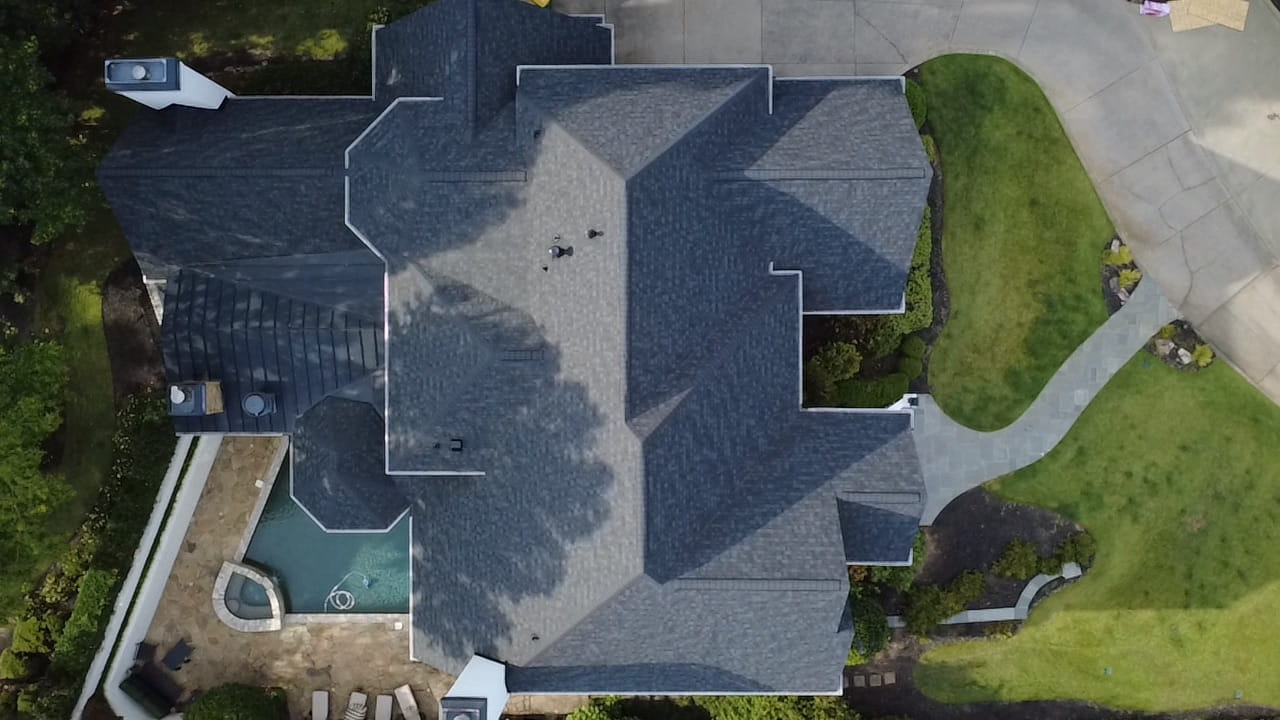
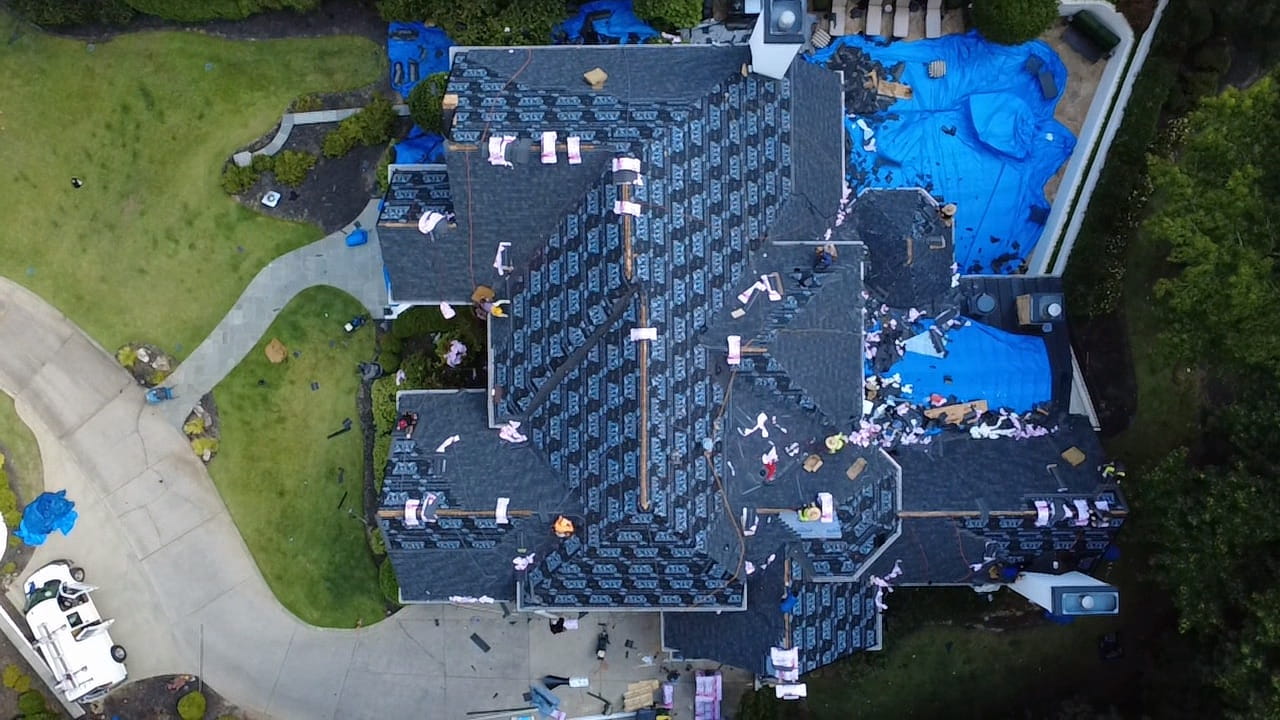
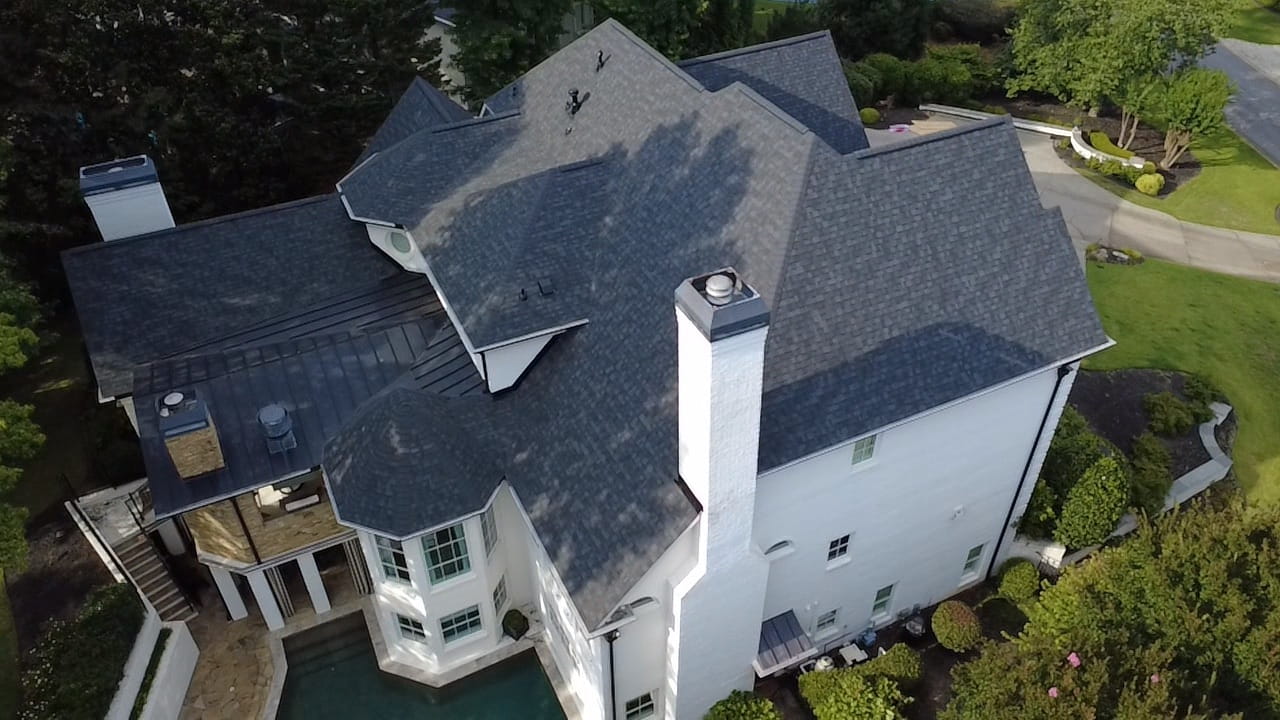
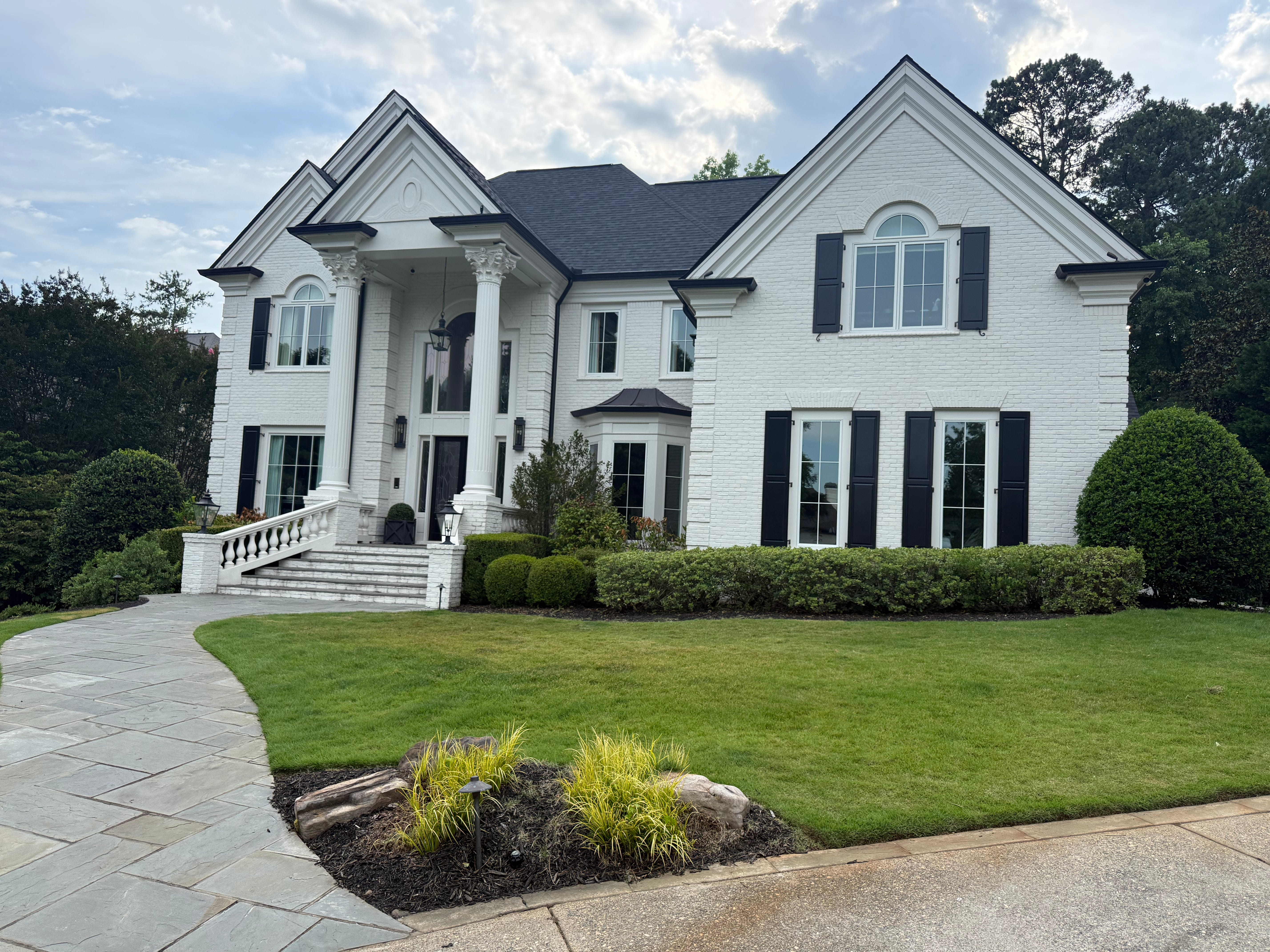
Alpharetta GA
A sophisticated gray shingle roof accented with standing-seam metal � a layered, architectural look that elevates an estate home.
No items found.
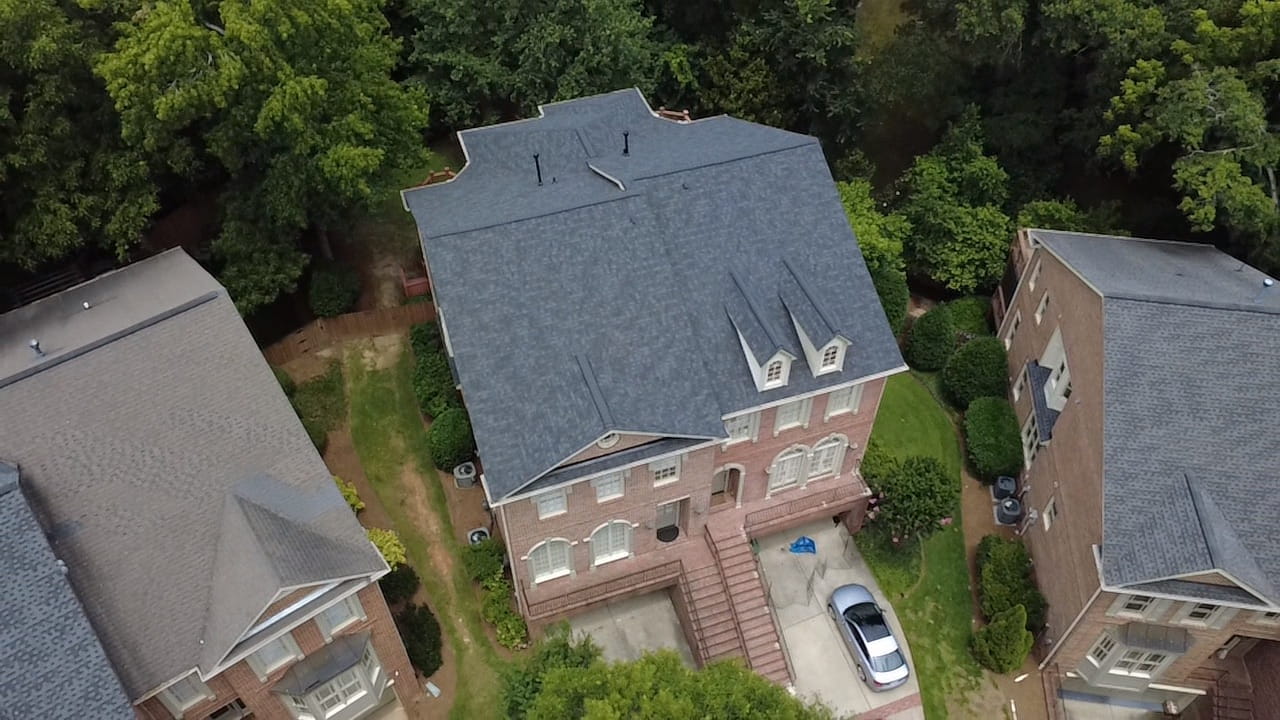
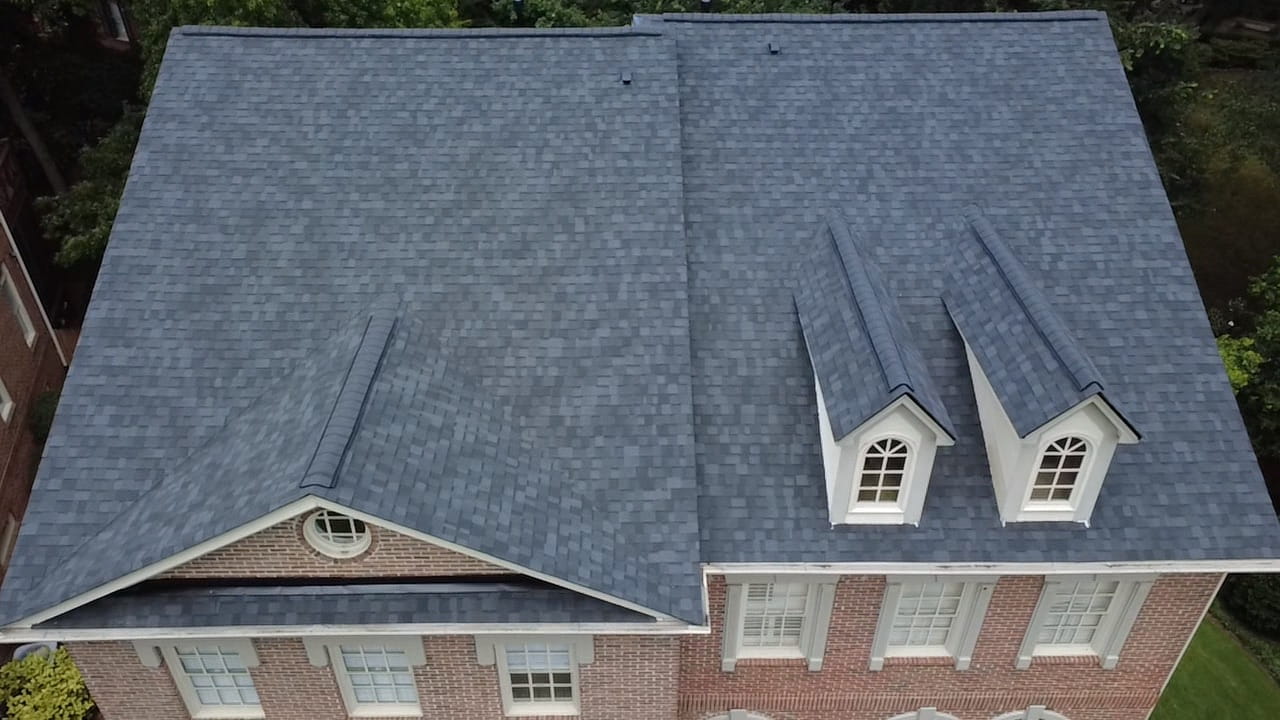
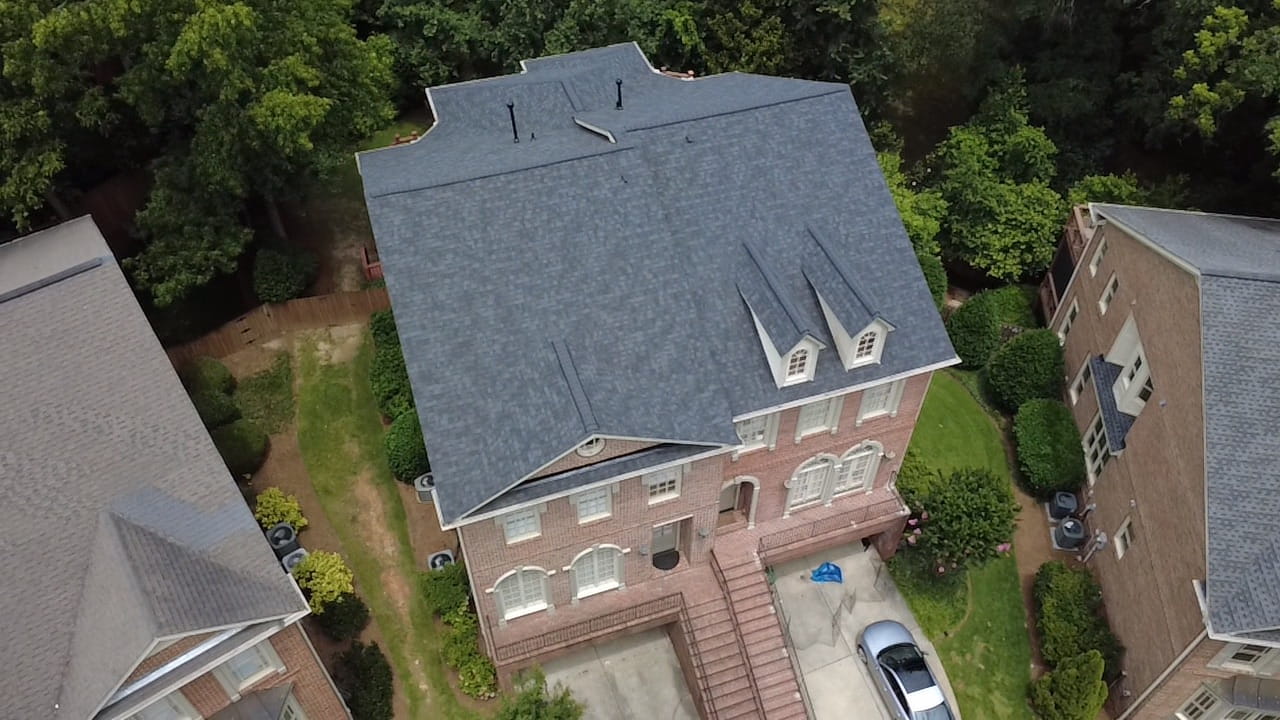
Atlanta, GA
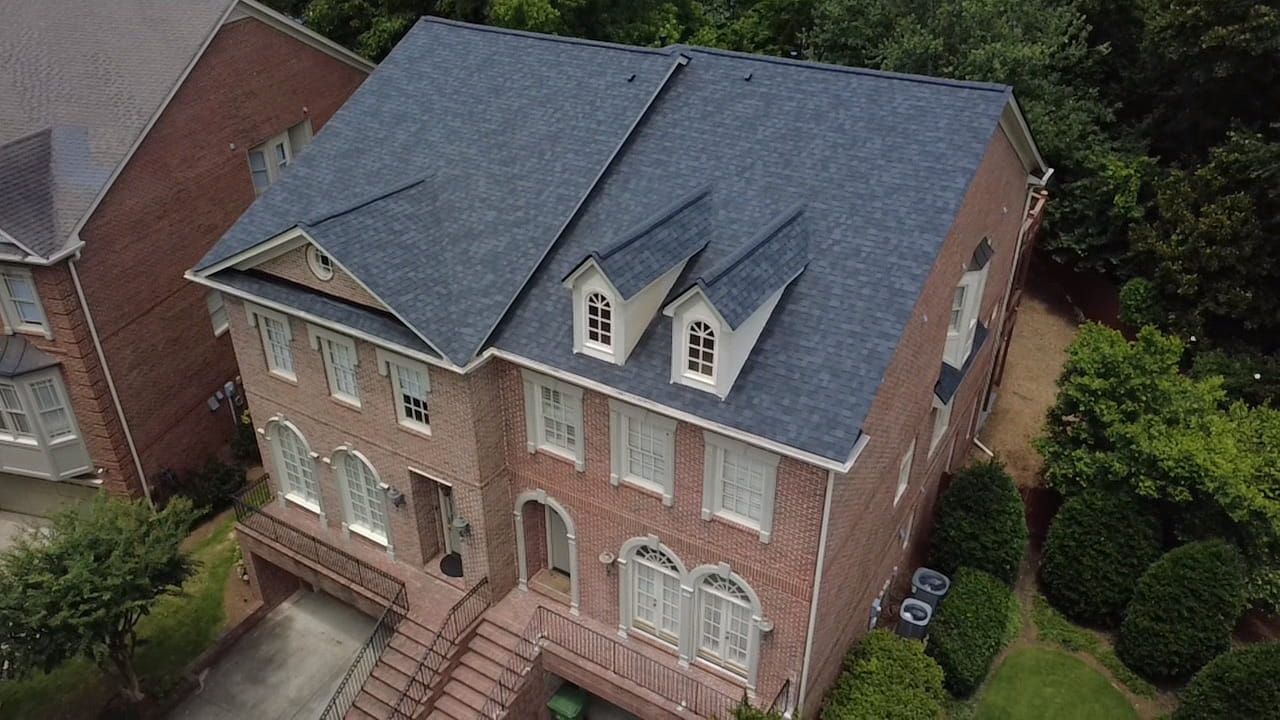
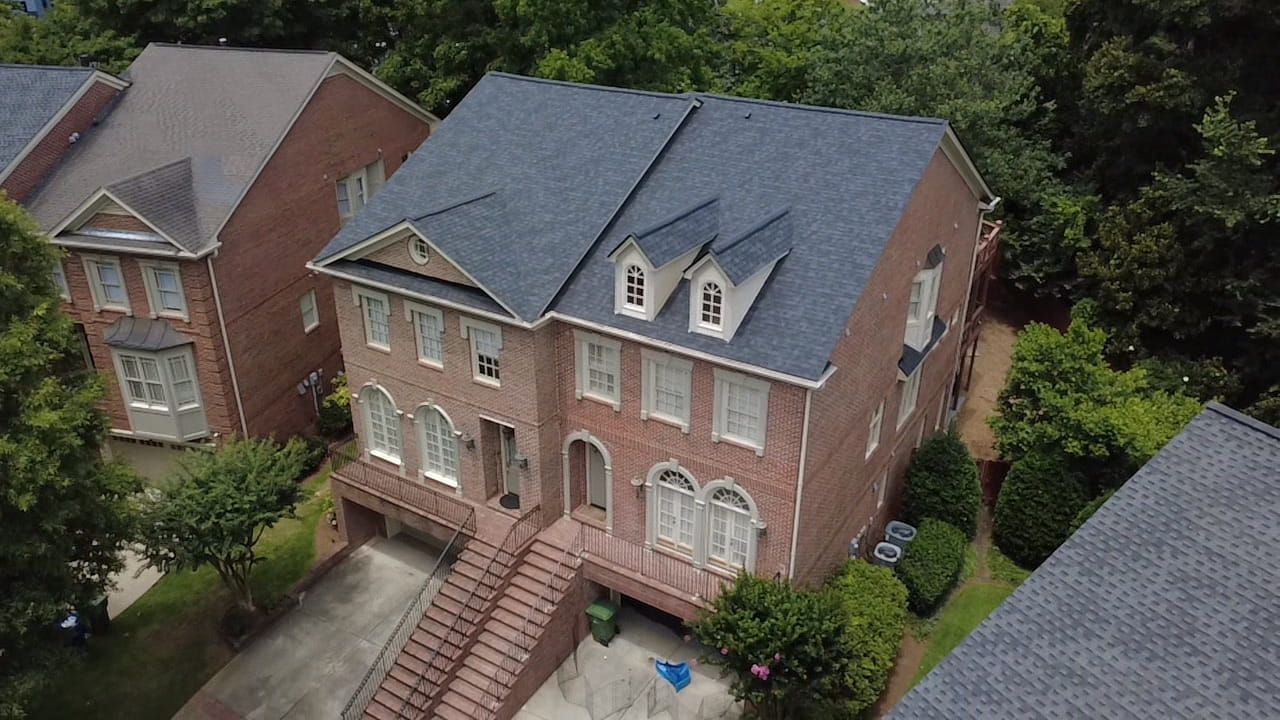
A refined slate-gray shingle roof crowning a stately brick colonial � clean gable lines and timeless curb appeal built to endure.

No items found.
Monroe, GA
Owens Corning Oakridge | Driftwood
A warm Driftwood-toned roof replacement in Monroe, Georgia, completed with Owens Corning�s reliable Oakridge shingles � a natural, earthy finish that complements the character of the home.
No items found.
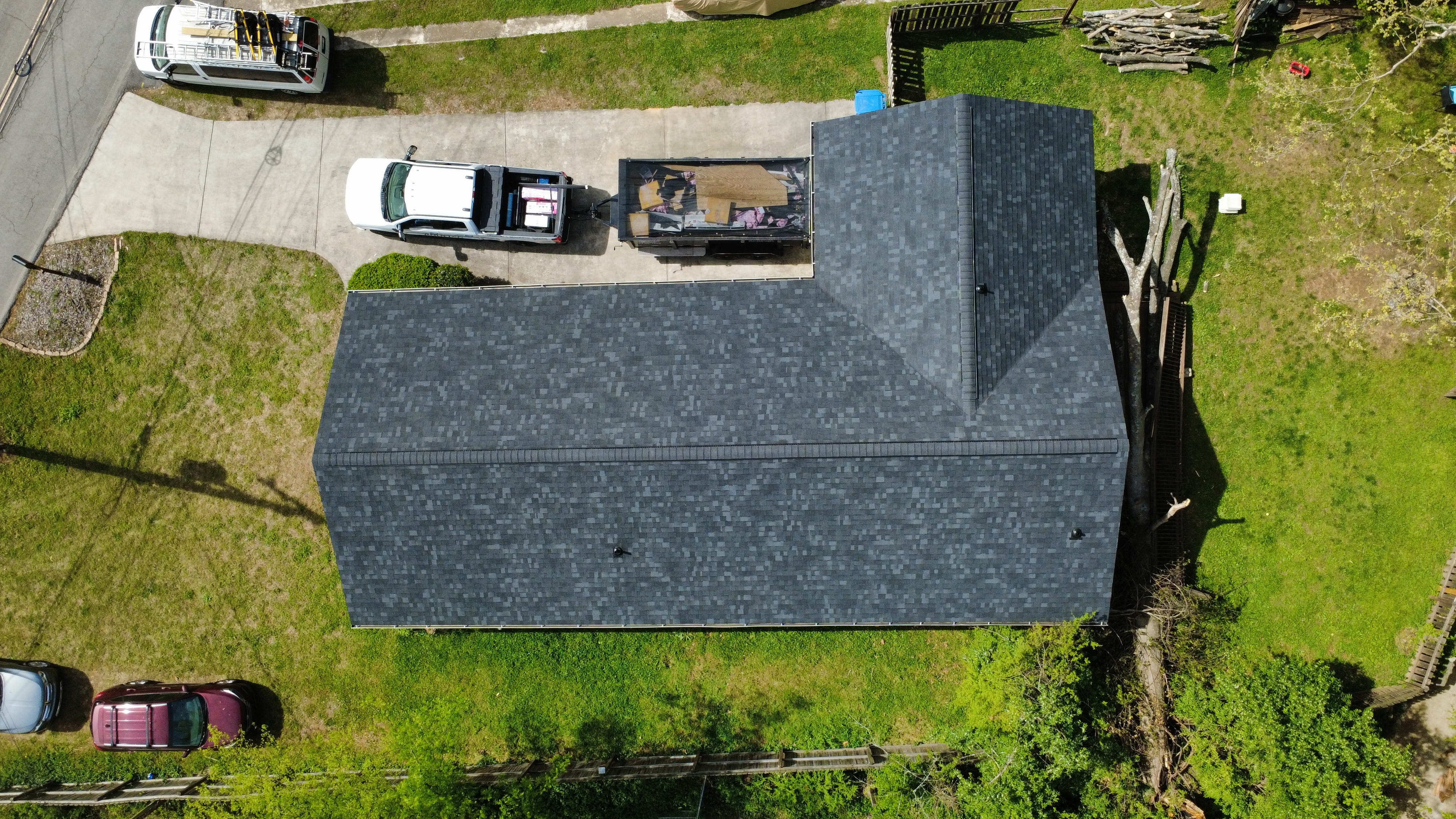
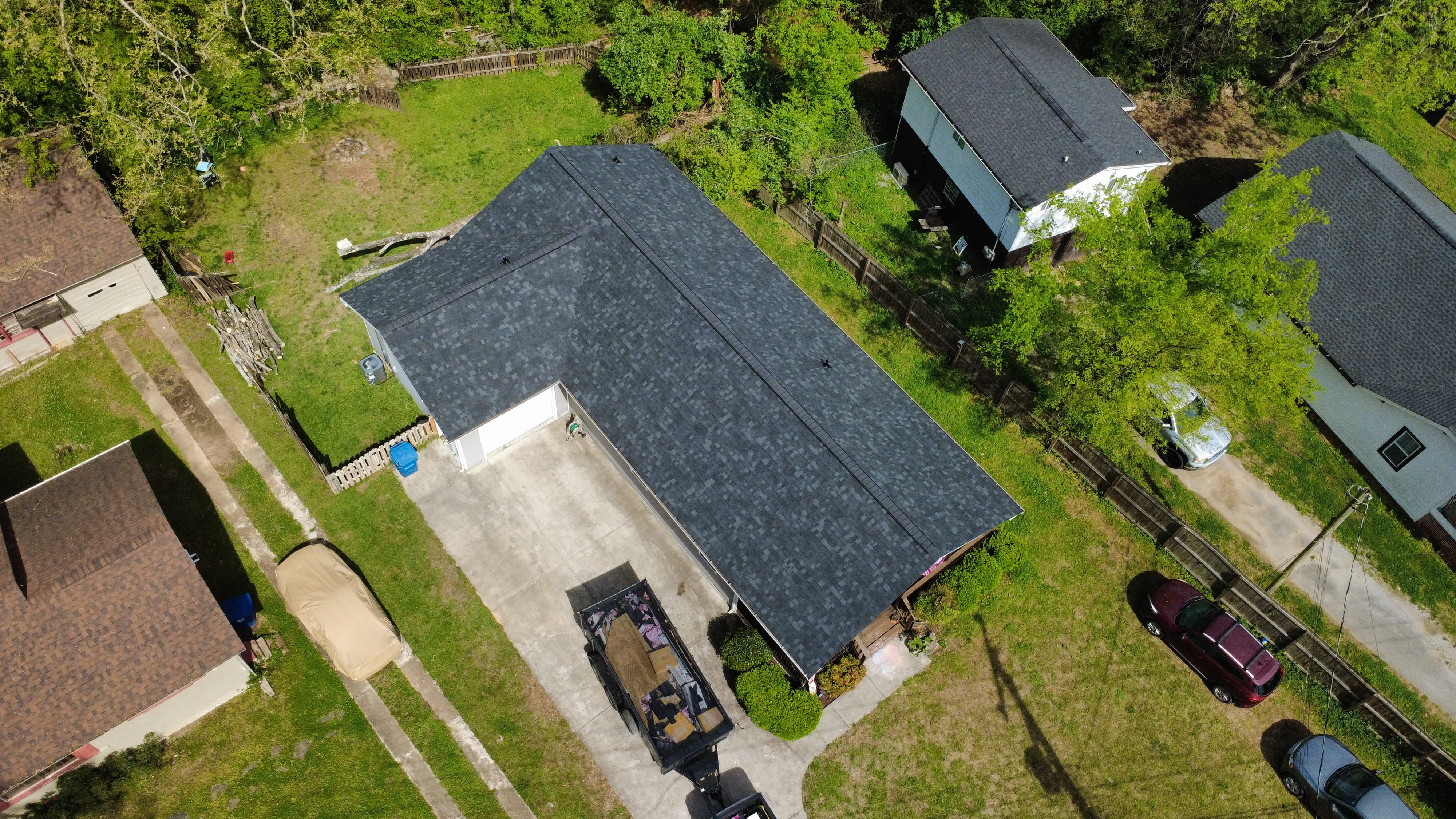
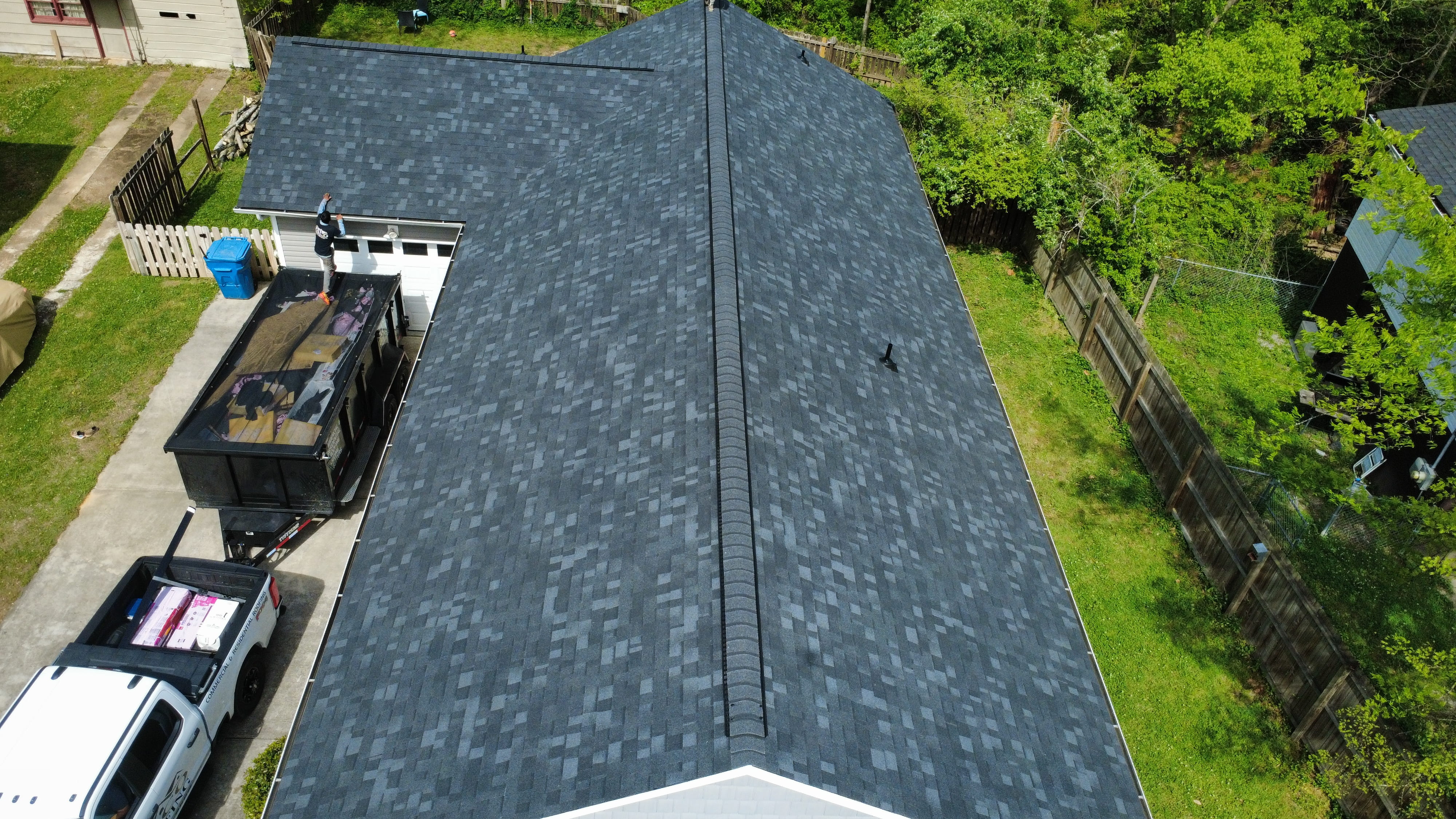
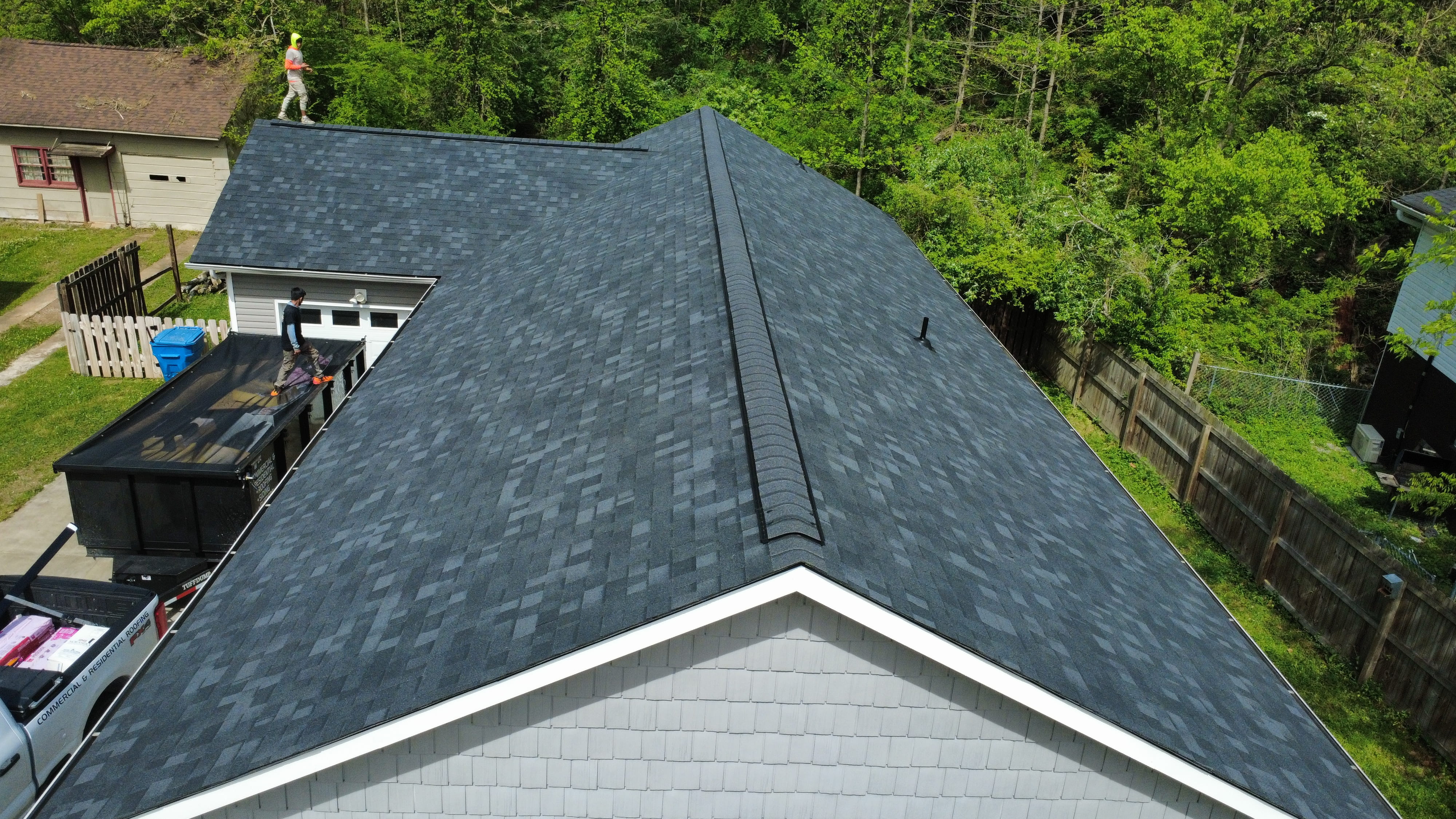
Chattanooga, TN
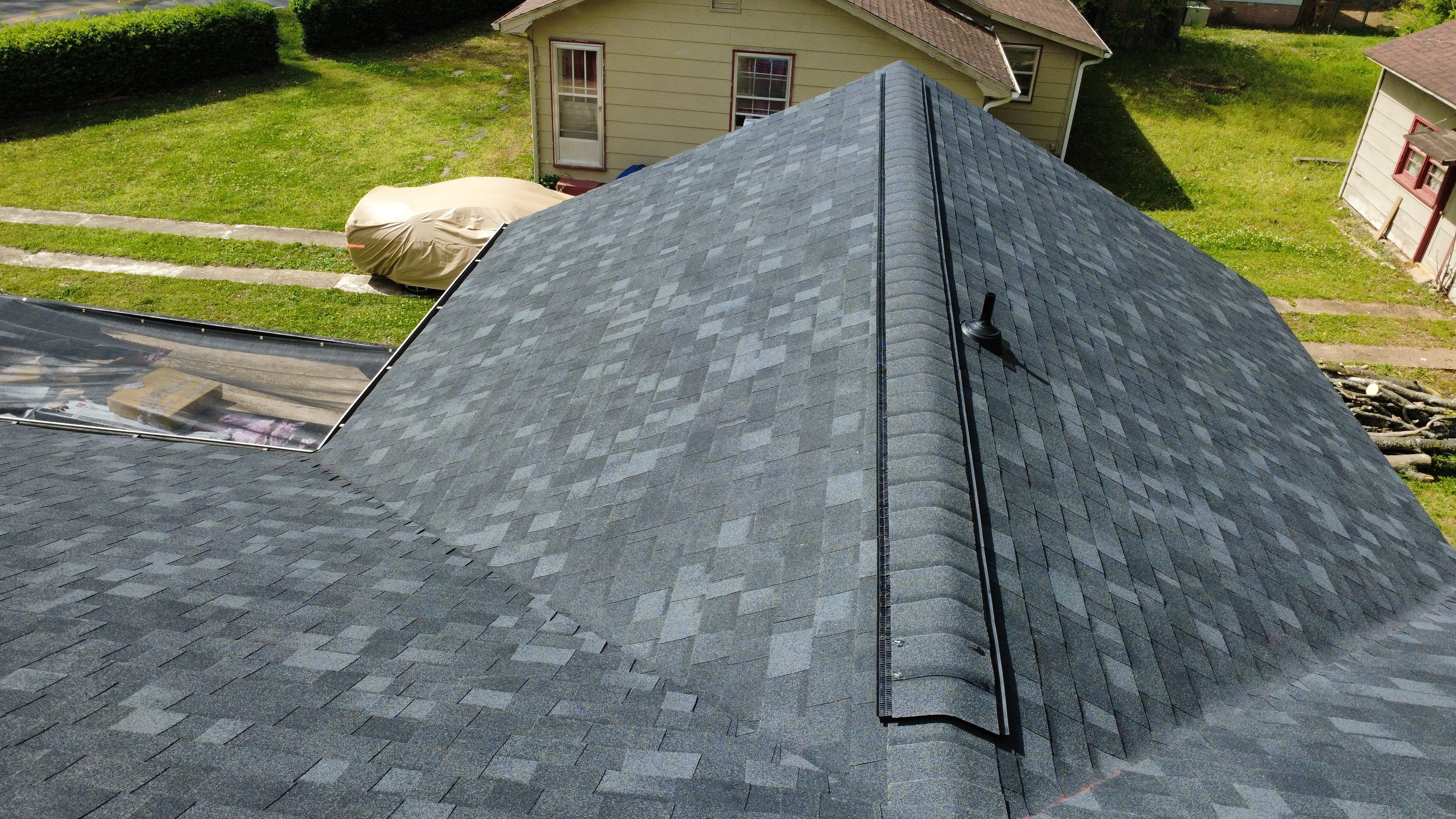
A deep charcoal shingle roof with a smooth, uniform finish � understated, durable, and made to weather every season.
No items found.
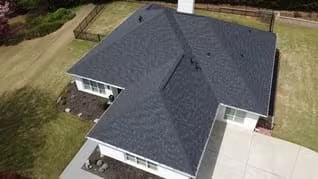
Chattanooga, TN
Owens Corning Duration | Onyx Black
A sharp Onyx Black roof replacement in Chattanooga, featuring Owens Corning's Duration shingles � a high-performance upgrade with a clean, modern finish.


No items found.
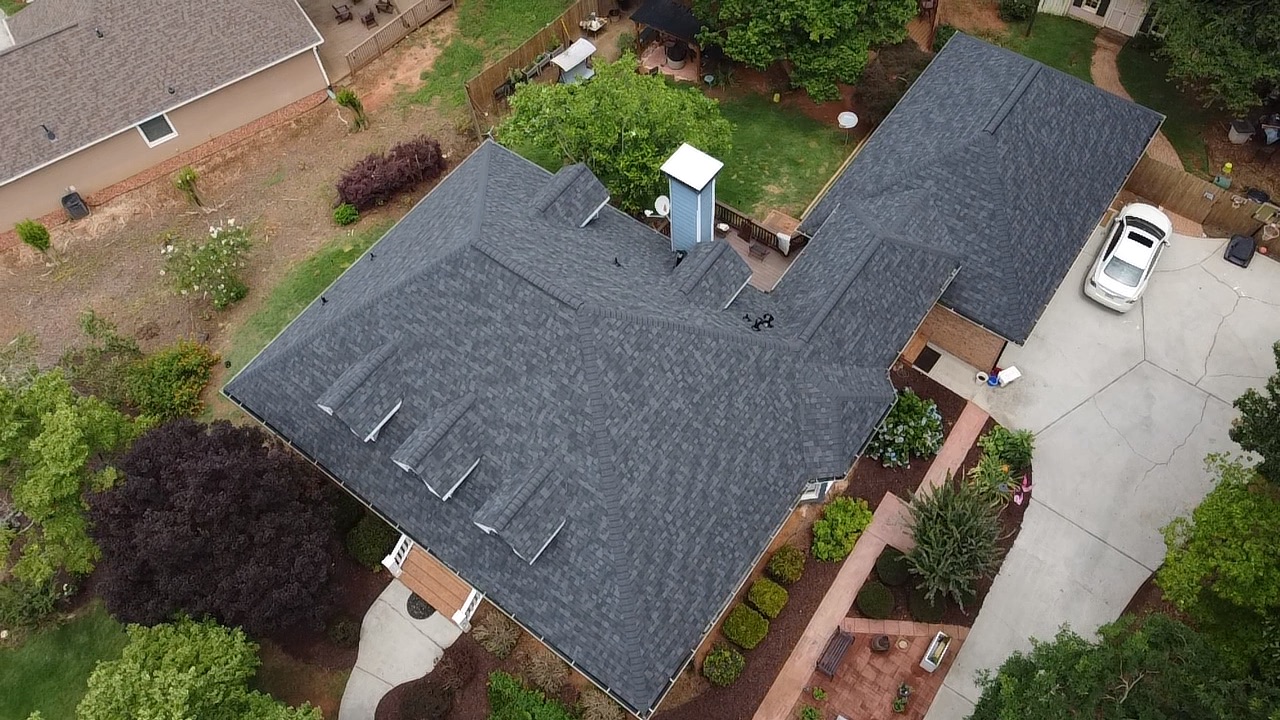
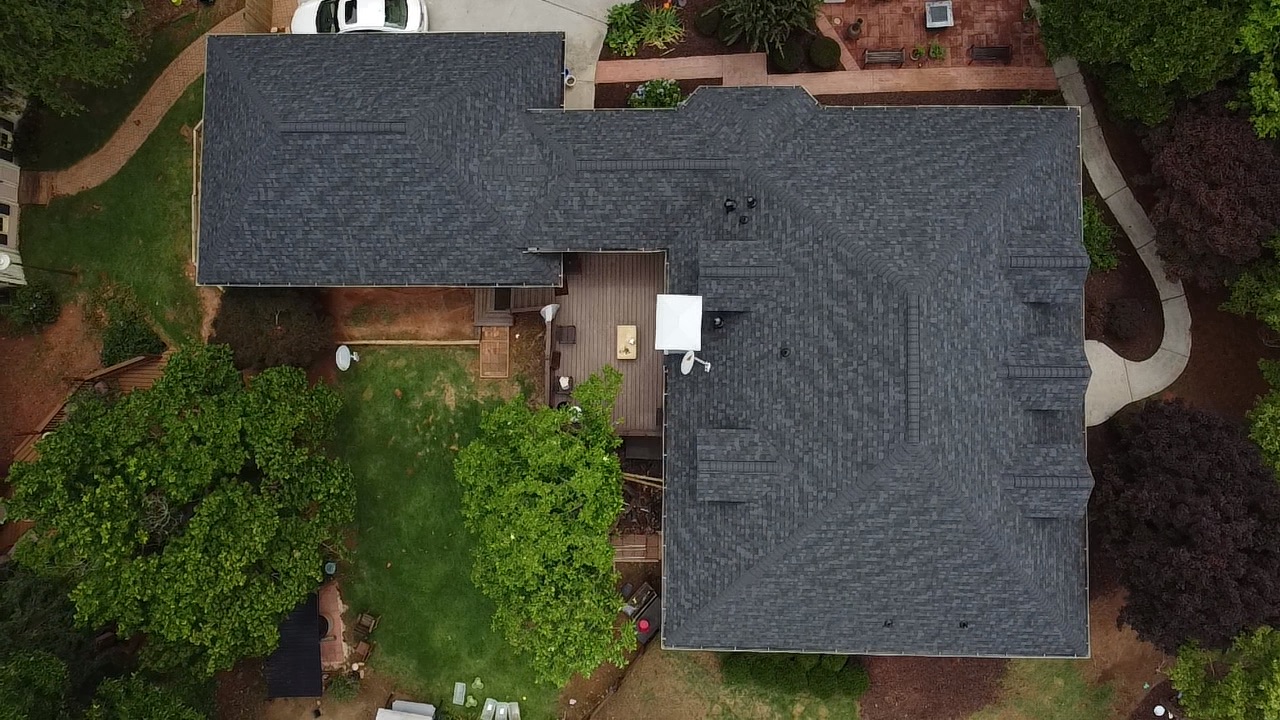
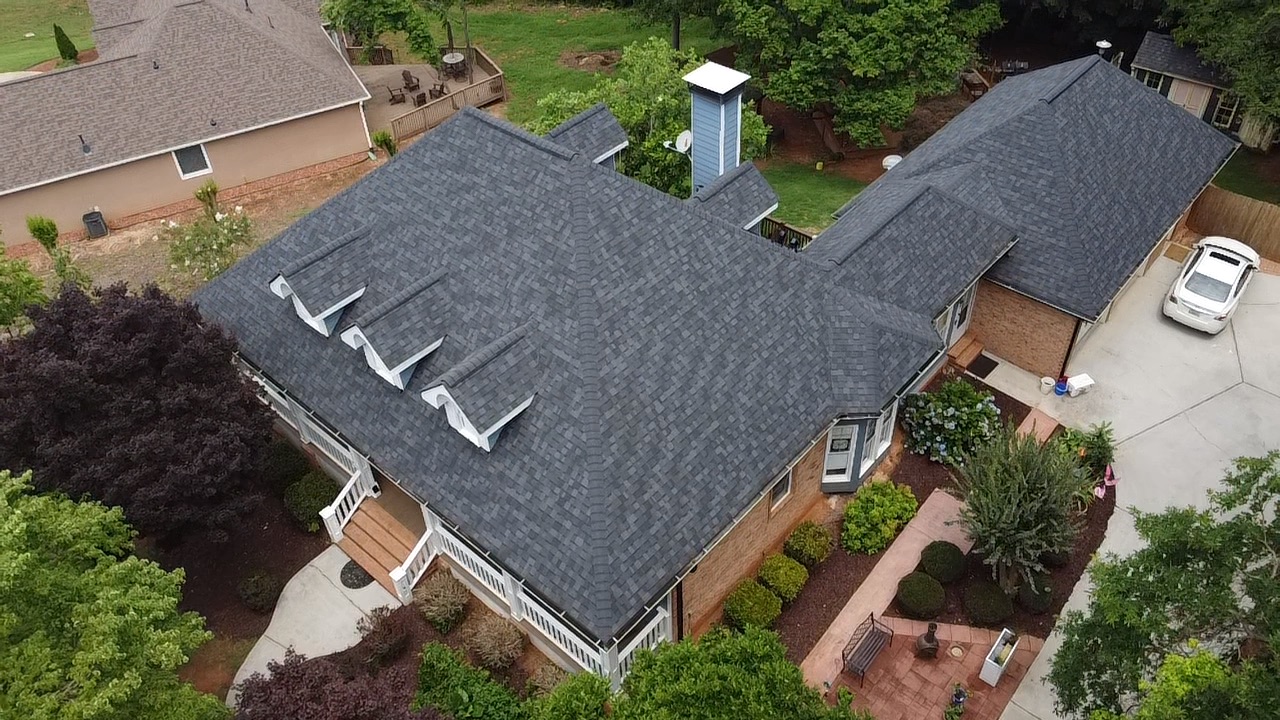
Hampton, GA
A bold charcoal shingle roof sweeping across a wide hip-and-valley design � rich color and lasting protection that anchor the home's classic profile.
No items found.
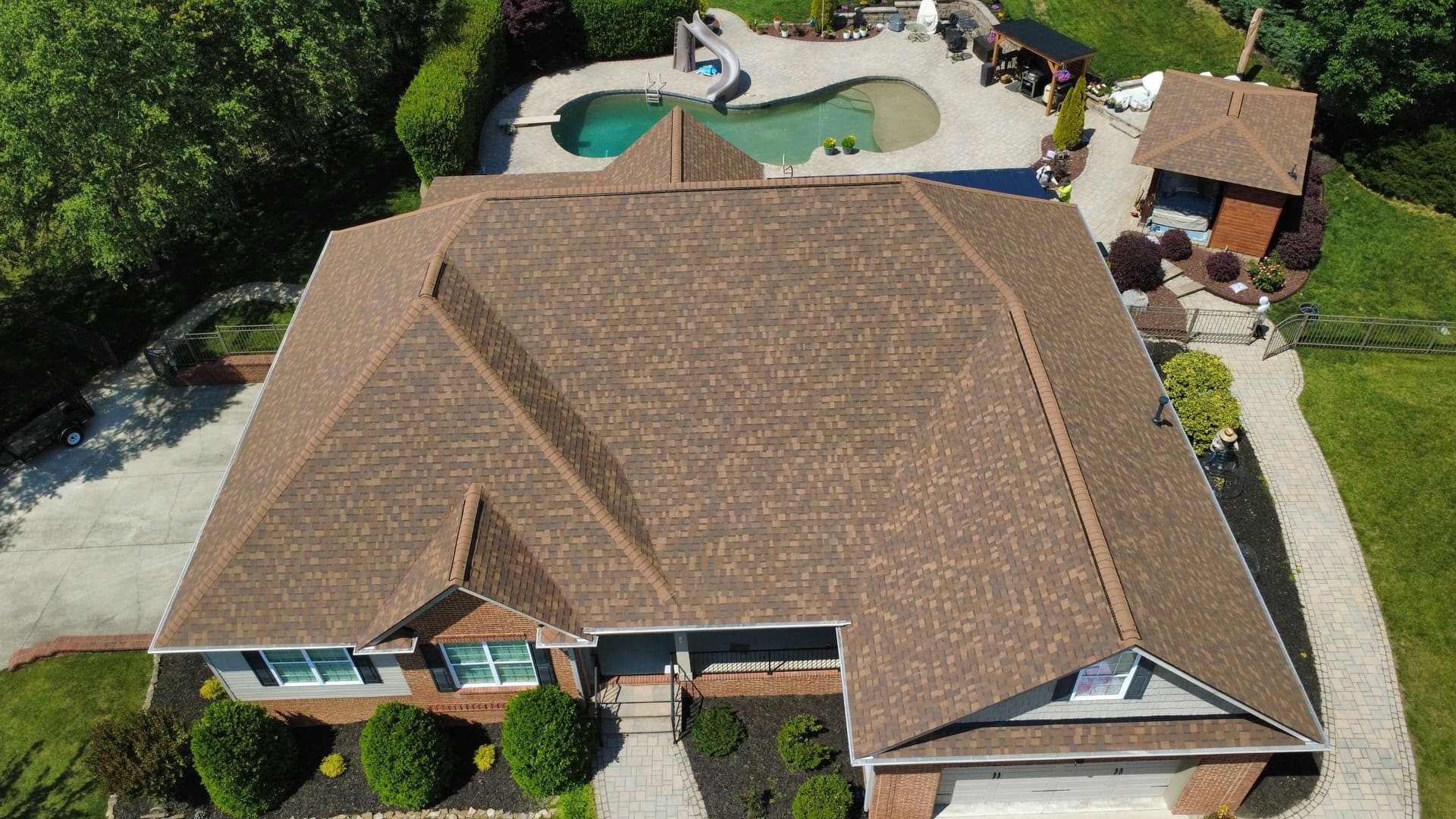
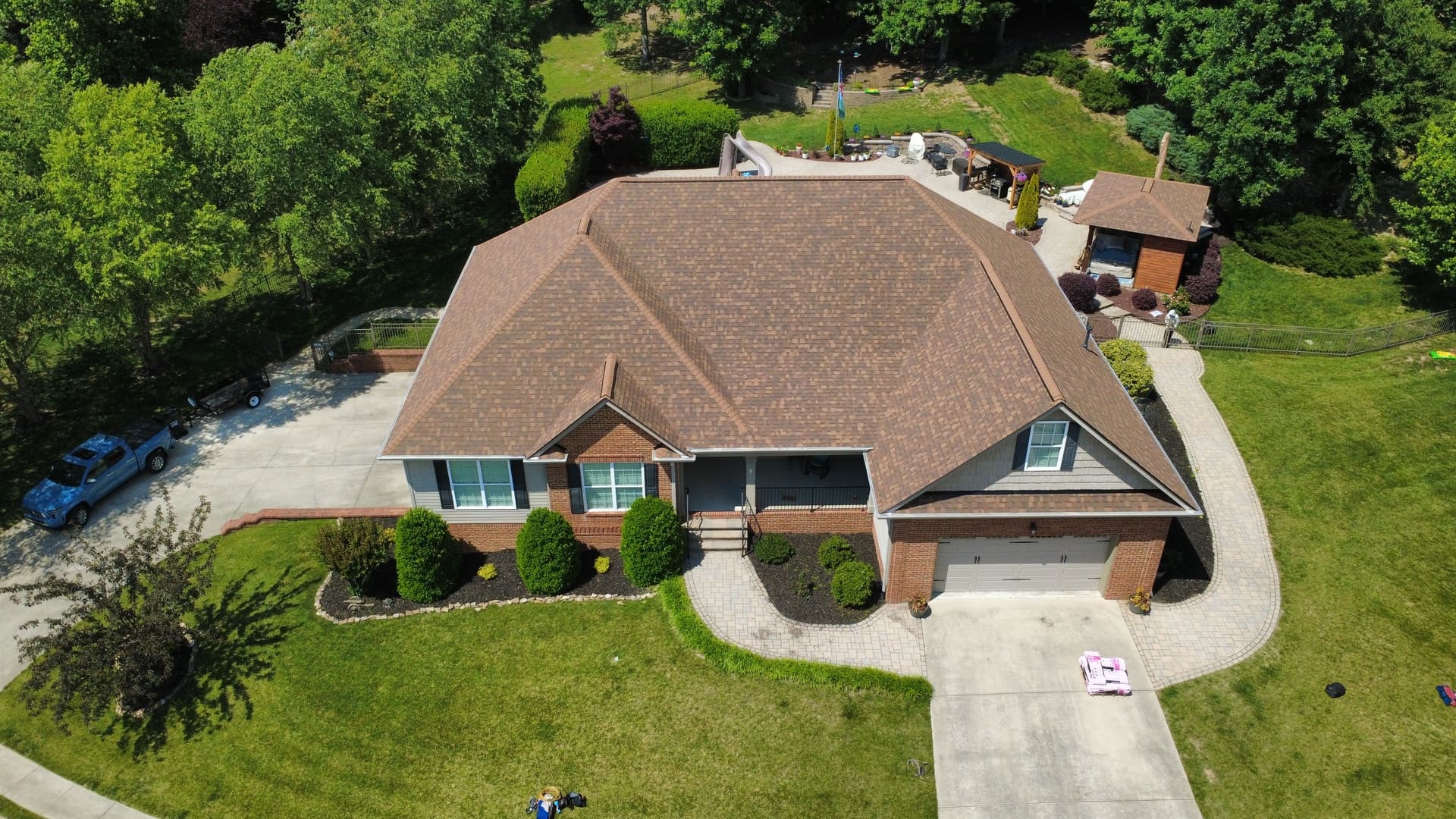
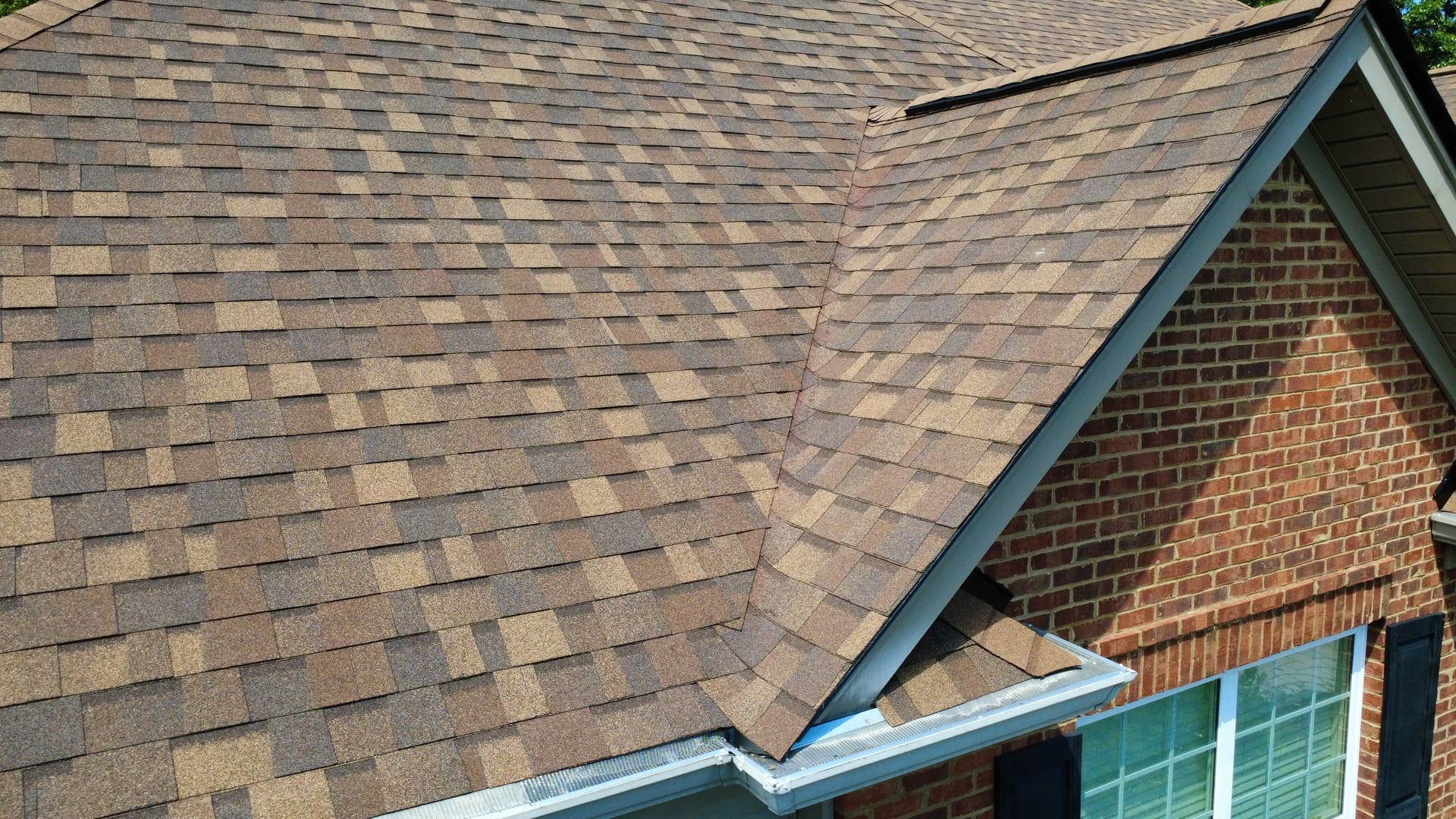
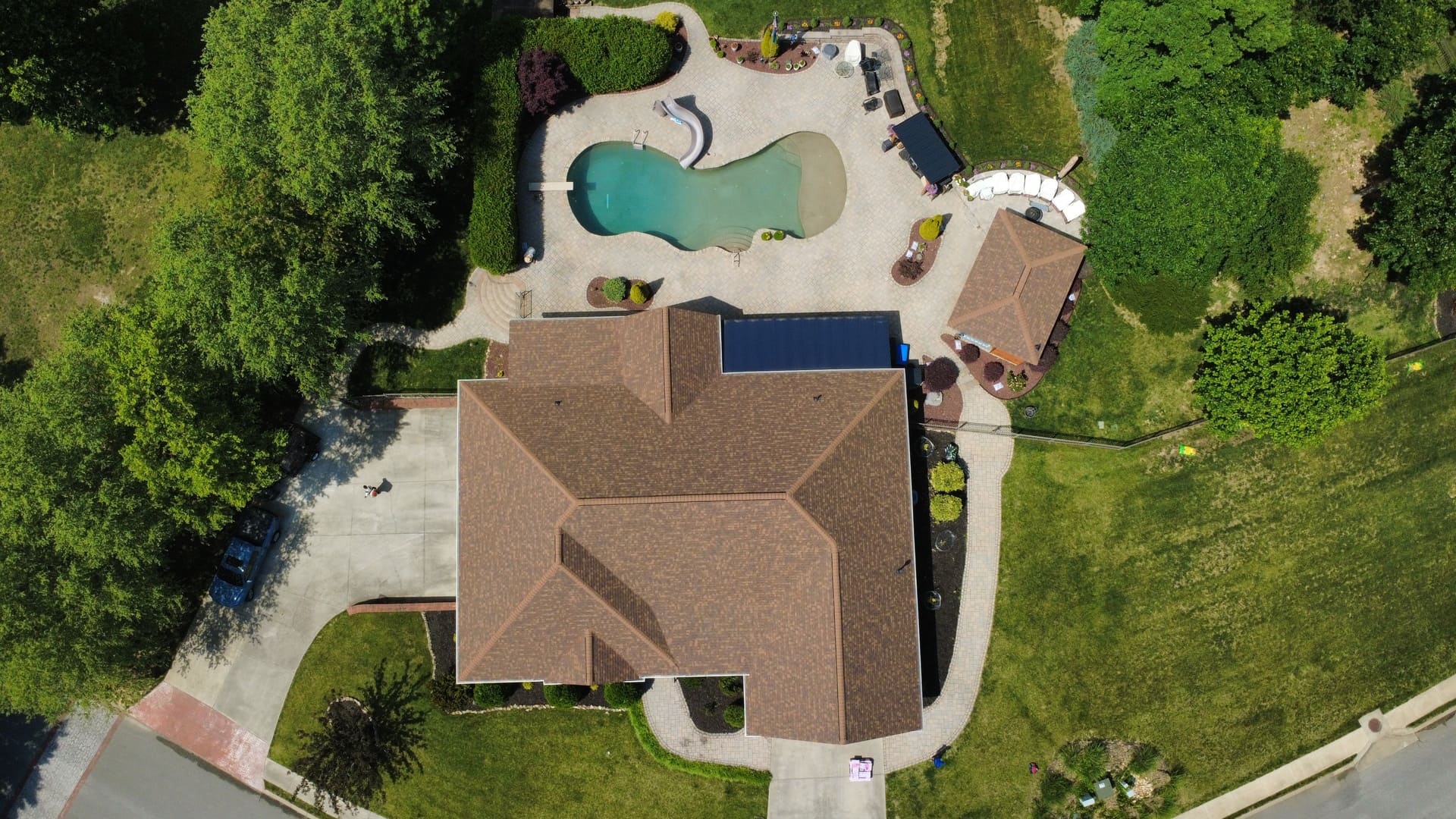
Soddy-Daisy, TN
A warm brown architectural shingle roof spreading across a sweeping hip design � earthy tones and rich dimension that complement the home's brick and bring lasting curb appeal.
No items found.
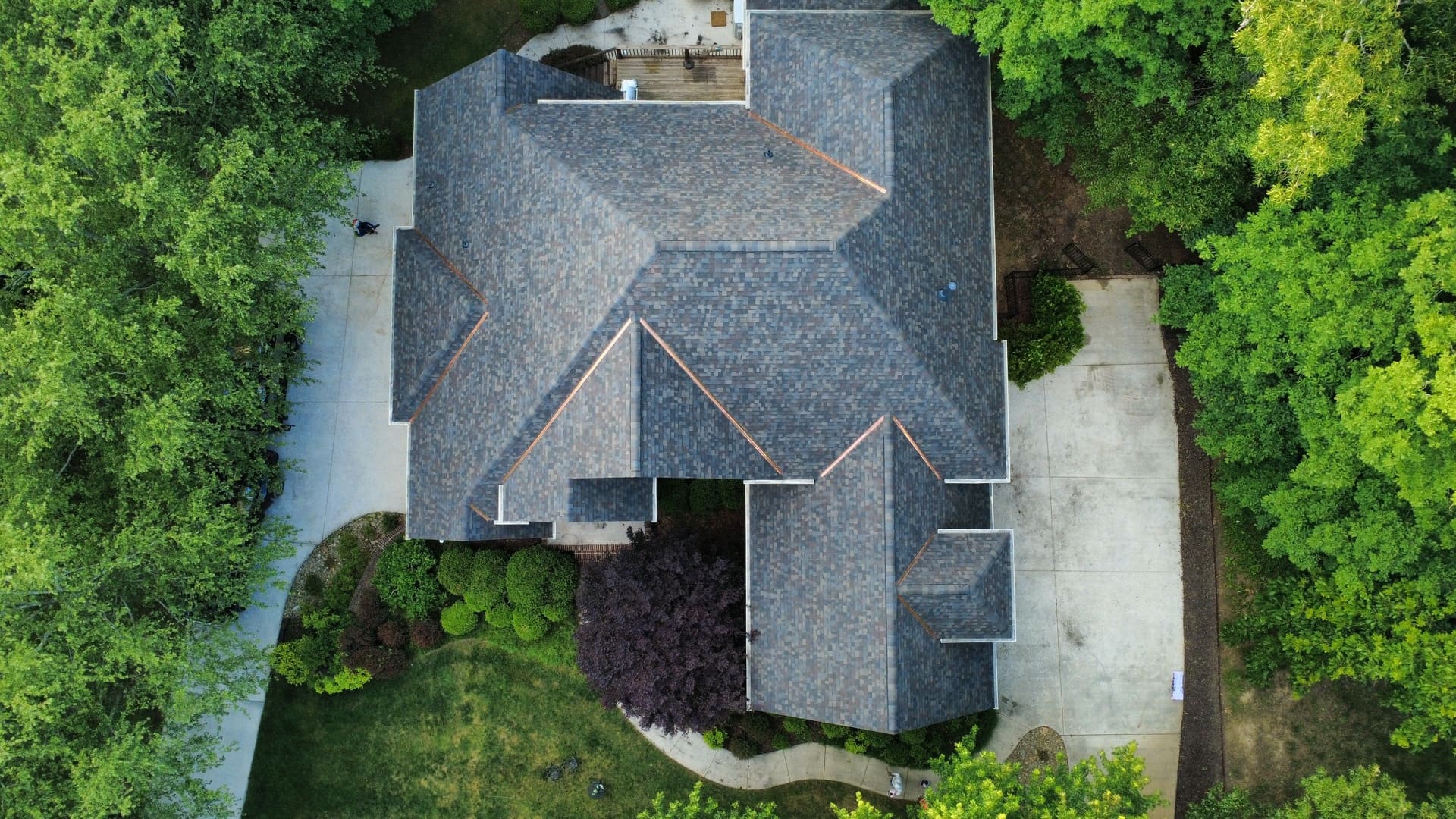
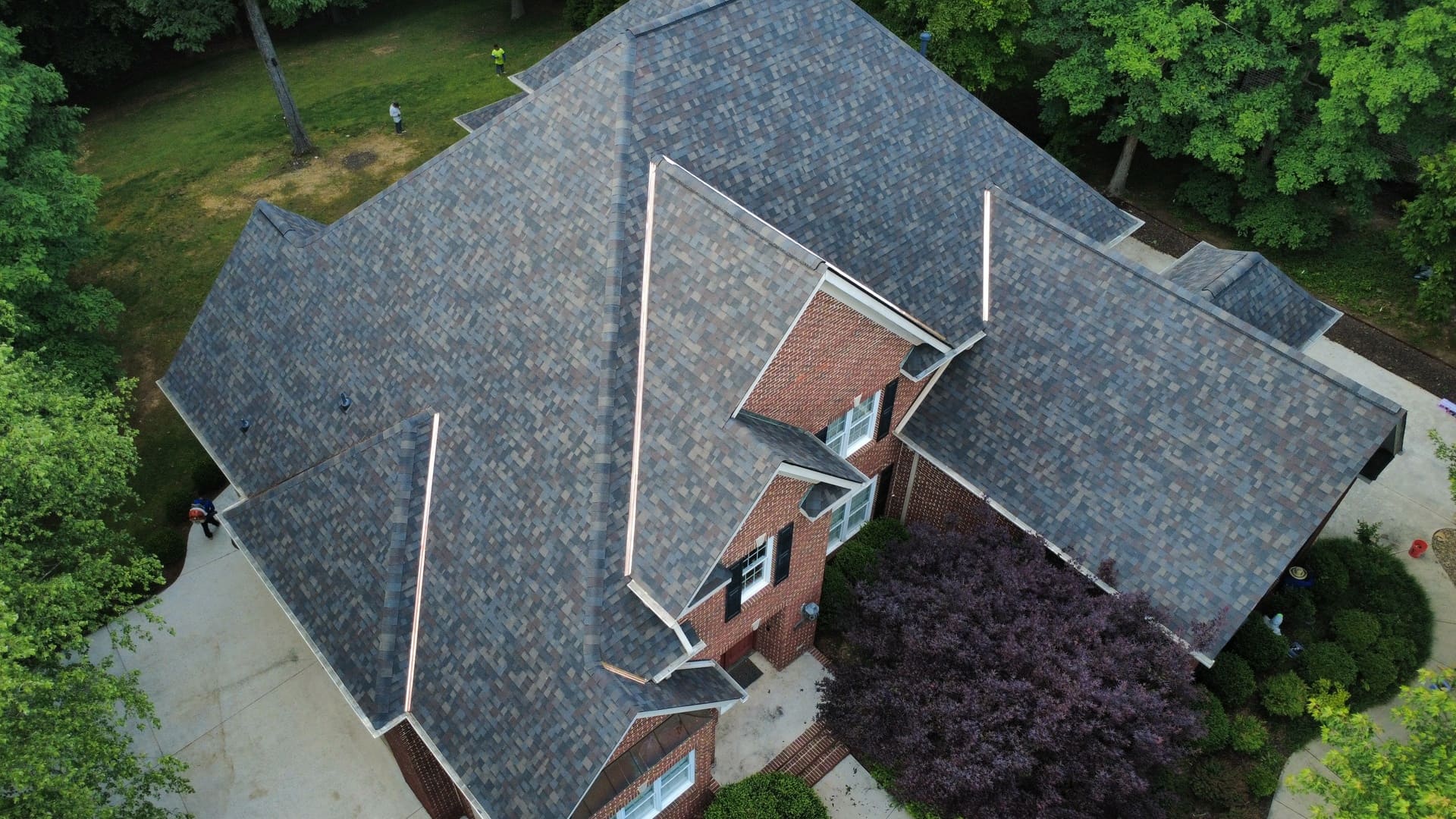
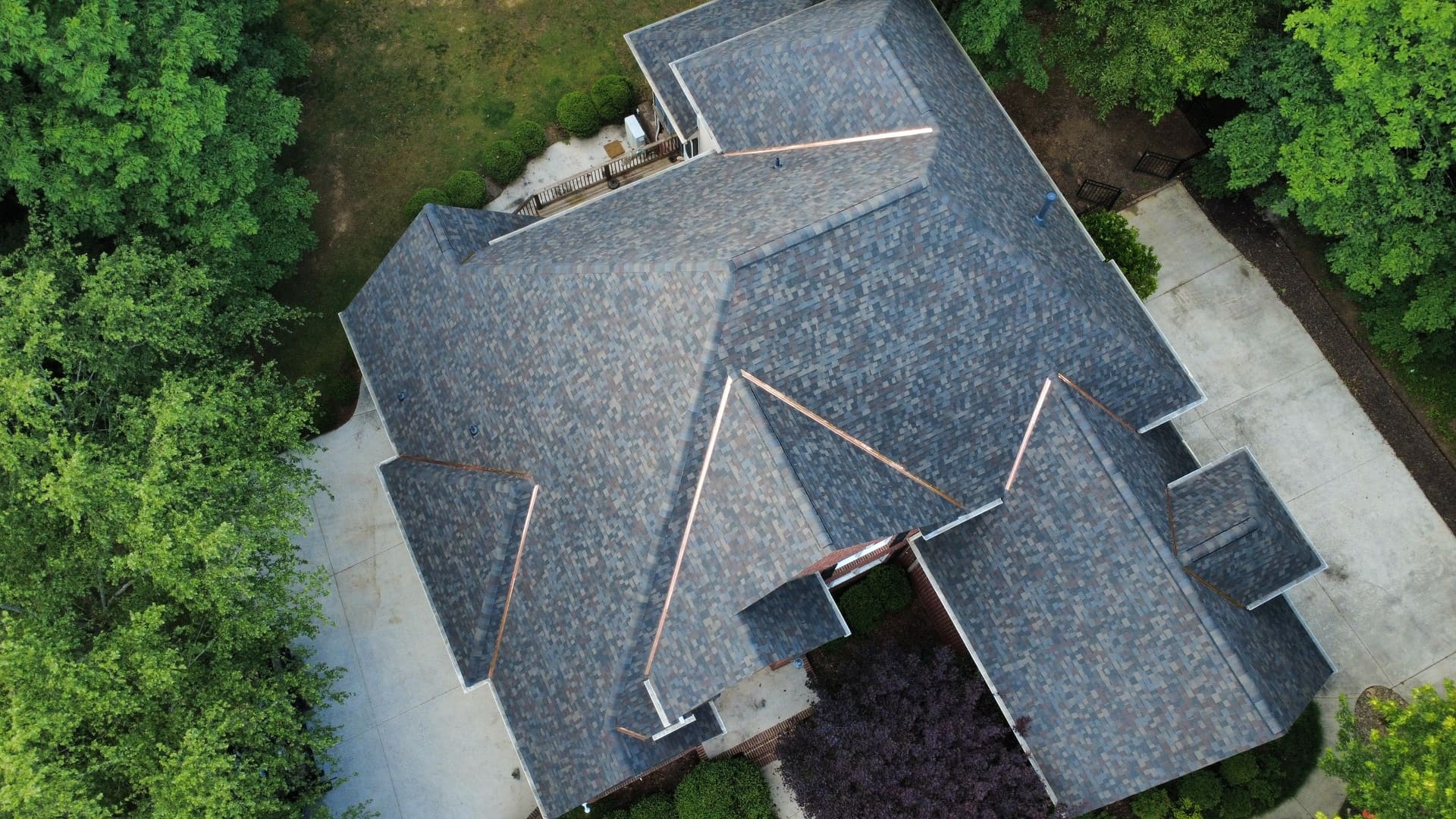
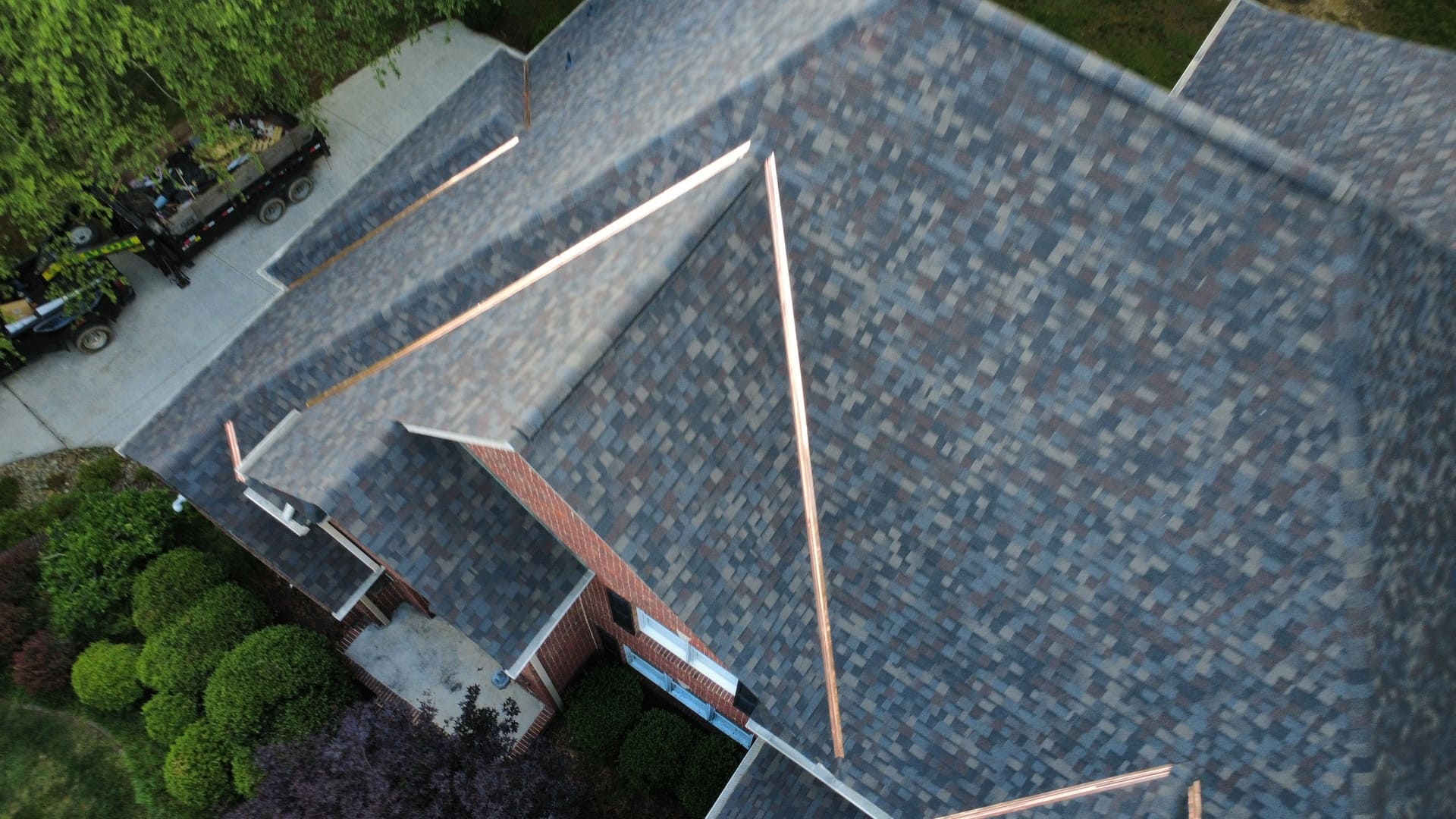
Soddy-Daisy, TN
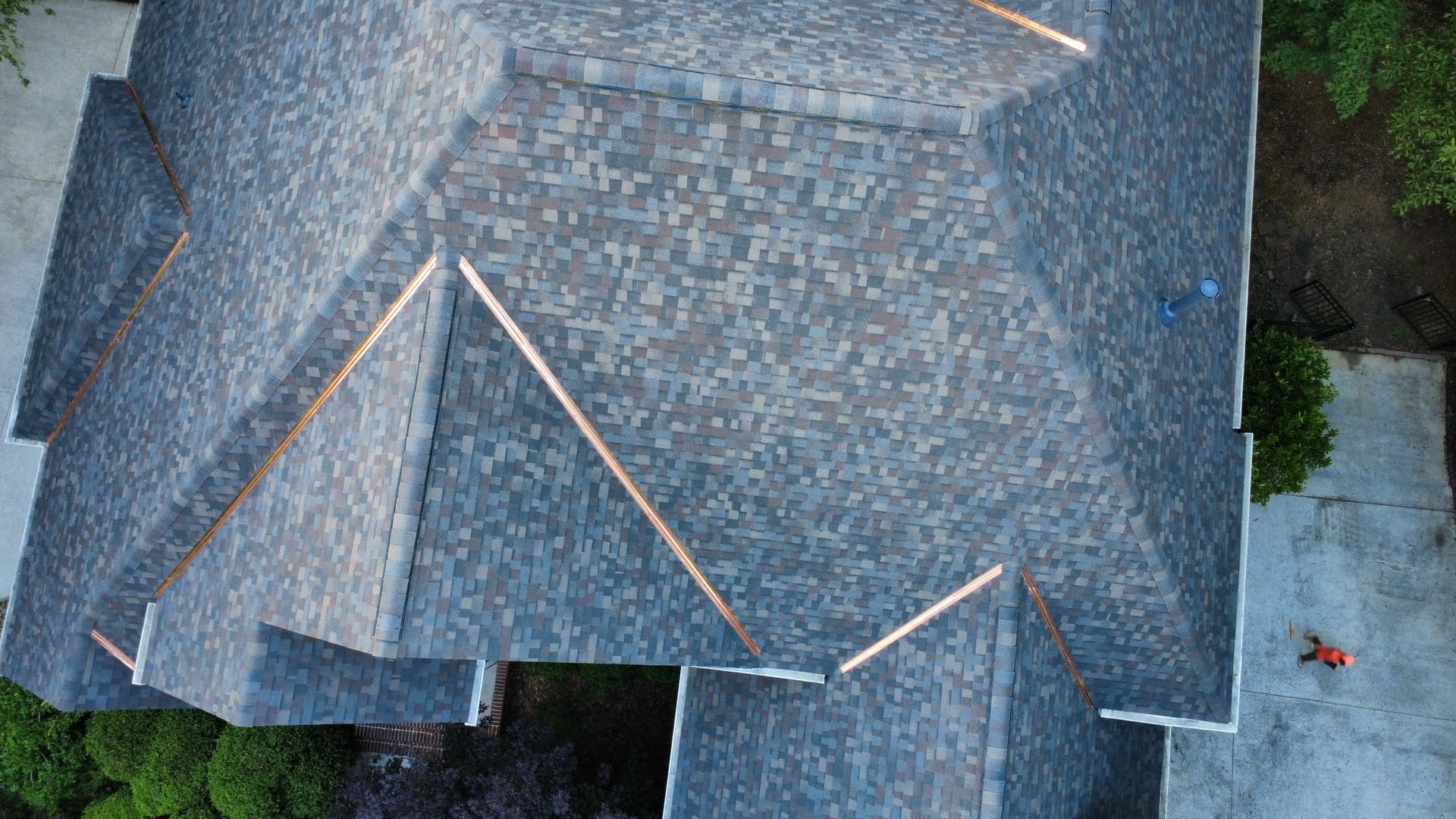
A blended gray architectural shingle roof tracing an intricate web of hips and valleys � crisp ridge lines and depth of color that crown a home tucked into the trees.

No items found.

Hixson, TN
A soft taupe-gray architectural shingle roof with clean hip lines meeting at sharp ridges � a warm, neutral finish that lends understated polish to the home.

No items found.
Atlanta, GA
Slate
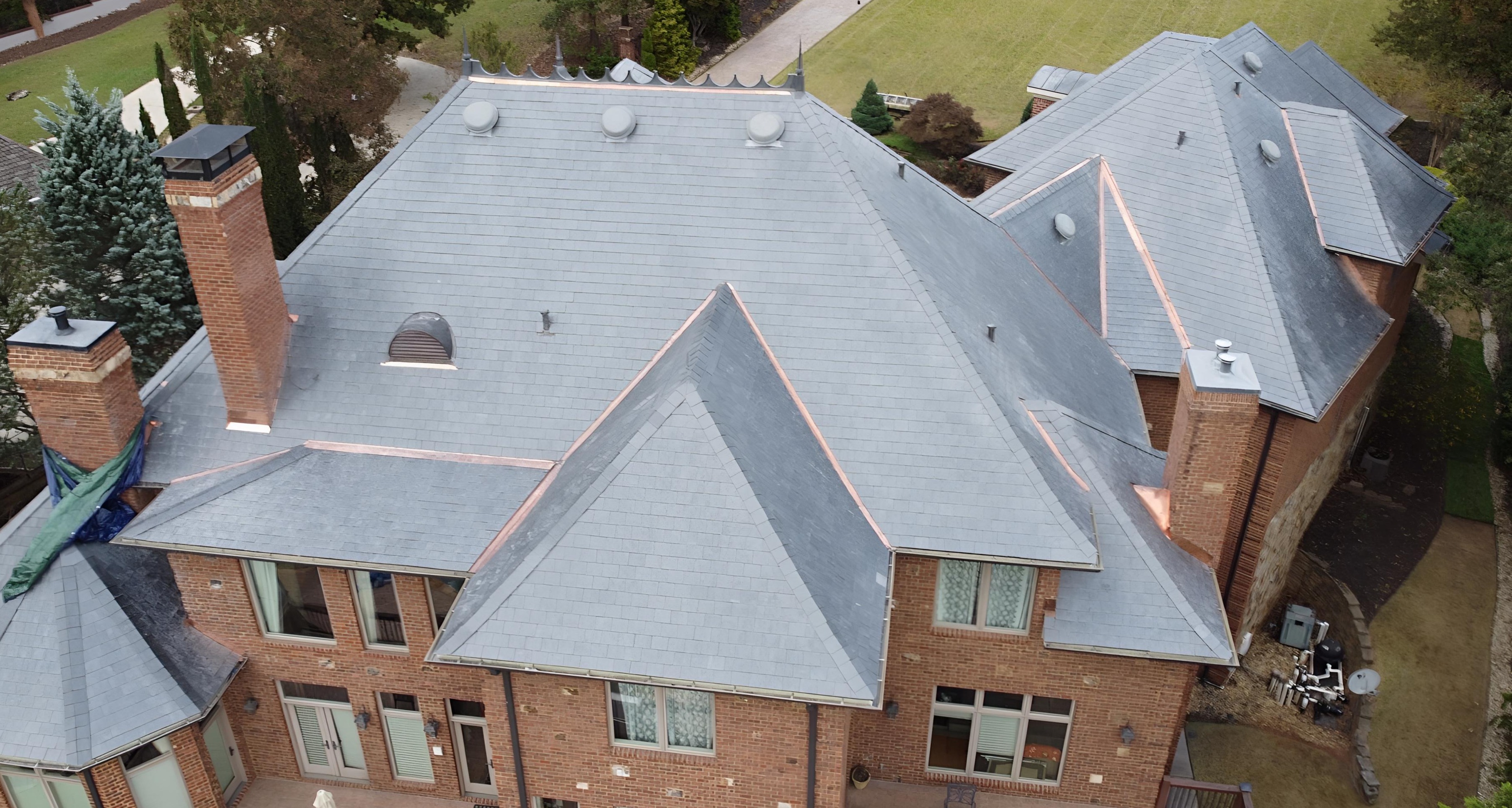
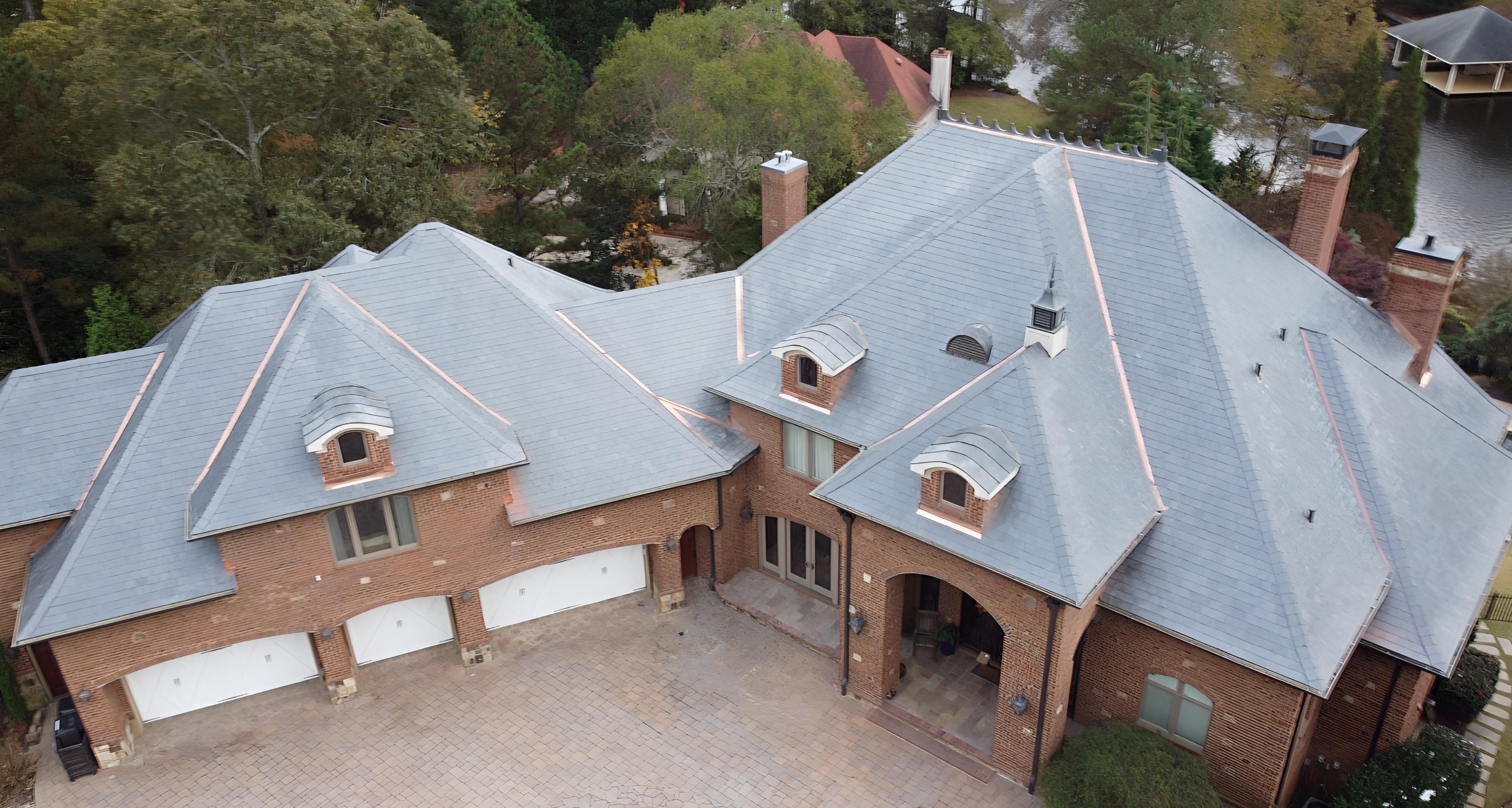
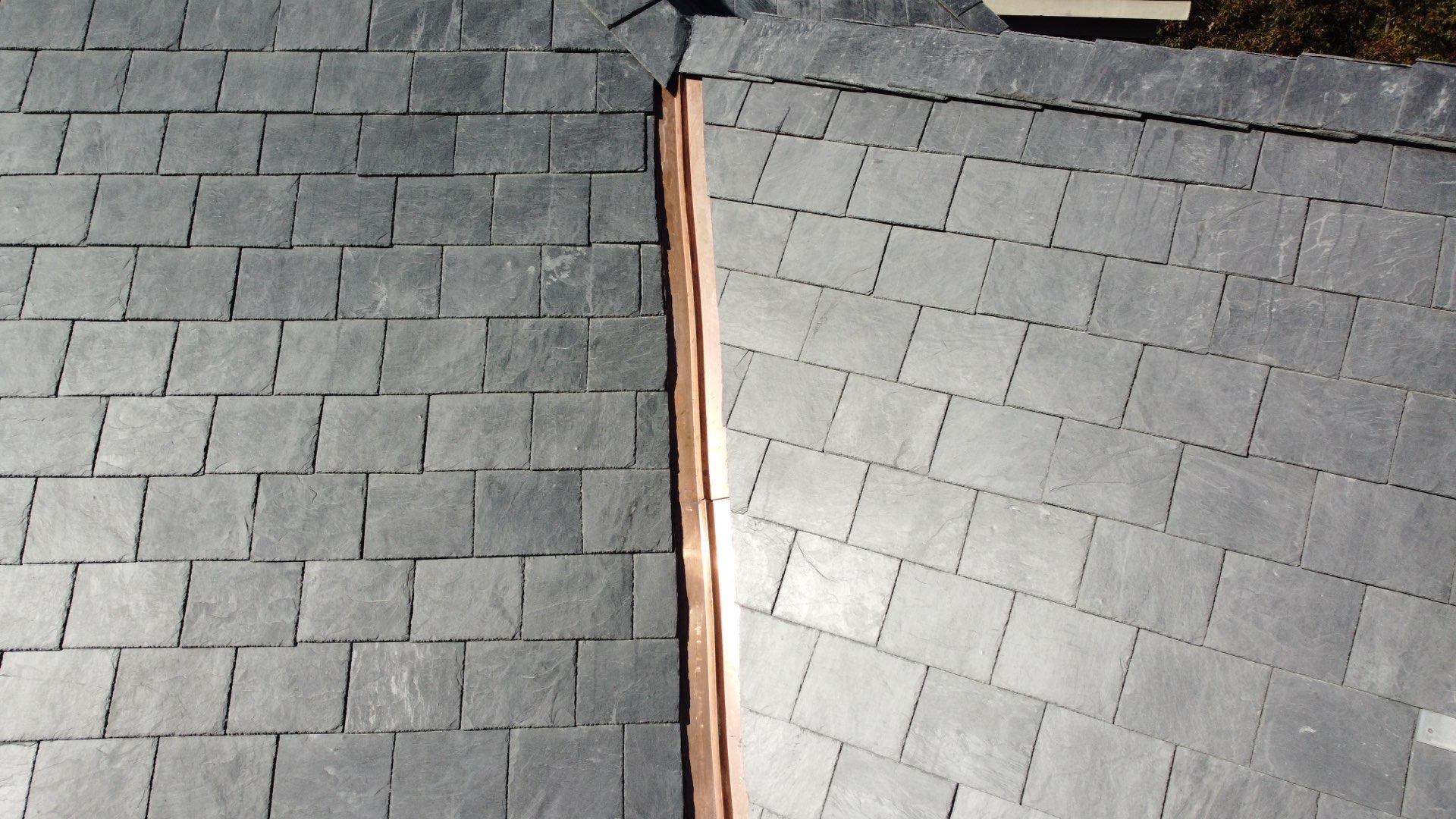
A timeless slate roof replacement in the heart of Atlanta � delivering natural elegance and exceptional durability for a home built to last generations.
No items found.

Marietta, GA
Owens Corning Oakridge | Onyx Black
A bold Onyx Black roof replacement in Atlanta, installed with Owens Corning's trusted Oakridge shingles � striking curb appeal with dependable, weather-resistant protection.
No items found.

Chattanooga, TN
Owens Corning Duration | Estate Gray
A classic Estate Gray roof replacement in Alpharetta using Owens Corning's premium Duration shingles � built for long-lasting beauty and performance in the Georgia heat.


No items found.
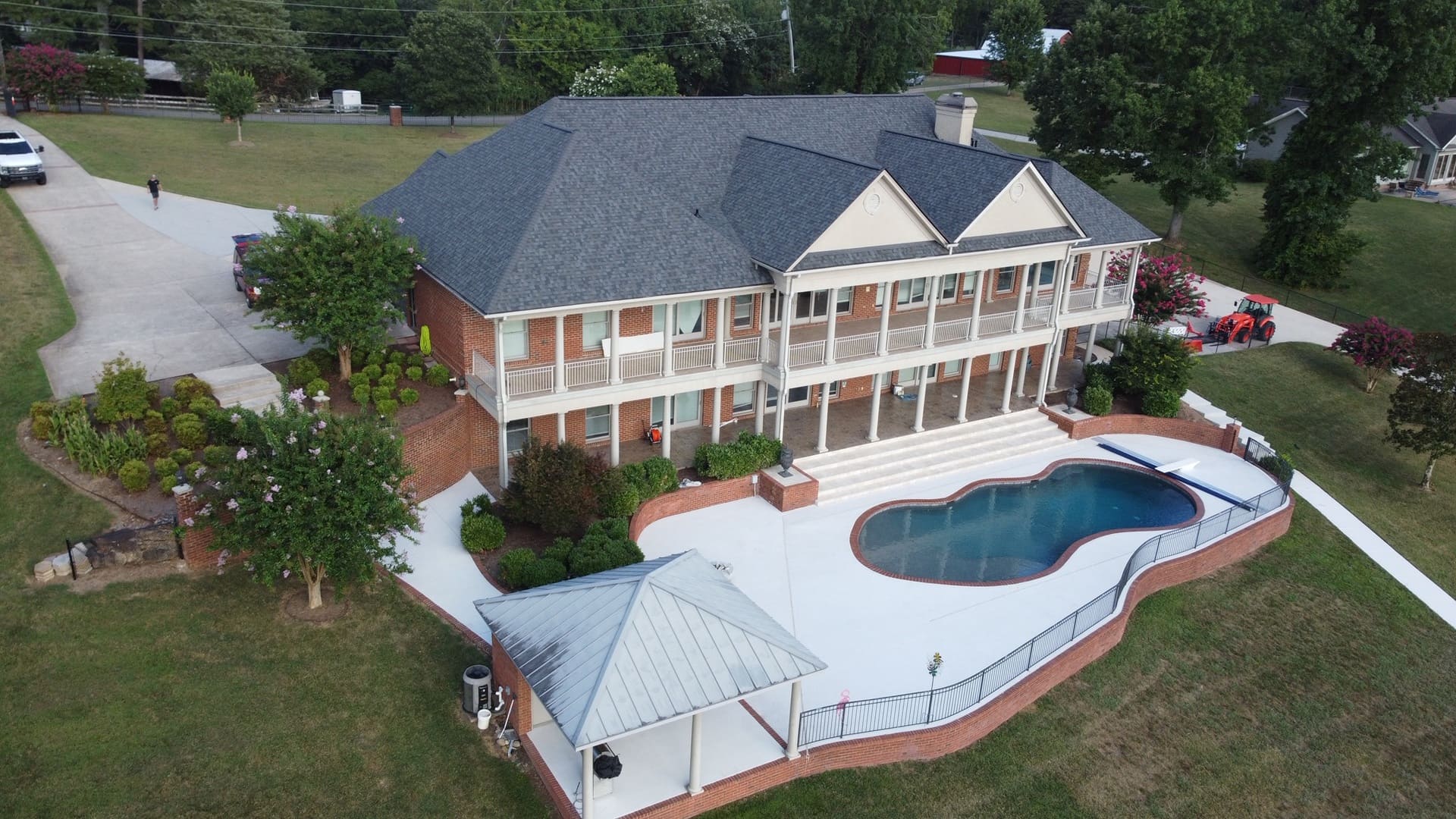
Harrison, TN
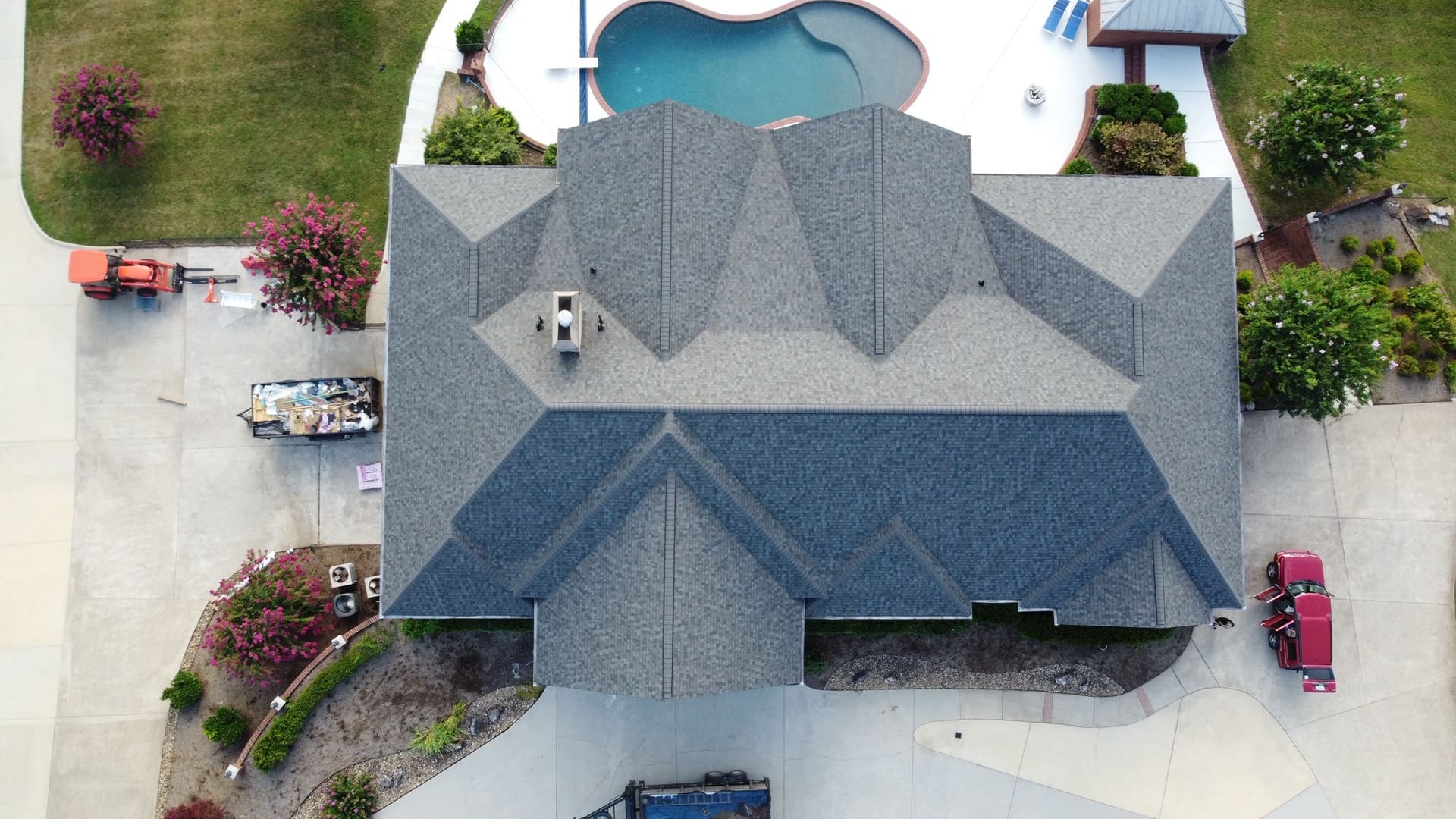
A cool slate-gray architectural shingle roof unfolding across a bold, symmetrical hip-and-gable layout � sharp peaks and clean lines that give this poolside home a striking, contemporary crown.
No items found.
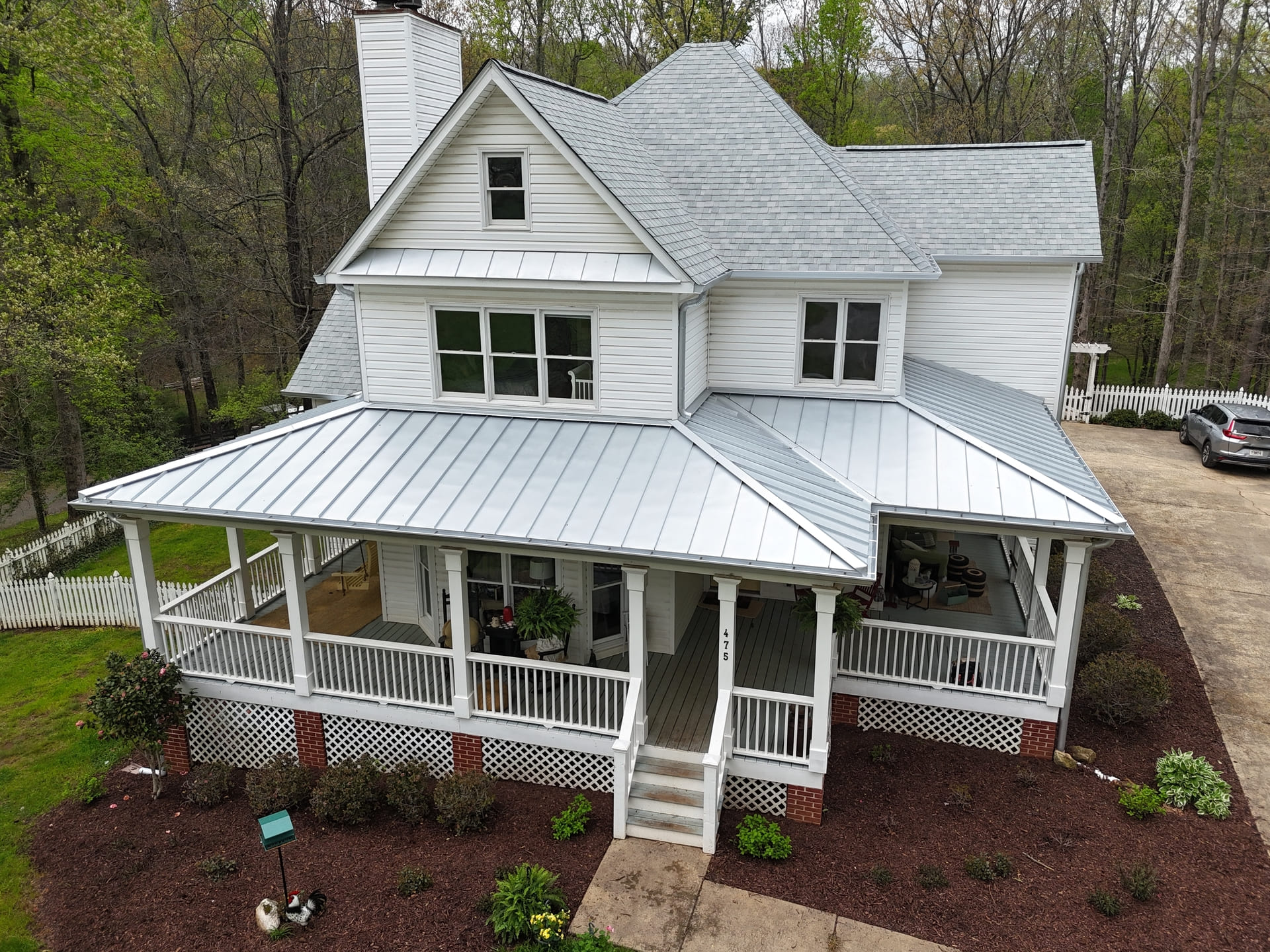
Cumming, GA
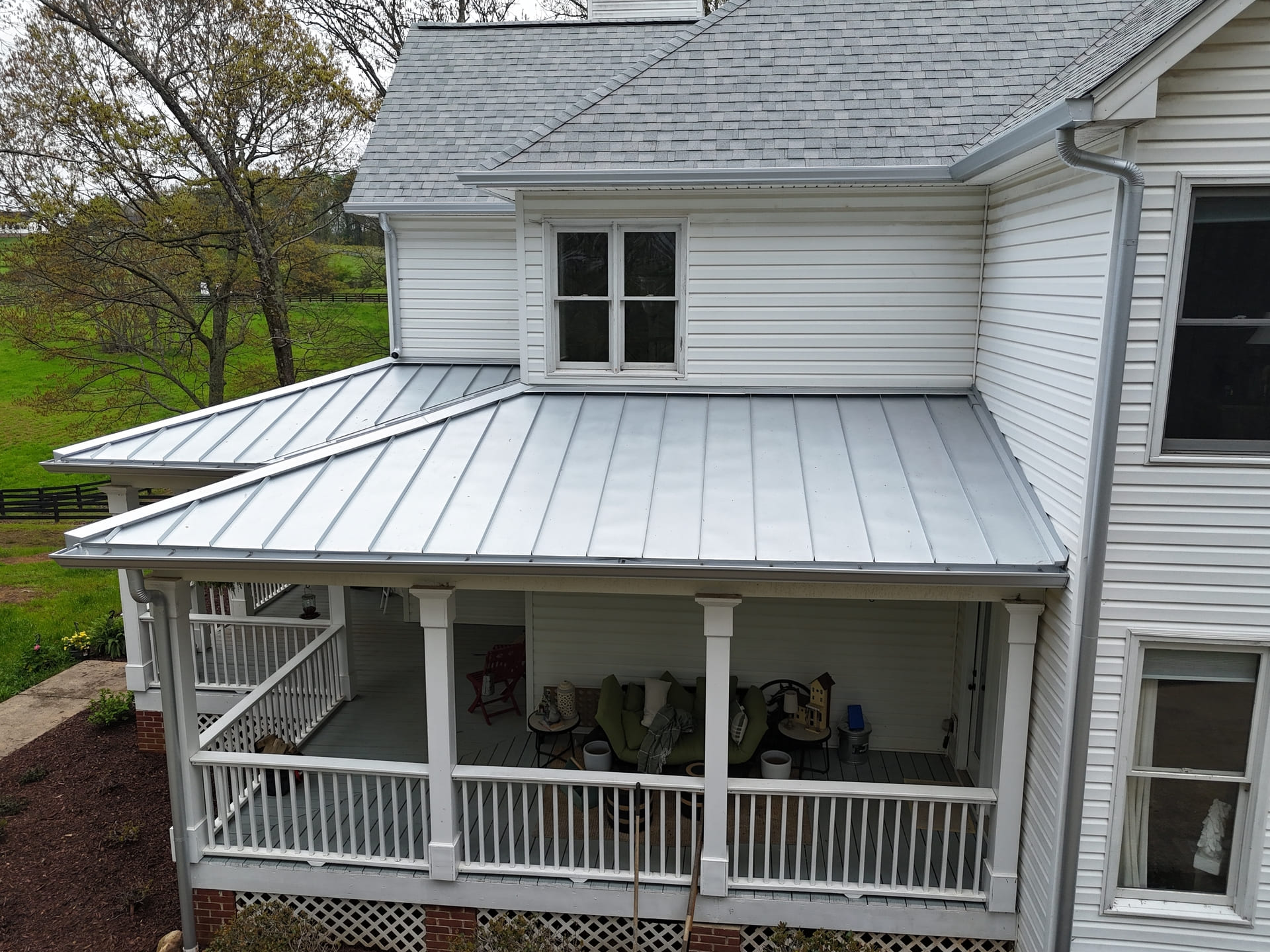
A classic farmhouse topped with gray architectural shingles on the upper roofline and a gleaming silver standing-seam metal roof over the wraparound porch � a mixed-material pairing that blends timeless charm with modern durability.
No items found.
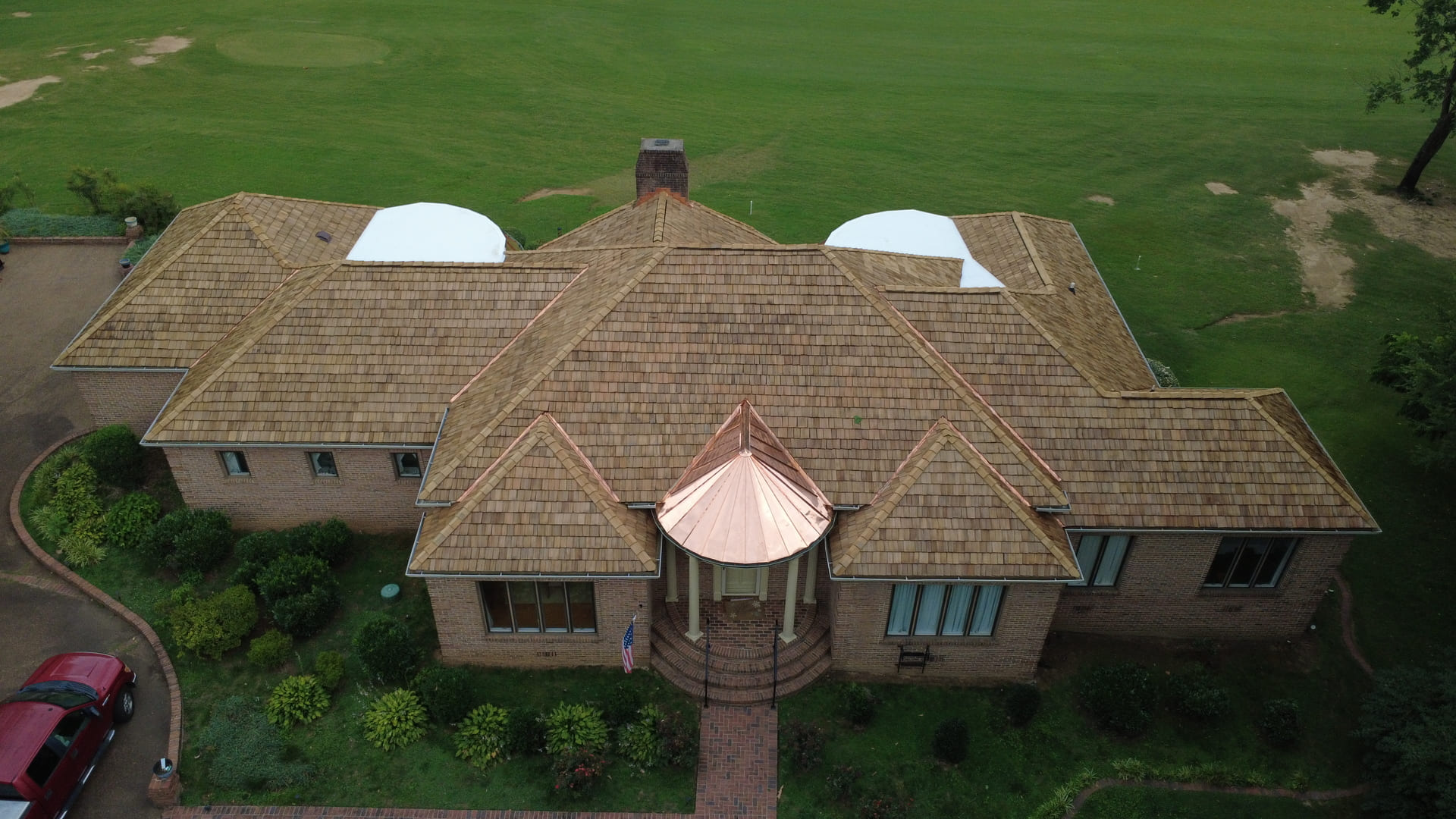
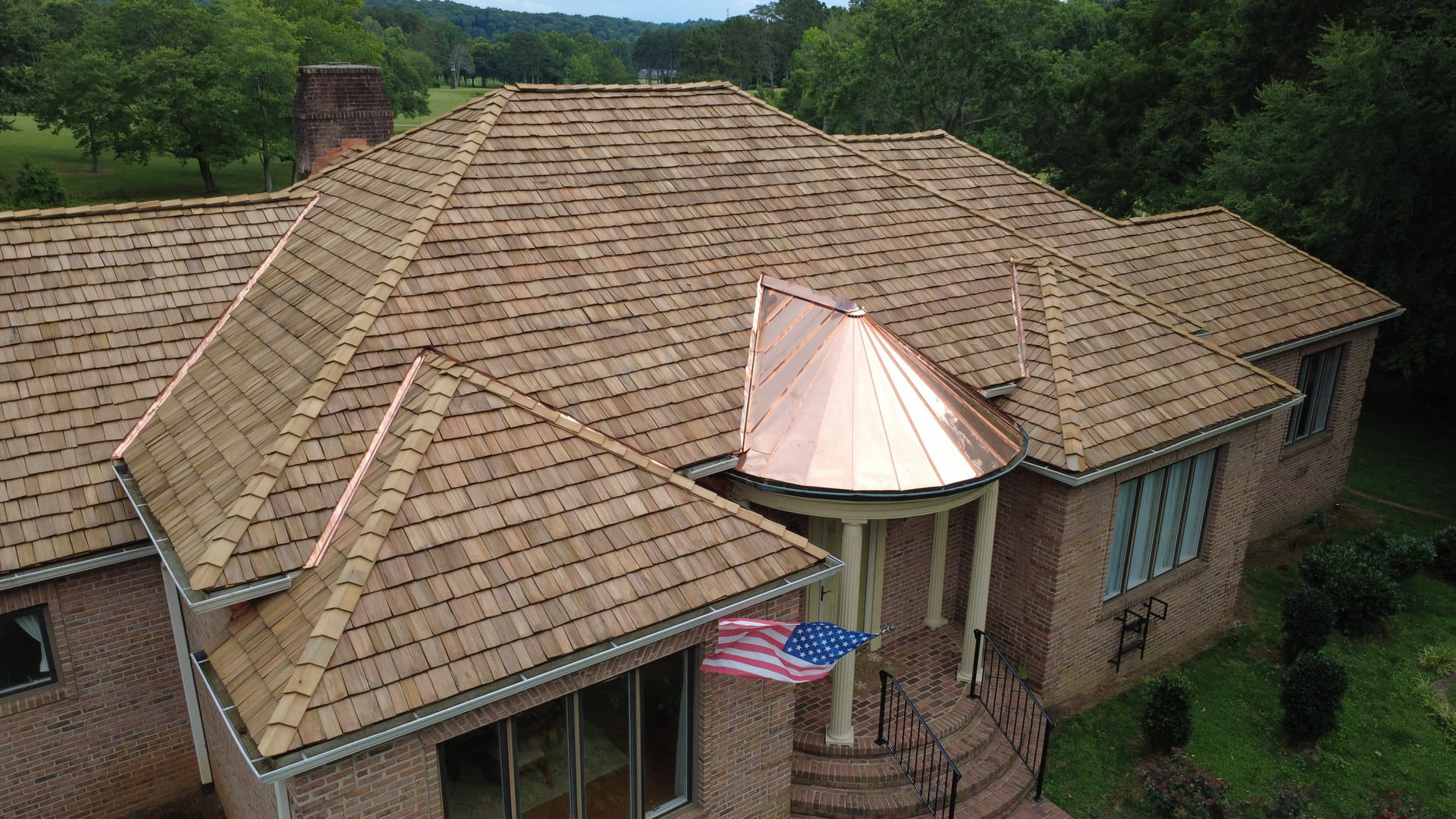
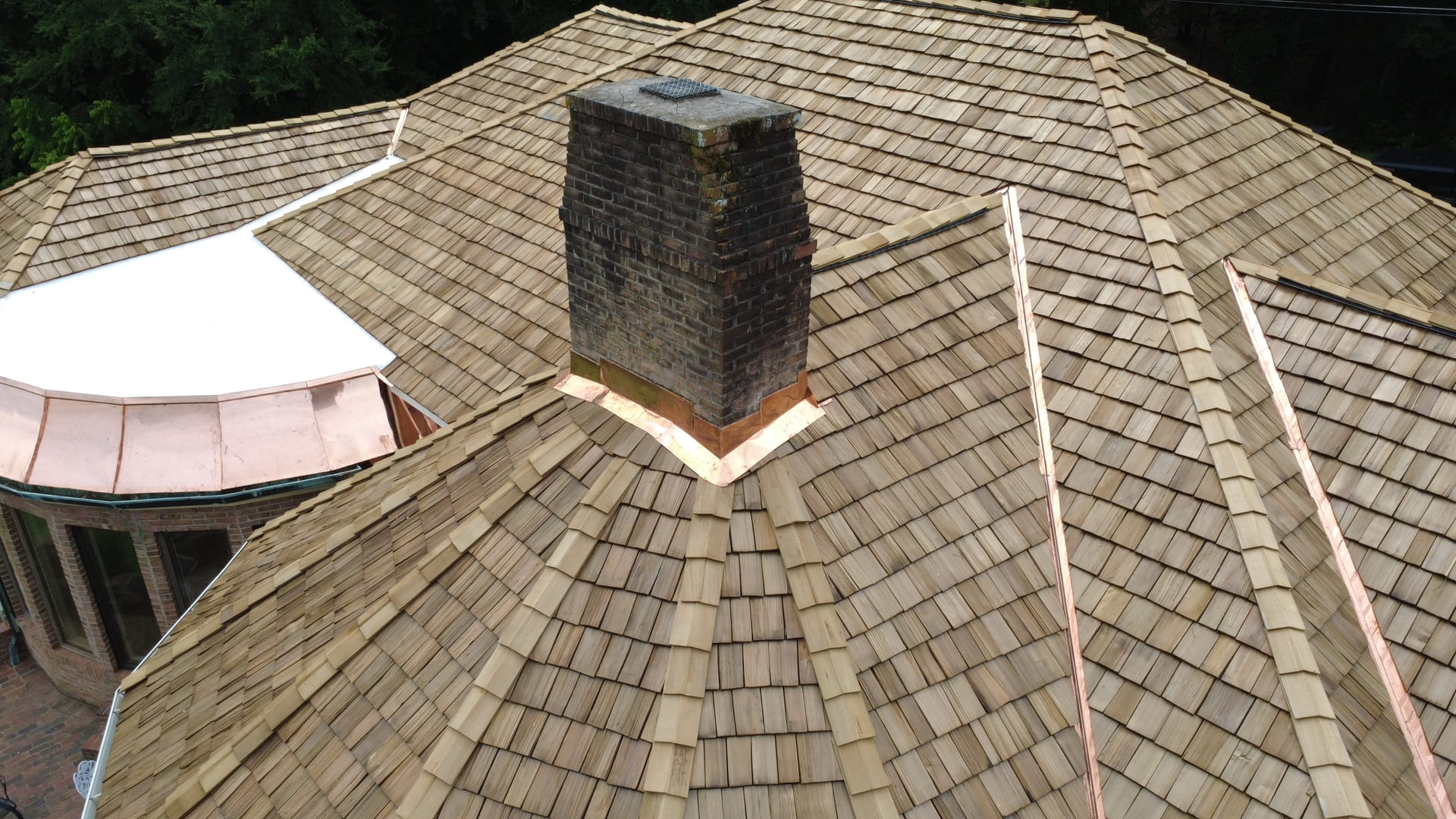
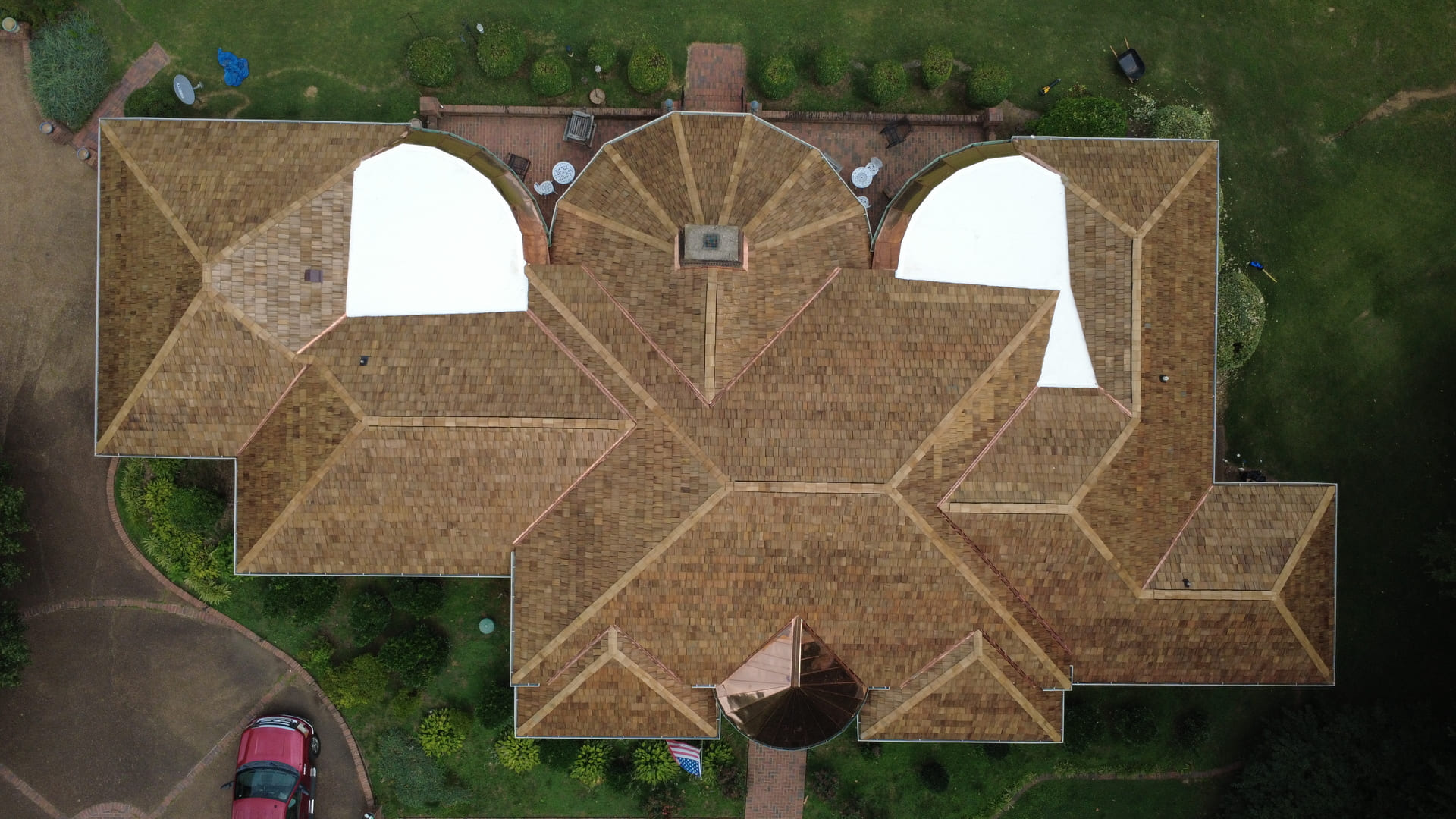
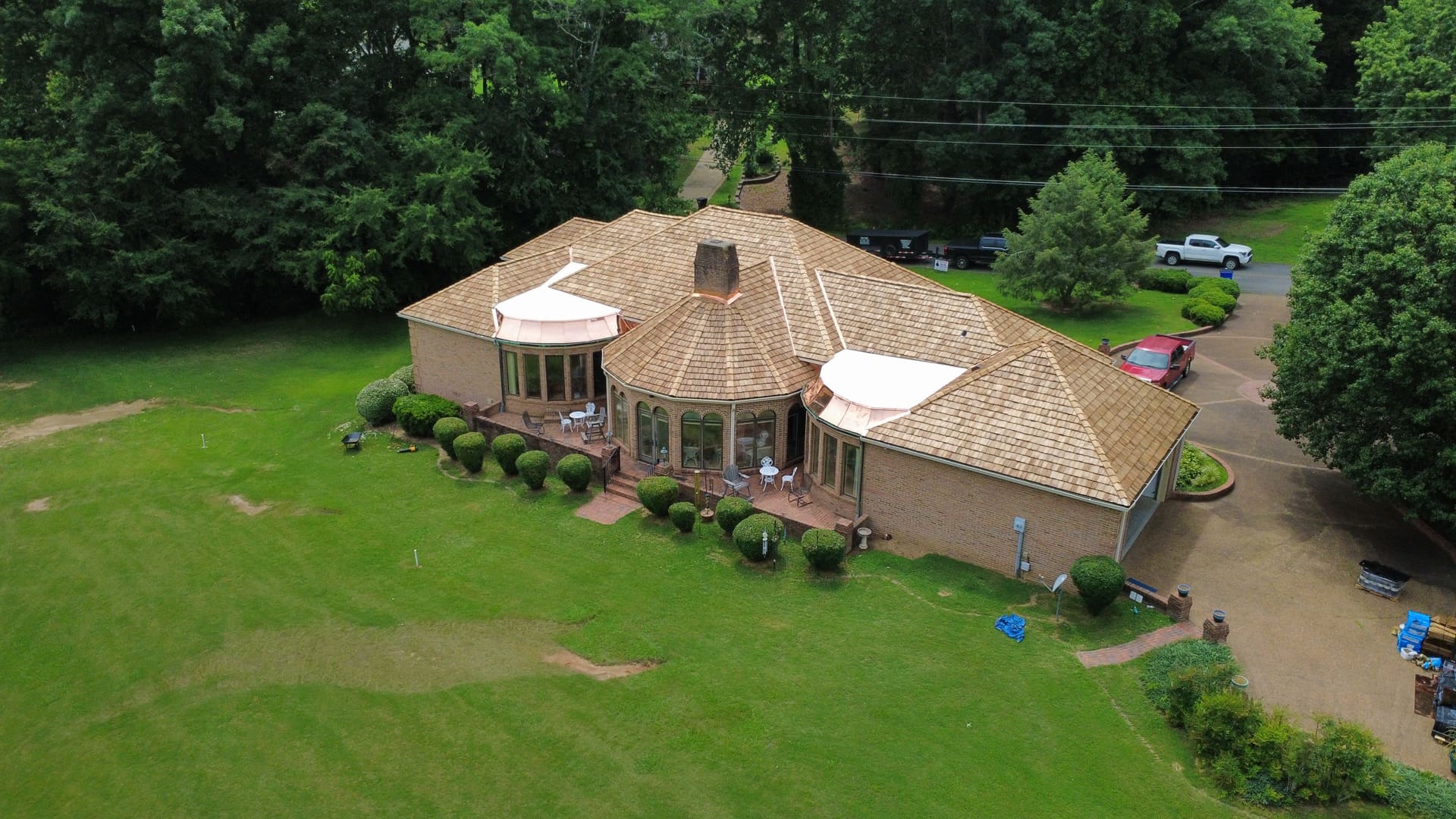
Cleveland, TN
A warm natural cedar shake roof flowing over a sweeping hip design and a striking octagonal turret, accented by curved copper roof sections over the bay window.
No items found.
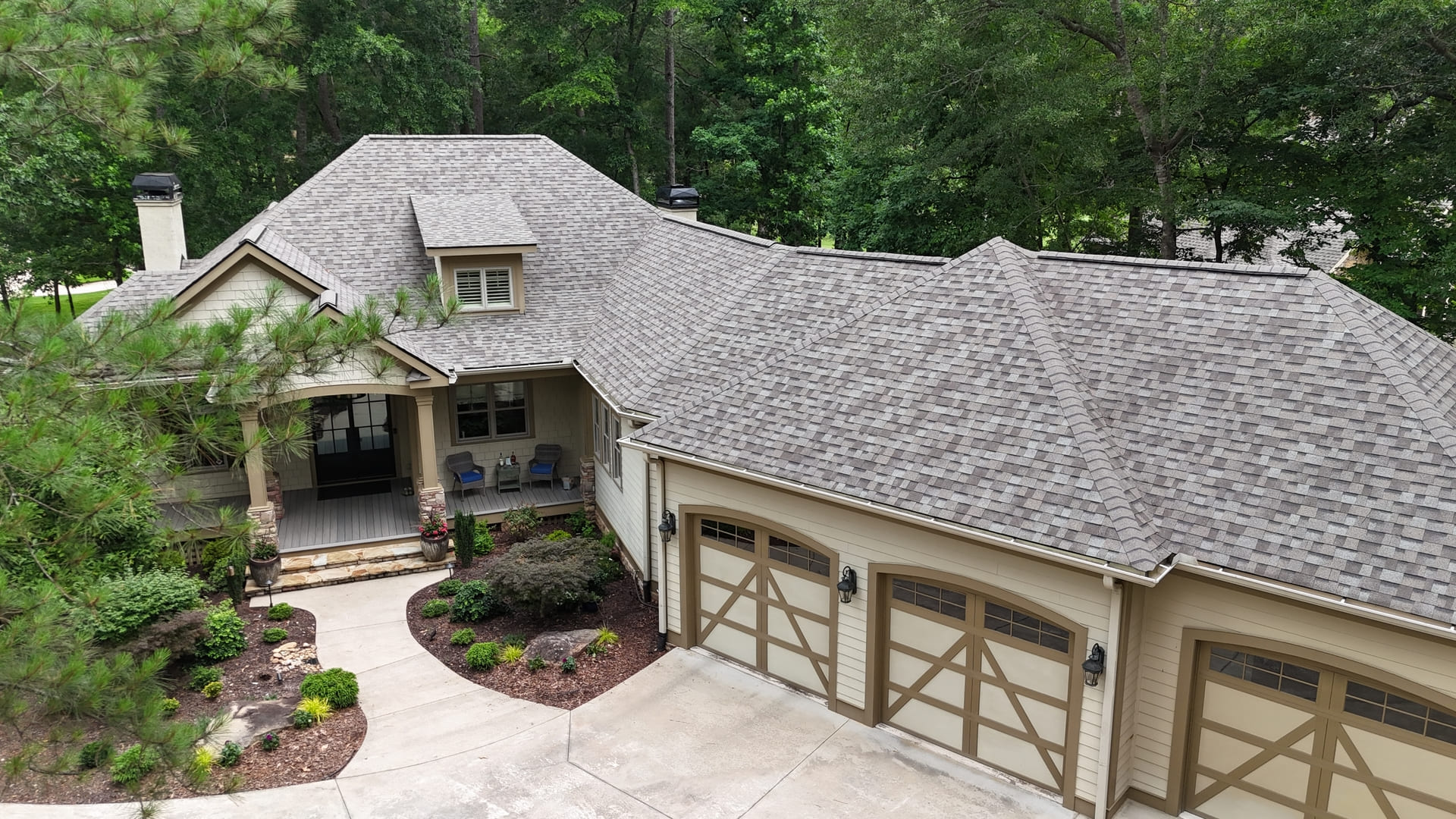
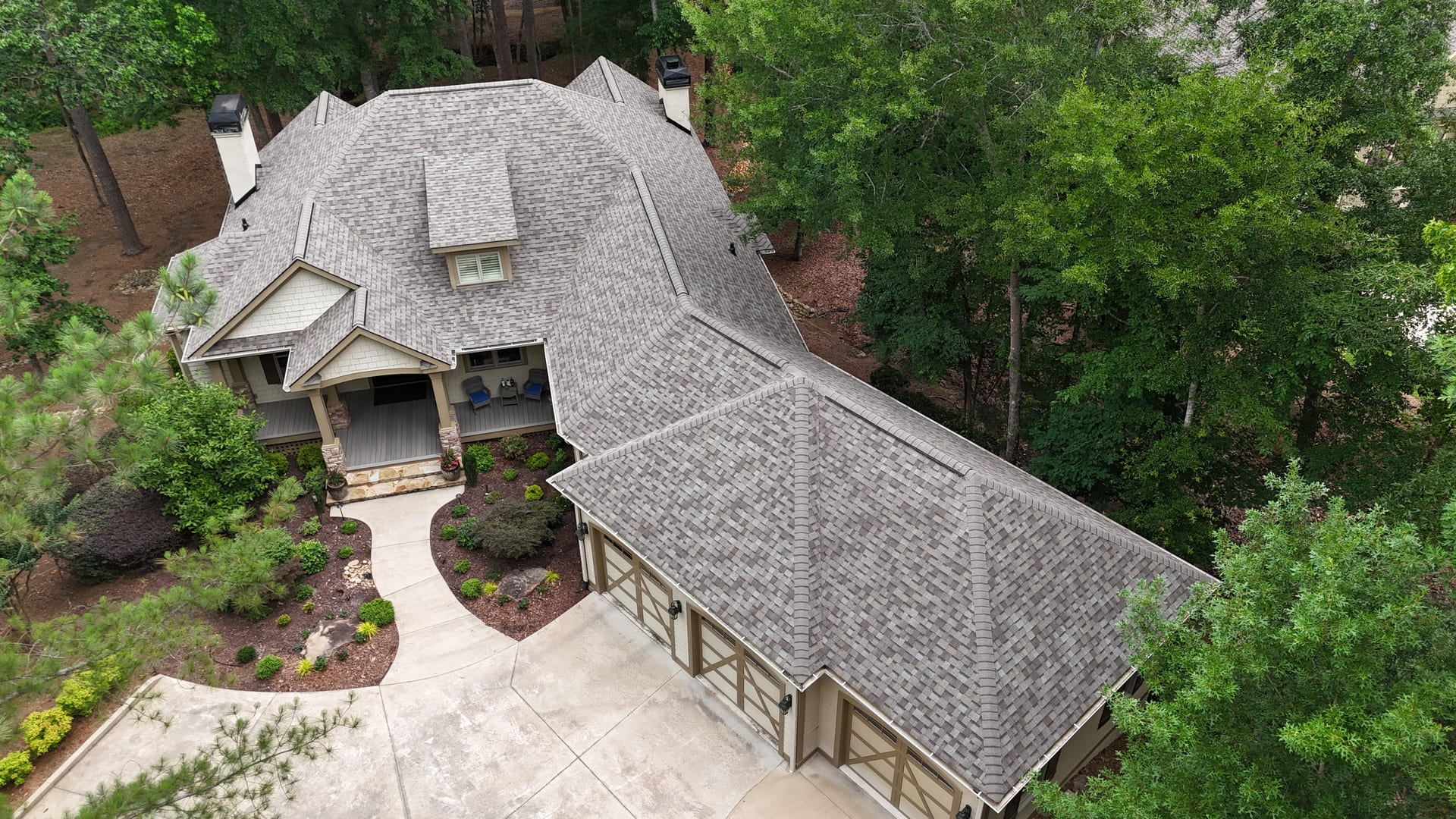
Greensboro, GA
A blended architectural shingle roof winding across a sprawling craftsman home, with steep gables, multiple ridges, and clean hip lines that suit its wooded setting.
No items found.
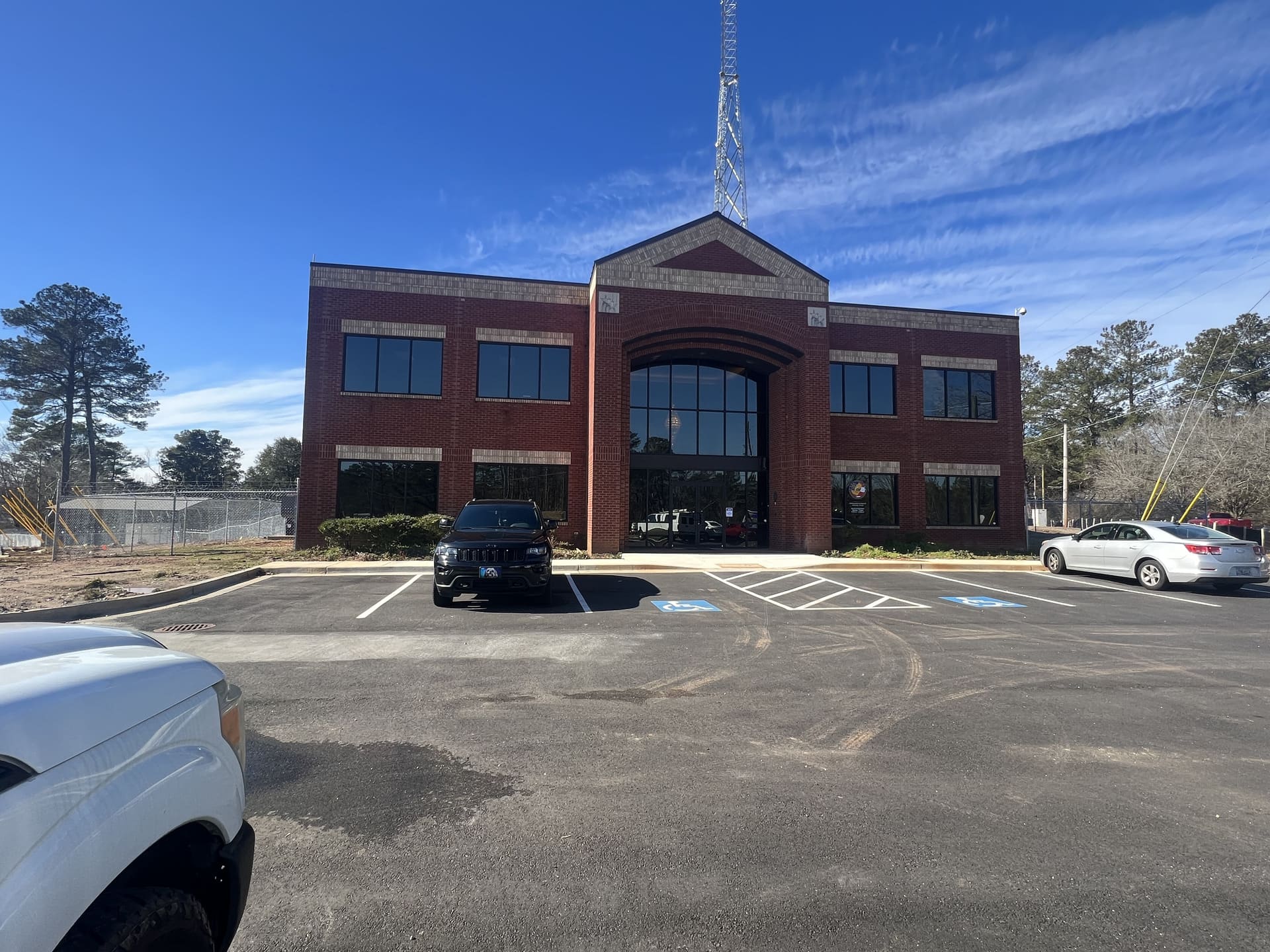
Conyers, GA
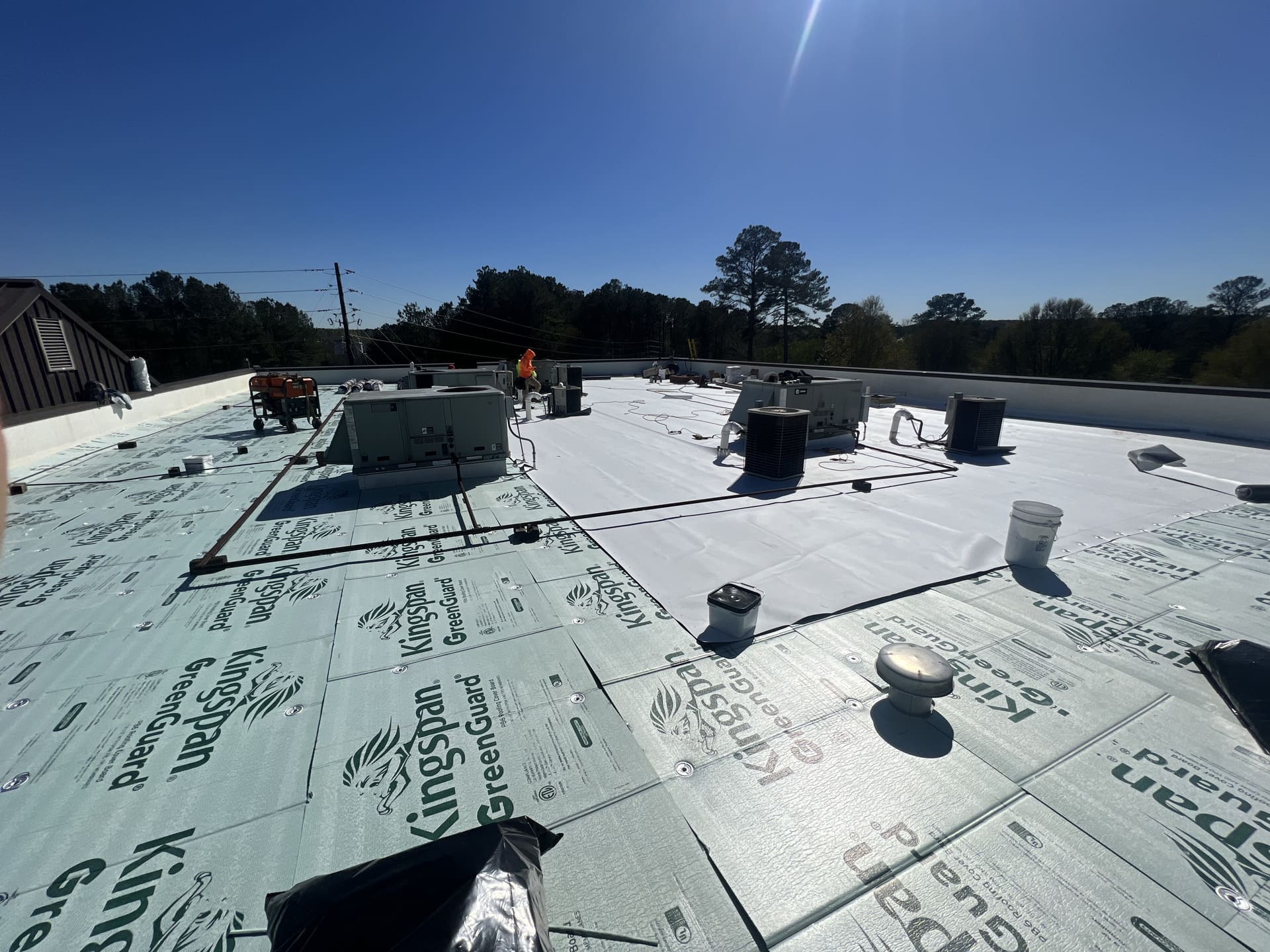
A re-roof on the EMA building, with fresh polyiso insulation board laid across the deck and a white membrane going down over it.
No items found.
FAQ[s]
Common FAQs
Get clear answers to the questions homeowners ask most about roofing, repairs, and working with Jaco Roofing.
What is PVC roofing, and why is it used on commercial buildings?
PVC (polyvinyl chloride) roofing is a single-ply membrane system designed for flat and low-slope commercial roofs. It's made from thermoplastic material that is heat-welded at the seams, creating a watertight bond that's actually stronger than the membrane itself. PVC is used widely on commercial buildings because it handles ponding water, chemical exposure, and UV radiation better than most other single-ply options. It's especially popular on restaurants, manufacturing facilities, and buildings with rooftop equipment because it resists grease, oils, and industrial chemicals that would break down other roofing materials over time.
How long does a PVC commercial roof last in Georgia?
A PVC commercial roof in Georgia typically lasts between 20 and 30 years when properly installed and maintained. Georgia's heat, humidity, and UV exposure do stress roofing materials, but PVC holds up well because of its chemical stability and UV-resistant formulation. The heat-welded seams are the strongest part of the system and rarely fail before the membrane itself shows wear. Factors that affect longevity include membrane thickness (50-mil vs. 60-mil or 80-mil), quality of installation, how well the roof drains, and whether it receives annual inspections. Thicker membranes and proper maintenance push the lifespan toward the higher end of that range.
What are the advantages of PVC roofing over TPO or EPDM for commercial properties?
PVC's biggest advantage over TPO and EPDM is its chemical resistance. If your building has a commercial kitchen, manufacturing operations, or rooftop HVAC equipment that might leak oils or chemicals, PVC handles that exposure far better than the alternatives. PVC also has a longer track record — it's been used commercially since the 1960s, while TPO has only been widely used since the early 2000s, so long-term performance data for PVC is more established. Compared to EPDM, PVC offers heat-welded seams versus glued or taped seams, which gives PVC a stronger and more watertight bond. PVC also reflects more sunlight, which can reduce cooling costs. The tradeoff is that PVC costs more upfront than both TPO and EPDM.
How much does PVC roofing cost for a commercial building in Georgia?
PVC roofing for a commercial building in Georgia generally costs between $7 and $13 per square foot installed, depending on the membrane thickness, roof complexity, insulation requirements, and accessibility. For a 10,000-square-foot commercial roof, expect a total project cost somewhere between $70,000 and $130,000. Thicker membranes (60-mil or 80-mil) and roofs with lots of penetrations, parapet walls, or equipment curbs will push costs toward the higher end. While PVC costs more than TPO or EPDM upfront, the longer lifespan and lower maintenance costs often make it more economical over 20 to 30 years.
How do I know if my commercial building in Georgia is a good candidate for PVC roofing?
Your building is a strong candidate for PVC if it has a flat or low-slope roof and any of these apply: you have a commercial kitchen or restaurant with grease exhaust, your building houses manufacturing or chemical processes, you have heavy rooftop equipment that could leak fluids, or you want a long-lasting roof with minimal maintenance. PVC is also a good fit if your existing roof has drainage issues — the heat-welded seams handle ponding water better than most alternatives. Buildings where PVC may not be the best choice include those with very tight budgets where TPO offers similar performance at a lower cost, or steeply sloped structures that would benefit more from shingles or metal. A roofing contractor can assess your building's specific conditions to confirm.
How Can We Help You?
We'll Be In Touch Right Away