
Chattanooga summers are like walking into a steamy greenhouse that also happens to slap you with a utility bill. And your attic? It’s often the secret culprit—trapping heat, harboring moisture, and silently driving up costs.
If you’ve been sweating it out upstairs or wondering why your AC can’t keep up, this guide’s for you. We’re unpacking:
- Why attic ventilation matters in humid climates
- How to ventilate an attic the right way
- What happens when airflow goes wrong
- How much ventilation an attic actually needs
- What you can do today to breathe easier upstairs
Not sure what’s going on in that upper crawlspace? JACO Roofing can help.

Why Attic Ventilation Matters in Chattanooga
In simple terms, attic ventilation is like the circulation system for your roof. It lets fresh air in (via soffit vents) and pushes hot, moist air out (via ridge or gable vents). And in Chattanooga—where heat and humidity show up early and stay late—that system has to work overtime.
When air gets stuck up there, it’s not just uncomfortable. It’s a chain reaction:
- Wood swells and cracks
- Insulation gets soggy
- Shingles degrade from the inside out
- Mold throws a party
And yes—your AC groans, your bills climb, and your house silently suffers.
But when it’s working? Proper attic ventilation keeps things dry, cool, and efficient. It helps extend the life of your roof, protect your insulation, and take the pressure off your HVAC.
Getting Ready to Fix Your Attic Ventilation
Before you break out the ladder, take a beat. Here’s what you should know first:
- Your attic’s square footage (this affects how much ventilation you need)
- What vents are already installed (ridge, soffit, gable, fans)
- If insulation is covering or blocking any vents
- Any visible signs of moisture or heat stress (warping, mold, weird smells)
You don’t need a permit to improve ventilation in most Chattanooga homes—but you do need a smart plan. Let a pro handle the parts that involve electrical work or cutting into the roof.
How to Ventilate an Attic (and Know If It’s Working)
Step 1: Understand the Two Types
- Passive Ventilation: Works like a natural chimney—soffits pull air in, ridge vents let it out.
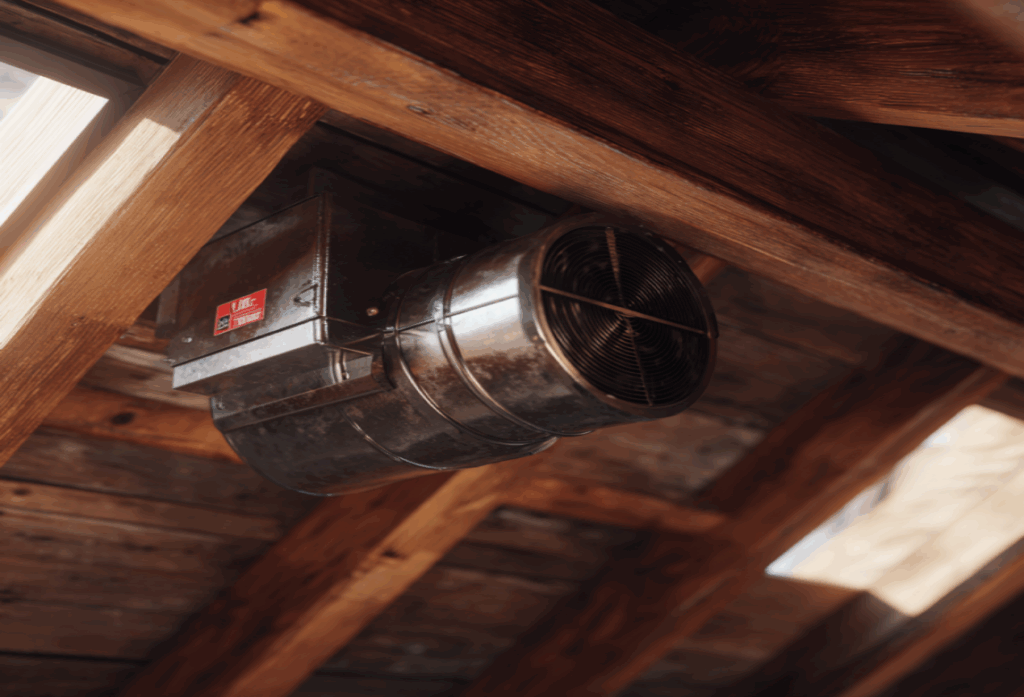
- Active Ventilation: Includes attic fans or turbines that mechanically push air through.
Chattanooga homes often need a combo. That thick, humid air doesn’t always move on its own.
Step 2: Map the Airflow
Picture your attic like a set of lungs. Air should come in low (soffit vents) and exit high (ridge or gable vents). If you only have exhaust or intake, you’re short-circuiting the system.
Step 3: Do the Math
Most homes need 1 square foot of ventilation for every 150 square feet of attic space. If you’ve got a vapor barrier? You might get away with 1:300. Split that square footage 50/50 between intake and exhaust.
Step 4: Watch for Red Flags
- Upper rooms always hotter?
- Musty smells or visible mold in the attic?
- Shingles curling or aging fast?
Those are signs your system is failing. Time to step in.
Deep Dive: How to Improve Attic Ventilation
Unblock What You’ve Got
One of the easiest wins is clearing soffit vents. Often, blown-in insulation clogs them up. Baffles can help keep pathways clear.
Add More Muscle If Needed
If passive flow isn’t cutting it, add attic fans or solar-powered roof vents. Especially helpful for large or multi-gable homes.
Get the Balance Right
Too much exhaust without enough intake? The system stalls. Too much intake? You just trap moist air inside. A professional can balance it for you based on your attic’s shape and roof pitch.
Upgrade Insulation at the Same Time
Ventilation and insulation are besties. Together, they help regulate heat and moisture. Make sure both are working together—not against each other.
Chattanooga FAQs About Attic Ventilation
How much ventilation does an attic need?
Usually 1 square foot per 150 square feet of attic. Vapor barrier? Cut it to 1:300. Just remember: balance intake and exhaust.
What happens if my attic isn’t ventilated?
Heat buildup, moisture damage, higher bills, and roof wear. Mold and mildew might move in too.
Can I DIY my attic ventilation?
Some parts, yes—like adding baffles or checking for blockages. But electrical work or fan installs? Call us.
Should I be worried if my upstairs is always hotter?
Yes. That’s a red flag. It often means trapped attic heat is radiating into your living space.
What’s the best ventilation system for humid climates?
Usually a mix: soffit + ridge vents with an attic fan or gable vent backup. Every home’s different, though.
Want to dig deeper into home ventilation science? Check out this helpful overview from the U.S. Department of Energy, or explore Energy Star's guide to spotting attic issues before they cost you. Usually a mix: soffit + ridge vents with an attic fan or gable vent backup. Every home’s different, though.
Why Chattanooga Trusts JACO Roofing
We’re more than roofers. We’re roof thinkers. We look at the whole system—from the shingles to the soffits to the heat hiding in your attic—and we design smart solutions that make your home healthier.
Whether it’s a free inspection, a drone scan, or a ridge vent upgrade, we help Chattanooga homeowners breathe easier all year long. You can explore our full list of roofing and exterior services here, or learn more about who we are and how we’ve built a reputation you can trust. Our advice is honest. Our crew is trained. And our work is backed by experience and warranties that matter.
Ready to ditch the sauna? We’ll take a look and give you clear, honest options—no pressure.
Keep Your Cool (Literally)
You don’t have to live with a stifling second floor or mystery mold spots. Attic ventilation is one of the smartest—and most cost-effective—ways to protect your roof, your air quality, and your wallet.
At JACO Roofing, we make it simple. We inspect, we explain, and we handle the fix. Let’s bring the breeze back to your attic.